

Quality is of utmost importance when it comes to alumina bricks. As an alumina brick supplier, I've dedicated years to understanding and ensuring the high - quality standards of our products. This blog post will delve into the various methods and aspects to test the quality of alumina bricks.
1. Chemical Composition Analysis
Firstly, examining the chemical composition of alumina bricks is fundamental. Alumina (Al₂O₃) is the main component, and its content greatly influences the brick's performance. Higher alumina content usually means better refractory properties and chemical resistance. We use advanced X - ray fluorescence (XRF) spectrometry to accurately measure the percentages of different elements in the bricks. This method can quickly identify not only the amount of alumina but also other elements such as silica (SiO₂), iron oxide (Fe₂O₃), and calcium oxide (CaO).
For instance, silica may affect the thermal expansion coefficient of the alumina brick, and iron oxide could potentially reduce its high - temperature strength. By precisely knowing the chemical composition, we can ensure that the alumina bricks meet the specific application requirements. Whether for industrial furnaces or 25mm Fire Bricks used in smaller heating systems, the appropriate chemical balance is crucial.
2. Physical Property Tests
A. Bulk Density
Bulk density is an important physical property of alumina bricks. It is defined as the mass per unit volume of the brick when it includes both its solid and pore space. A higher bulk density often indicates better strength and less porosity, which is beneficial for resisting abrasion and erosion. We measure bulk density by taking a sample of the brick, drying it to remove any moisture, and then accurately weighing it before calculating the volume using measurement techniques.
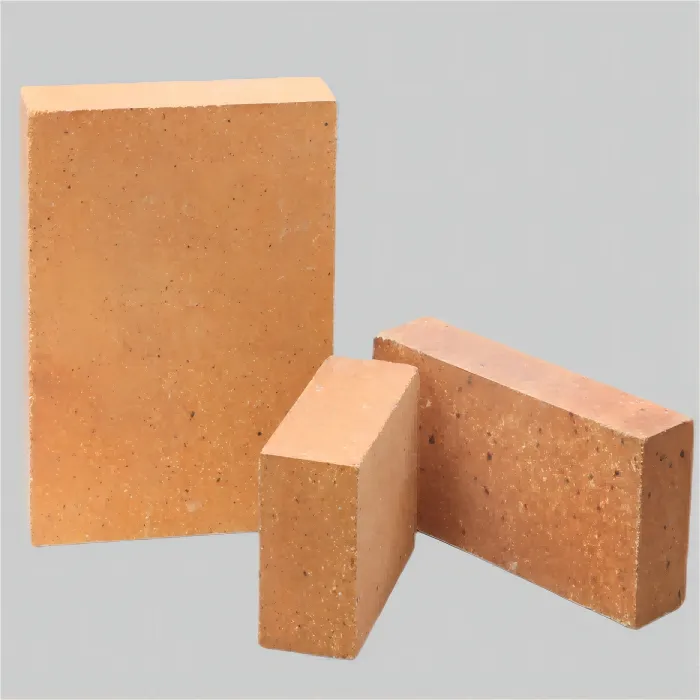
For example, in a situation where the alumina bricks are used in the lining of a high - velocity hot gas duct, a high - bulk - density brick can better withstand the impact of the hot gas and prevent premature wear. Our 9 X 4.5 X 1.25 Firebrick requires a suitable bulk density to ensure its long - term service in such harsh environments.
B. Apparent Porosity
Apparent porosity reflects the openness of the pores in the alumina brick. Lower porosity means fewer paths for gases and liquids to penetrate the brick, which is essential for maintaining the integrity of the brick in high - temperature and corrosive environments. We use the vacuum saturation method to measure apparent porosity. First, the brick samples are dried, then they are completely immersed in water under vacuum conditions to ensure that the water fills all the open pores. By comparing the weight of the dry sample and the water - saturated sample, we can calculate the apparent porosity.
In an industrial furnace where molten metals or corrosive fluxes are present, low - porosity alumina bricks can prevent the infiltration of these substances, thus extending the service life of the furnace lining.
C. Thermal Expansion
Thermal expansion is another critical physical property. Alumina bricks will expand when heated, and if the expansion is not properly controlled, it can lead to cracking and damage to the brickwork. We use a dilatometer to measure the linear thermal expansion of the alumina bricks. By gradually heating the sample at a controlled rate and monitoring its length change, we can determine the thermal expansion coefficient.
This property is especially important for large - scale industrial applications such as Fire Kiln Bricks used in continuous kilns. The expansion characteristics need to be considered during the installation and operation of the kiln to prevent structural failures due to thermal stress.
3. Mechanical Strength Tests
A. Compressive Strength
Compressive strength measures the ability of the alumina brick to withstand pressure without breaking. It is a vital property, especially in applications where the bricks are subjected to heavy loads. We use a universal testing machine to apply a gradually increasing load to the brick until it fails. The maximum load at failure is recorded, and the compressive strength is calculated by dividing the load by the cross - sectional area of the sample.
In a blast furnace, for example, the bottom layer of alumina bricks needs to support the weight of the upper layers and the materials inside the furnace. High - compressive - strength bricks are required to ensure the stability and safety of the entire furnace structure.
B. Flexural Strength
Flexural strength reflects the brick's ability to resist bending forces. This is important in applications where the bricks may be subject to non - uniform loads or stresses that create bending moments. We use a three - point bending test to measure flexural strength. A brick sample is placed on two supports, and a load is applied at the center until the sample breaks. The flexural strength is then calculated based on the applied load, the span between the supports, and the dimensions of the sample.
In some industrial heating equipment, the walls may experience external forces that cause bending, so alumina bricks with sufficient flexural strength are crucial for maintaining the structural integrity of the equipment.
4. Thermal Performance Tests
A. Heat Resistance
Heat resistance is one of the most important properties of alumina bricks. We conduct tests to determine the maximum temperature that the bricks can withstand without significant deformation or degradation. The refractoriness under load (RUL) test is commonly used. In this test, a brick sample is subjected to a constant load while being heated at a controlled rate. The test records the temperature at which the sample experiences a certain amount of deformation.
This data is essential for various applications, from small - scale laboratory furnaces to large - scale industrial incinerators. Knowing the RUL of our alumina bricks helps us and our customers choose the most suitable products for their specific temperature requirements.
B. Thermal Conductivity
Thermal conductivity measures how well the alumina brick can conduct heat. In some applications, such as furnaces where heat conservation is important, lower thermal conductivity is desired to reduce heat loss. We use the steady - state heat flow method to measure thermal conductivity. A temperature difference is established across the brick sample, and the heat flow through the sample is measured, allowing us to calculate the thermal conductivity.
In a well - insulated industrial furnace, using alumina bricks with low thermal conductivity can significantly improve energy efficiency and reduce operating costs.
5. Corrosion Resistance Tests
Alumina bricks may be exposed to various corrosive substances in different applications. To ensure their long - term performance, we conduct corrosion resistance tests. For example, we immerse the brick samples in molten fluxes or corrosive solutions for a certain period and then evaluate the degree of corrosion. The weight loss and visual inspection of the samples are used to assess the corrosion resistance.
In a metal - smelting furnace, the alumina bricks need to resist the corrosion of molten metals and slag. Understanding the corrosion resistance of our products helps us provide customers with bricks that can withstand the harsh chemical environments of their processes.
Acquisition Consultation
We understand that each customer has unique requirements for alumina bricks. If you are interested in our products or have any questions about the quality testing of alumina bricks, please feel free to reach out to us. We are more than willing to have in - depth discussions with you to ensure that you get the most suitable alumina bricks for your specific applications. Our team of experts is always ready to provide professional advice and solutions.
References
- Bannister, F. A., & Lewis, J. A. (1992). High Alumina Refractories. Blackie & Son Limited.
- Reed, J. S. (1995). Principles of Ceramic Processing. Wiley - Interscience.
- Bhadeshia, H. K. D. H., & Honeycombe, R. W. K. (2016). Steels: Microstructure and Properties. Elsevier.