

Low Cement Castable
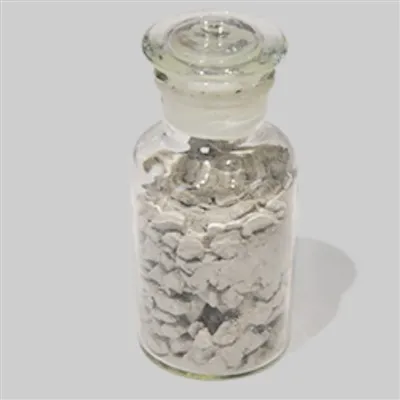
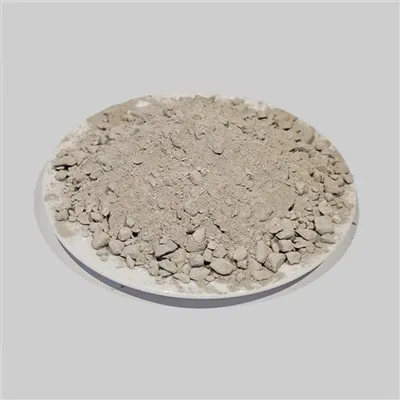
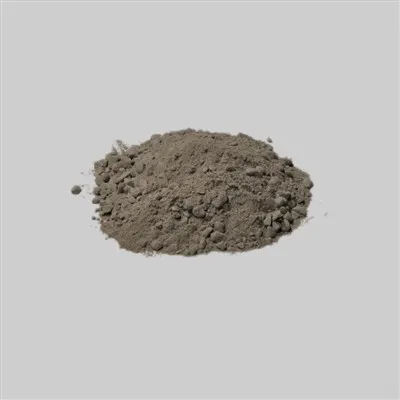
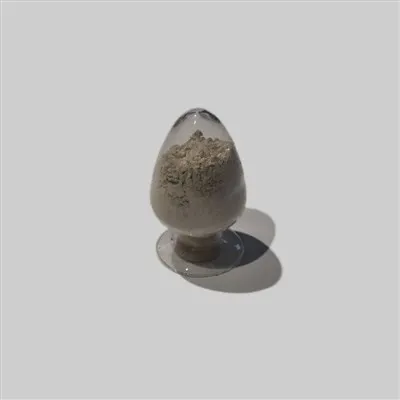
Low cement castables definition is the castable refractory which is made of ultrafine powder, aluminate cement and some admixtures. Furthermore, the amount of these composite can influence its performance. As for its water amount, given the guaranteed ease of mixing material, adding little water can lower porosity and improve strength. Low cement refractory castable has the advantages of little amount of water, high density and high strength, which is the reason that this refractory material is widely used in many field and various furnaces and kilns. Specifically, with different aggregates, it is applied on different kilns. Low cement castable can be used on the lining of high temperature burner and wrapping lining of heating furnace water cooling tube, and corundum and chrome corundum low cement castable can be used on lining of frequency induction furnace and high temperature areas of petrochemical catalytic cracking reactor.
Advantages of Low Cement Castable
Low cement content
Low cement castables is that they contain a lower proportion of aluminum silicate cement (calcium aluminate cement, cac). Typically, low cement castables have a cement content of less than 8%, while traditional castables may contain 10-20% cement. The low cement content reduces the overall porosity and permeability of the castable, improving the compactness and fire resistance of the material.
High temperature performance
Low cement castable has excellent high temperature performance. The lower cement content reduces the material's tendency to crack and provides better resistance to thermal shock and spalling. This allows low cement castables to have better stability and durability in high temperature environments.
Strength and load-bearing capacity
Low-cement castables exhibit high strength and good load-bearing capacity. Compared with traditional castables, its lower cement content can promote the formation of more mullite phases, which improves the thermal strength and bearing capacity of the material. This makes low-cement castables suitable for applications that need to withstand heavy loads or thermal cycling loads at high temperatures.
Reduced water demand
Low cement castables require less water during construction, which helps to improve the compactness of the material and shorten the drying time. This reduces the risk of cracking during drying and improves the overall properties of the material.
Good chemical corrosion resistance
Low cement castables are usually added with additional additives and binders to improve their chemical corrosion resistance. This makes low cement castables suitable for applications with alkali metal attack, slag attack or chemical corrosion requirements.
Construction flexibility
Low-cement castables have good fluidity and operability, and are easy to handle and install. It can be applied by pouring, spraying or scraping, providing high flexibility and suitable for applications where complex structures are formed.


Why Choose Us
Our factory
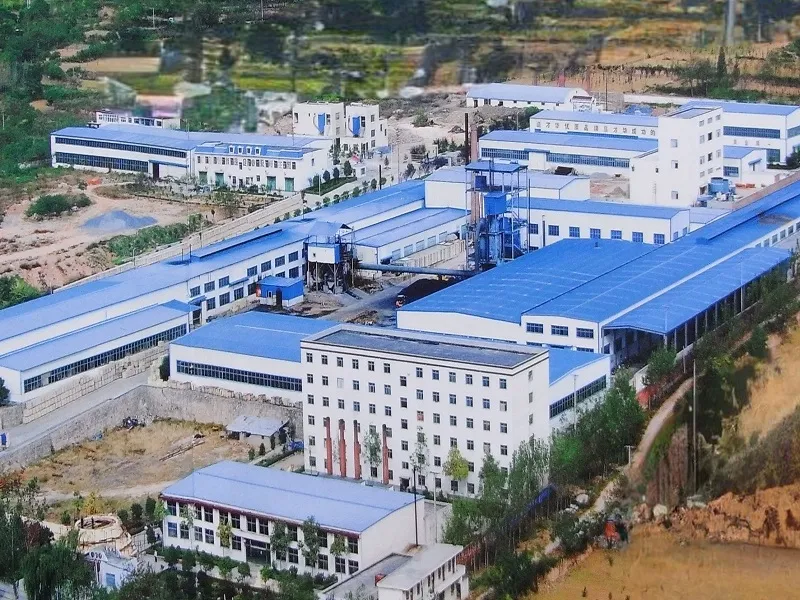
Factory established in 1984, International business department established in 2010, factory with 10000 m2 area.
Advanced equipment
Sets of 1000 tons brick machine, 10 sets of 630 tons brick machine, 2 sets of 180m high temperature tunnel kilns, complete set of physical and chemical index testing equipment.
Our service
Free products design, free technological supporting, free installation guidance, 18 month quality guarantee.
Our product
Ch refractories is professional manufacturer of fire bricks, Mortar, Pre-cast, Pre shape, Insulation products, Castable, Functional Products for Iron & Steel, Cement, Glass, Power & Petrochemical Industries. Moreover, CH REFRACTORIES also manufacturing and exporting refractory cement A600 A700 A900 CA70, Bauxite and other refractories raw material to all of the world.
The Difference Between Low Cement Castable and Traditional Castable
Low cement castable and traditional castable is very different, mainly in the difference between the middle and final strength, the traditional castable in the middle strength is not good, but low cement castable is far better than the traditional refractory castable, not only because the cement content is low, and have less calcium content, but also the use of ultrafine powder technology, so that the castable is in a reasonable proportion of particles distribution. Moreover, the final strength and middle strength of castable also are further improved.
Compared with traditional refractory castable, low cement castable has higher density, lower porosity and higher curing strength at room temperature. At the same time, it has good volume stability, the volume shrinks after drying and calcination. The high strength and low cement material in the low cement castable is prepared by using pure calcium aluminate cement as the binder. The maximum use temperature of high strength castable reaches 1600℃, and it has good wear resistance at high temperature. High strength and low cement castables are suitable for use in all kinds of kiln linings with high temperature and strong erosion.
The low cement material with fused white corundum as aggregate is called low cement corundum castable, corundum low cement material has high mechanical strength, erosion resistance and abrasion resistance, the highest use temperature reaches 1700℃, low cement corundum castable is suitable for more than 1400℃, impact abrasion serious large cement kiln mouth, multi-barrel cooling machine elbow and other lining parts used. It is also suitable for use with all parts of the kiln lining above 1400℃.
Traditional refractory castables are made of refractory particles and powders, as well as high aluminum cement. The particle gradation of the aggregate part is not as fine as the low cement material. Cement particles are also coarse, and the proportion of cement added is large, the amount of water added during construction is also large. In addition, the amount of cement is large and the particles are not graded, so that the cement material can not be completely hydrated, especially at 800℃, there is basically no strength, so the performance of traditional castable is not as good as low cement castable.
The Role of Silica Fume in Low Cement Castable
Pore rate and pore structure
The apparent porosity of low cement castables compared with ordinary castables after heating at 1400℃ is 20.4% for the former and 26.4% for the latter, an increase of nearly 30%. The total porosity in the low cement castables was lower than that of ordinary castables as measured by the pressure pump method. The ordinary castables after heating at 800°C increased nearly 40% compared to 110°C drying. In terms of pore size distribution, the pore size of ordinary castables greater than 100A is 2-3 times of that of low cement castables, and the pore size of less than 1000A is only 30-50% of that of low cement castables.
Strength change characteristic
The strength of low cement castables can grow continuously in low temperature, medium temperature and high temperature stage, while the medium temperature strength of common castables has obvious decrease.
Thermal state flexural strength
When the line changes in heating, the shrinkage value of low cement castables is lower than that of ordinary castables. When it reaches 1500℃, the low cement castables show a micro expansion of 0.1-0.8%, so the material does not show cracks. The refractoriness of low cement castables was measured to be 1790-1830℃, which is higher than that of ordinary castables (1690-1710℃).
Load softening point test
The thermal expansion is basically the same between the two types of castables before 1400℃, after 1400℃ the low cement castable shrinks slightly and then starts to expand again, the expansion rate is 0.5% at 1500℃, while the ordinary castable shrinks sharply after 1400℃, the expansion rate is already negative at 1500℃ (-1.8%).
Erosion resistance
The test with converter slag heated to 1450℃ and constant temperature for 3 hours, the erosion amount of low cement castable is about 4CM2, which is better than 7CM2 of common castable. So far, the General Institute of Metallurgy and Construction has developed DJ series of various grades of cement castable and used them in many projects.
Thermal Conductivity of Low Cement Castables
Cement content
Compared with traditional castables, low cement castables have lower cement content. Generally, cement has a higher thermal conductivity than other refractory particles, so low-cement castables help reduce overall thermal conductivity while reducing cement content.
Refractory particles
The main component of low-cement castables is refractory particles, such as alumina, mullite, silicate, etc. These refractory particles generally have a low thermal conductivity and play an important role in reducing the overall thermal conductivity.
Binders and fillers
A certain proportion of binders and fillers may be added to low-cement castables, such as Portland cement, silicate microspheres, etc. These materials generally have low thermal conductivity, which can further reduce the thermal conductivity of the castable.
Particle gradation and pore structure
The particle gradation and pore structure of low-cement castables will also affect its thermal conductivity. Reasonable particle gradation can reduce the connectivity of pores, thereby reducing the heat conduction path; at the same time, controlling the pore structure, such as increasing the closed pore rate or adopting a fine pore structure, also helps to reduce the thermal conductivity.
What Is the Refractoriness of Low Cement Castables?
Low cement castables exhibit relatively moderate refractoriness. Unfortunately refractoriness is a very complex classification to use when analyzing material to find which will best fit your application. There is no rating or measurement of refractoriness with which to compare various materials because the designation / classification of a material as ‘refractory’ ties in many traits, many of which are in reference to the materials ability to resist deformation and maintain structural integrity or load bearing abilities within sever thermally chaotic environment or when subjected to extremely high temperatures for extended period of times.
All substances defined as refractory are expected to more or less display behaviors of an ‘ideological’ refractory, which at minimum must withstand deformation when subjected to extreme thermal environments. However, a substances refractoriness is not just determined by peak temperature to which it can be exposed while sustaining it’ s form. Maintaining structural integrity when subjected to rapid transitions from lowest (usually the temperature that the material will cool to and rest at when the device or system within which it is installed is inactive) temperature to highest temperature. The faster a transition the material can withstand while maintaining an unchanged form, structural integrity, etc the more refractory that material is. The faster from low temp to high temp, and then a.s.a.p. back down from that temp to the low temp, as well as how long it can be held at the peak temperature, and then dropped at the fasted pace to the lowest temp. Thermal shock resistance is a very rare quality among refractory materials but follows the theme of a material maintaining it’ s form and structural strength within a thermal worst case scenario environment.
And as technology changes so do materials comparative refractoriness. But then we must answer the question of whether we are talking about general refractory characteristics across all industrial applications or looking at materials comparatively upon a specific singular industrial thermal application. While refractory materials must be able to withstand thermal environments and conditions, with greater refractoriness relating to a material having a greater resistance to degradation under such conditions, the refractoriness of any material is also immensely dependent on it’ s ability to be insulatory. This is equally as important of a material trail as thermal resistance and both serve as determinants of a materials relative refractoriness.
A materials ability to insulate can be seen by either calculating it’ s K-value or R-value. K-value gives context to a wider scope of the material properties being a variable independent of material thickness. A materials R-value is a calculation of it’ s thermal resistance. This relates very directly to insulatory material defined in simple terms as the resistance to the flow of heat that any material offer specifically at a thickness of 1 meter. This variable is dependent on the insulating materials thickness and it’ s R-value increases in direct proportion to an increase in thickness over 1 meter.
How to Use Low Cement Castables Efficiently?
The setting and hardening process of low-cement castables is caused by hydration bonding and cohesion bonding, or cohesion bonding alone. After the water-reducing agent in the castable is determined, the fluidity of the castable will also vary greatly depending on the amount of pure calcium aluminate cement added. When the addition amount exceeds 9%, the flow value of the castable is lower than 110mm, and the normal construction fluidity of the castable can no longer be guaranteed. This may be due to the excessive amount of pure calcium aluminate cement that accelerates the setting and hardening process of the castable.
The following measures can be taken to solve the aging changes of low cement castables. Double-sealed packaging, especially in the rainy season or when the storage time is long. Choose a dispersant with a strong dispersing ability. Consider adding some newly opened packages of cement during construction and mixing. Use a powerful mixer to mix and control the mixing time. Add an accelerator or retarder to adjust the hardening speed of the castable. In terms of on-site management, prevent moisture absorption during storage. At present, the most effective way to solve the aging change of low cement castables on site is to add a setting accelerator or retarder to the castables. The accelerators and retarder used, especially the carbonate accelerator and citric acid retarder, are used in small quantities have significant effects, and have no adverse effects on the strength of the castable at all temperatures.
Instantaneous loss of fluidity sometimes occurs during castable construction. The analyzed reason should be due to the failure of the water-reducing agent in the castable material or improper operation during construction. Water reducing agent is a surface active substance. The surface activity of inorganic water-reducing agents is not significant. It mainly increases the zeta potential through chemical adsorption, effectively destroying the flocculation structure between particles. Give full play to the filling effect of micro powder and the lubrication effect of free water to increase fluidity. The anionic group N ionized by the organic water-reducing agent in water has a strong surface activity. Its lipophilic end is adsorbed on the surface of colloidal particles by physical adsorption and enters the fixed adsorption layer. The potential increases in the negative direction, and the oil-repellent ends repel each other to achieve the purpose of dispersion. However, the water-reducing agent easily absorbs the moisture in the castable ingredients during the storage process and causes deliquescence and hydrolysis, which increases the acidity of the castable ingredients. This results in loss of water-reducing effect and instantaneous fluidity loss. Therefore, measures should be taken during the production and storage of castables. For example, use a water-reducing agent with poor hygroscopicity, separate the water-reducing agent from the castable, etc.
Our Factory
Factory established in 1984, International business department established in 2010. Factory with 10000 m2 area, 120 employees including 20 professional engineers. CH REFRACTORIES is professional manufacturer of fire bricks, Mortar, Pre-cast, Pre shape, Insulation products, Castable, Functional Products for Iron & Steel, Cement, Glass, Power & Petrochemical Industries. Moreover, CH REFRACTORIES also manufacturing and exporting refractory cement A600 A700 A900 CA70, Bauxite and other refractories raw material to all of the world.
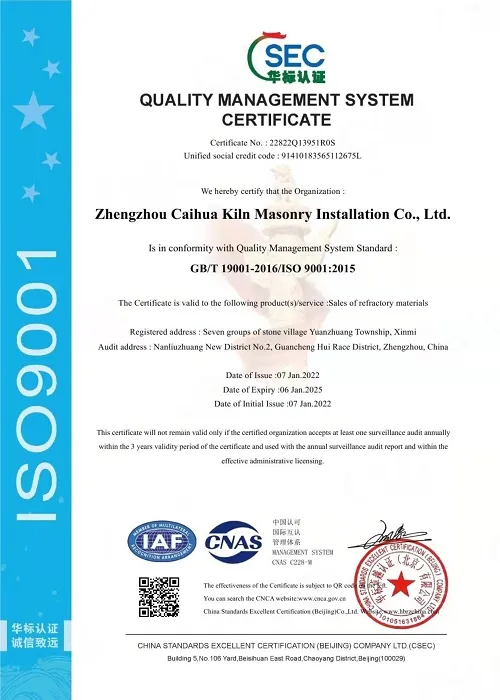
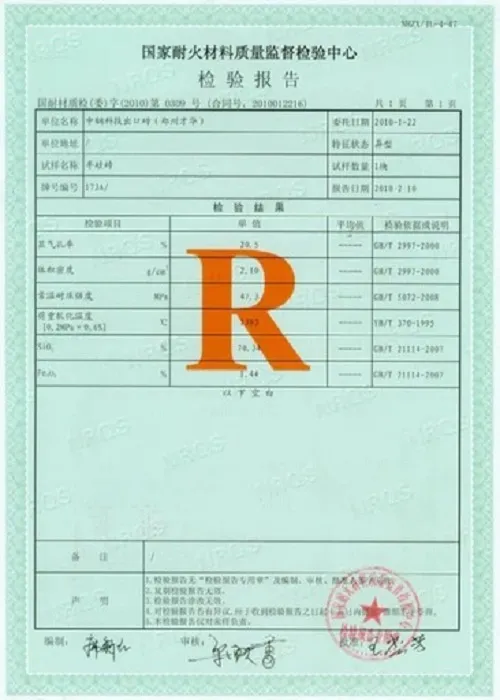
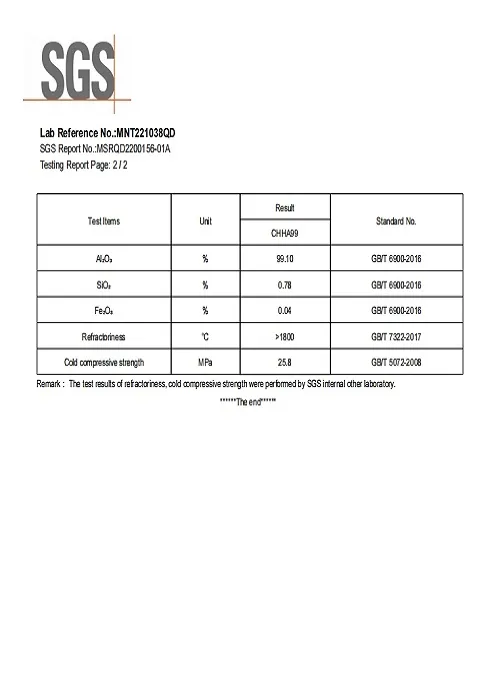
Certificate
FAQ:
Q: What is a low cement castable?
Q: What are the main applications of low cement castables?
Q: Can low cement castables be used in high-temperature applications?
Q: Are there any safety precautions to consider when working with low cement castables?
Q: How do you repair damaged low cement castable linings?
Q: What are the key factors to consider when selecting low cement castables for a specific application?
Q: How do you extend the service life of low cement castable linings?
Q: Can low cement castables be used in non-ferrous metal applications?
Q: How should low cement castables be stored?
Q: How do you determine the appropriate thickness of low cement castables for a furnace lining?
Q: How are low cement castables different from conventional castables?
Q: What is the typical composition of low cement castables?
Q: How are low cement castables manufactured?
Q: What are the advantages of using low cement castables?
Q: What are the limitations of low cement castables?
Q: How do low cement castables compare to traditional refractory bricks?
Q: Can low cement castables be used in contact with molten metals?
Q: How do you determine the appropriate water content for mixing low cement castables?
Q: What are the common curing methods for low cement castables?
Q: How do you assess the quality of low cement castables?
We're well-known as one of the leading low cement castable manufacturers in China. Please rest assured to buy customized low cement castable at competitive price from our factory. Contact us for more cheap products.
efficient fire brick, metallurgical foaming agents, refractory for galvanizing resistance