

Hey there! As a zirconia nozzle supplier, I often get asked about the material sources for zirconia used in nozzles. So, I thought I'd take a deep - dive into this topic and share some insights with you all.
1. Natural Zircon Sands
One of the primary material sources for zirconia used in nozzles is natural zircon sands. Zircon, with the chemical formula ZrSiO₄, is a widespread mineral found in many beach and alluvial deposits around the world. Countries like Australia, South Africa, and the United States are major producers of zircon sands.
The process of extracting zirconia from zircon sands is quite involved. First, the zircon sands are mined and then undergo a series of purification steps. They're usually concentrated through methods like gravity separation, magnetic separation, and electrostatic separation to remove impurities such as titanium, iron, and other heavy minerals.
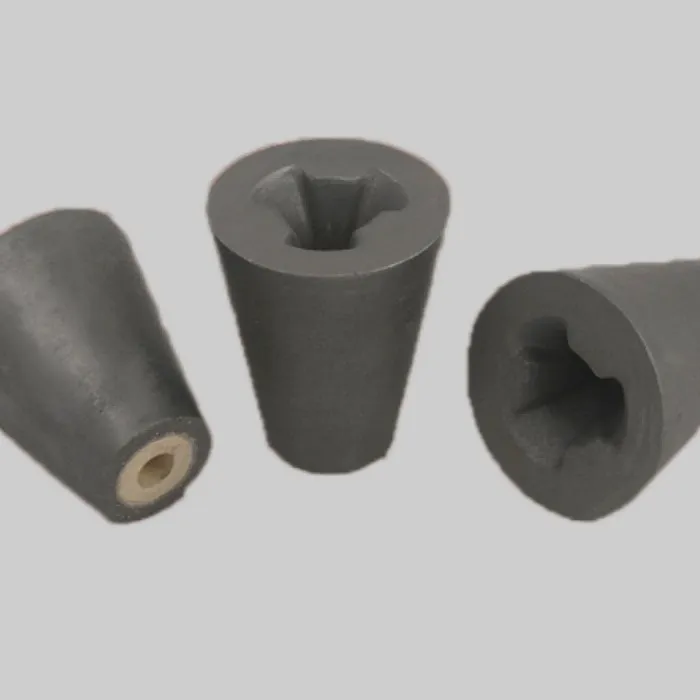
After purification, the zircon is subjected to a high - temperature treatment. In some cases, it's reacted with chemicals to break down the ZrSiO₄ structure. For example, it can be treated with sodium hydroxide at high temperatures to form sodium zirconate, which can then be further processed to obtain zirconia. The zirconia derived from zircon sands is often used in the production of Zirconia Nozzle due to its relatively high purity and availability.
2. Baddeleyite
Baddeleyite is another important source of zirconia. It's a naturally occurring mineral that consists mainly of zirconium dioxide (ZrO₂). Baddeleyite deposits are found in places like Brazil, Russia, and Canada.
Compared to zircon sands, baddeleyite is closer to the final zirconia product. However, it still needs purification to meet the requirements for nozzle production. The purification process typically involves crushing the baddeleyite ore, followed by froth flotation to separate the zirconia - rich fraction from other minerals. Then, further chemical purification steps are carried out to remove trace impurities such as hafnium, which can affect the properties of the final zirconia product.
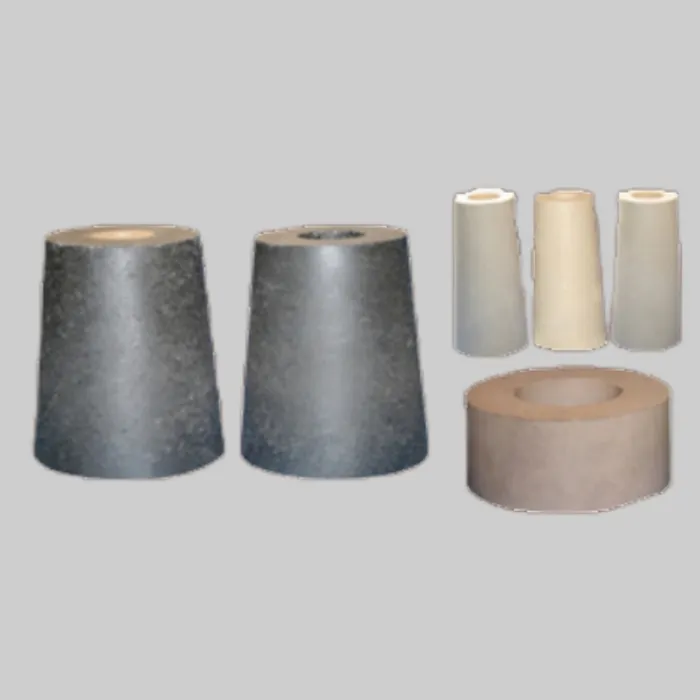
The zirconia obtained from baddeleyite has excellent refractory properties, making it a great choice for Zirconium Sizing Nozzle and Tundish Nozzle. These nozzles need to withstand high temperatures and corrosive environments during metal - casting processes, and the zirconia from baddeleyite can provide the necessary durability.
3. Synthetic Zirconia
In addition to natural sources, synthetic zirconia is also widely used in nozzle production. Synthetic zirconia is produced through chemical synthesis methods, which allow for precise control of the chemical composition and crystal structure of the zirconia.
One common method for synthesizing zirconia is the precipitation method. Zirconium salts, such as zirconium oxychloride, are dissolved in water and then reacted with a precipitating agent, like ammonia. This reaction forms a zirconium hydroxide precipitate, which is then calcined at high temperatures to convert it into zirconia.
Another method is the sol - gel process. In this process, zirconium alkoxides are hydrolyzed and condensed to form a sol, which can then be gelled and dried. The resulting gel is calcined to obtain zirconia. Synthetic zirconia can be tailored to have specific properties, such as a particular crystal phase (e.g., monoclinic, tetragonal, or cubic), which can enhance the performance of the nozzles in different applications.
4. Recycling
Recycling is becoming an increasingly important source of zirconia for nozzle production. Zirconia - containing waste materials, such as used nozzles or other zirconia - based refractory products, can be recycled. The recycling process usually starts with crushing the waste materials to a suitable particle size.
Then, the crushed materials are subjected to chemical and thermal treatments to remove impurities and restore the zirconia to a usable form. Recycling not only helps to reduce the environmental impact of waste disposal but also provides a cost - effective source of zirconia. It also conserves natural resources, which is crucial as the demand for zirconia nozzles continues to grow.
Why These Sources Matter for Nozzle Production
The choice of zirconia source can significantly impact the quality and performance of the nozzles. For example, zirconia from natural sources like zircon sands and baddeleyite may have some inherent impurities, but they are generally cost - effective and widely available. On the other hand, synthetic zirconia offers more control over the properties, which is beneficial for applications where high - precision performance is required.
The purity of the zirconia affects its refractory properties, such as its melting point and resistance to chemical attack. A higher - purity zirconia can withstand higher temperatures and is less likely to react with molten metals, which is essential for nozzles used in metal - casting processes. The crystal structure of the zirconia also plays a role. For instance, the tetragonal phase of zirconia can provide better toughness, which helps the nozzles resist cracking under thermal stress.
Conclusion
In conclusion, there are several material sources for zirconia used in nozzles, including natural zircon sands, baddeleyite, synthetic zirconia, and recycled zirconia. Each source has its own advantages and is suitable for different types of nozzle applications. As a zirconia nozzle supplier, I understand the importance of choosing the right source of zirconia to ensure the high - quality performance of our products.
If you're in the market for high - quality zirconia nozzles, whether it's Zirconia Nozzle, Zirconium Sizing Nozzle, or Tundish Nozzle, I'd love to have a chat with you. We can discuss your specific requirements and find the best solution for your needs. Feel free to reach out and start a conversation about your procurement.
References
- "Zirconium and Hafnium" by the US Geological Survey.
- "Refractory Materials: Properties, Processing, and Applications" edited by various authors.
- Research papers on zirconia production and nozzle manufacturing from academic journals.