

As a trusted supplier of slide gate plates, I often encounter inquiries about the maximum flow capacity of these crucial components in various industrial applications. Slide gate plates play a pivotal role in controlling the flow of molten metals, such as steel, in ladles and tundishes during the steelmaking process. Understanding their maximum flow capacity is essential for optimizing production efficiency, ensuring product quality, and maintaining safety in steel plants.
Factors Affecting the Maximum Flow Capacity
The maximum flow capacity of a slide gate plate is influenced by several key factors, each of which needs to be carefully considered during the design, selection, and operation of these components.
Orifice Size and Shape
The size and shape of the orifice in the slide gate plate are primary determinants of the flow capacity. A larger orifice generally allows for a higher flow rate of molten metal. However, the shape of the orifice also matters. For instance, a circular orifice is often preferred as it provides a more uniform flow distribution compared to other shapes. Irregular or non - circular orifices can cause turbulence in the molten metal flow, which may lead to uneven pouring and potential quality issues in the final product.
Refractory Material Properties
The refractory material used in the slide gate plate significantly impacts its flow capacity. High - quality refractory materials with good thermal shock resistance, erosion resistance, and low porosity are essential. Materials with low porosity reduce the risk of molten metal penetration, which can clog the orifice and reduce the flow capacity over time. Additionally, refractory materials with excellent erosion resistance can withstand the abrasive action of the flowing molten metal, maintaining the integrity of the orifice and ensuring consistent flow rates. For more information on slide gate refractories, you can visit Slide Gate Refractories.
Pressure Differential
The pressure differential across the slide gate plate is another critical factor. A higher pressure differential between the ladle or tundish and the pouring area can increase the flow rate of molten metal through the orifice. However, excessive pressure differentials need to be carefully managed to avoid issues such as splashing and uneven flow. In steel plants, the pressure differential is often controlled by adjusting the height of the molten metal in the ladle and the opening of the slide gate.
Slide Gate Plate Design and Operation
The design of the slide gate plate, including its thickness, the mechanism for opening and closing, and the alignment of the orifice, can affect the flow capacity. A well - designed slide gate plate with a smooth opening and closing mechanism ensures precise control of the flow rate. Moreover, proper operation and maintenance of the slide gate plate are crucial. Regular inspection and cleaning of the orifice can prevent the accumulation of debris and solidified metal, which can impede the flow.
Calculating the Maximum Flow Capacity
Calculating the maximum flow capacity of a slide gate plate is a complex process that typically involves fluid dynamics principles. One of the commonly used equations for estimating the flow rate of a liquid through an orifice is the Torricelli's law, which can be adapted for molten metals under certain assumptions.
The basic form of Torricelli's law for the velocity of a fluid flowing out of an orifice is (v = \sqrt{2gh}), where (v) is the velocity of the fluid, (g) is the acceleration due to gravity ((9.81\ m/s^{2})), and (h) is the height of the fluid above the orifice. The flow rate (Q) can then be calculated using the formula (Q=A\times v), where (A) is the cross - sectional area of the orifice.
However, in the case of molten metals, several factors need to be considered to obtain a more accurate estimate. These include the viscosity of the molten metal, the frictional losses in the orifice, and the non - ideal behavior of the fluid. Advanced computational fluid dynamics (CFD) simulations are often used in modern engineering to model the flow of molten metal through slide gate plates more accurately. These simulations take into account the complex interactions between the molten metal, the refractory material, and the surrounding environment.
Importance of Optimal Flow Capacity in Steel Plants
In steel plants, achieving the optimal flow capacity of slide gate plates is of utmost importance for several reasons.
Production Efficiency
An optimal flow capacity ensures a continuous and consistent supply of molten metal to the casting process. This reduces the downtime between pours, increases the overall production rate, and improves the efficiency of the steelmaking process. For example, in a continuous casting operation, a well - controlled flow rate of molten steel through the slide gate plate is essential for producing high - quality steel slabs with uniform dimensions.
Product Quality
The flow rate of molten metal can have a significant impact on the quality of the final steel product. A stable and appropriate flow rate helps to prevent defects such as porosity, inclusions, and uneven solidification. By controlling the flow capacity of the slide gate plate, steel manufacturers can ensure that the molten metal is distributed evenly in the mold, resulting in a more homogeneous and high - quality steel product.
Safety
Maintaining the proper flow capacity is also crucial for safety in steel plants. An uncontrolled or excessive flow rate can lead to splashing of molten metal, which poses a serious risk to the operators. On the other hand, a blocked or restricted flow can cause pressure build - up in the ladle or tundish, potentially leading to equipment failure and dangerous situations.
Our Slide Gate Plate Offerings
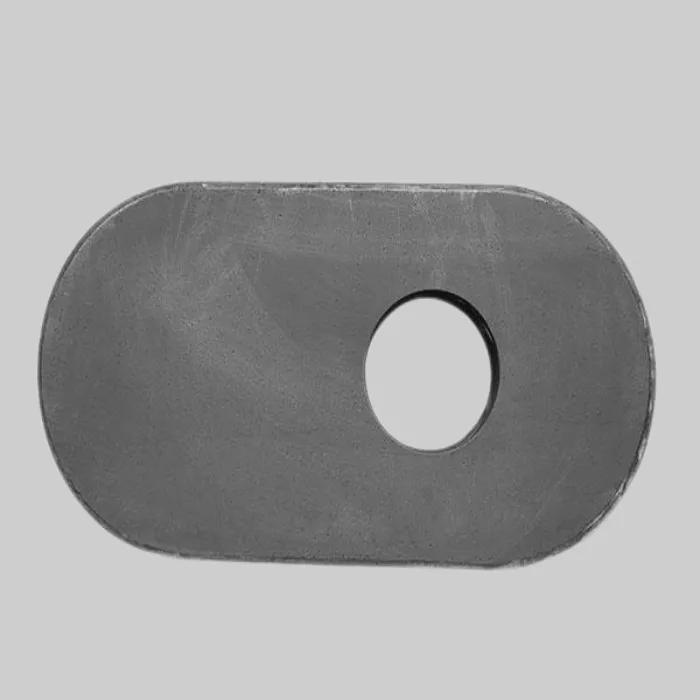
As a leading supplier of slide gate plates, we offer a wide range of products to meet the diverse needs of steel plants. Our Steel Plant Slide Gate Plate is designed with high - quality refractory materials and advanced manufacturing techniques to ensure optimal flow capacity and long - term performance.
We also provide 1 Qc Slide Gate Plate, which is known for its excellent erosion resistance and precise flow control. Our slide gate plates are available in various sizes and orifice configurations to suit different applications and production requirements.

Contact Us for Procurement
If you are interested in our slide gate plates and would like to discuss your specific needs, we invite you to contact us for procurement. Our team of experts is ready to provide you with detailed information, technical support, and competitive pricing. Whether you are looking to optimize the flow capacity of your existing steelmaking process or are starting a new project, we can offer the right solutions for you.
References
- Incropera, F. P., & DeWitt, D. P. (2002). Fundamentals of Heat and Mass Transfer. Wiley.
- Fox, R. W., McDonald, A. T., & Pritchard, P. J. (2011). Introduction to Fluid Mechanics. Wiley.
- Rao, Y. K. (1995). Principles of Iron and Steelmaking. Pergamon Press.