

In the industrial realm, fire bricks are indispensable components, playing a crucial role in high - temperature applications such as furnaces, kilns, and incinerators. As a fire brick supplier deeply involved in this industry, I often encounter a common concern from customers: Are fire bricks prone to cracking? This question is of great significance as the integrity of fire bricks directly impacts the efficiency, safety, and longevity of the equipment they are used in.
Understanding the Nature of Fire Bricks
Fire bricks are specifically designed to withstand extremely high temperatures, often exceeding 1000 degrees Celsius. They are made from refractory materials such as clay, silica, alumina, and other minerals, which are carefully selected and processed to ensure high heat resistance.
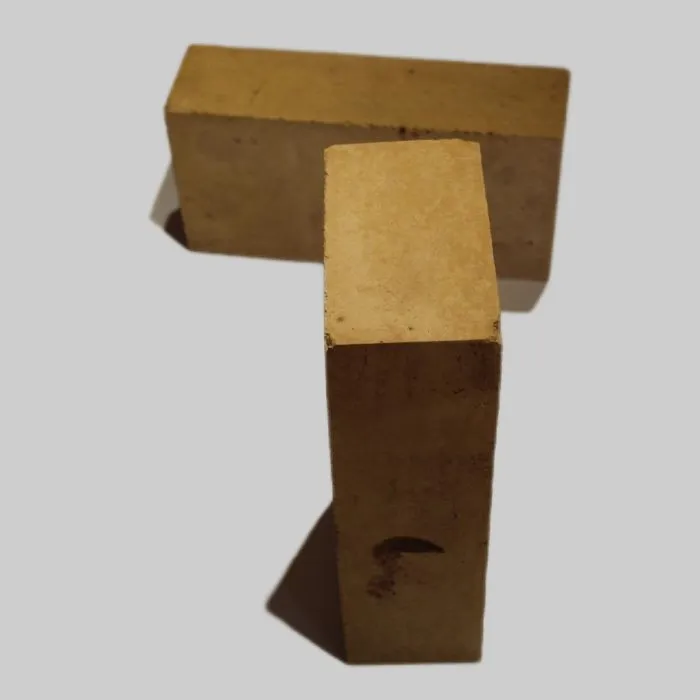
The manufacturing process of fire bricks is complex. It typically involves mixing the raw materials, forming the bricks through methods like pressing or casting, and then firing them at high temperatures. This firing process is essential as it gives the bricks their strength and heat - resistant properties. However, despite these rigorous manufacturing steps, fire bricks can still face the risk of cracking.
Factors Contributing to Cracking
Thermal Stress
One of the primary causes of fire brick cracking is thermal stress. When fire bricks are exposed to rapid temperature changes, the expansion and contraction of the material occur at an uneven rate. For example, in a furnace, when it is heated up quickly from room temperature to a high - operating temperature, the outer layers of the brick may expand faster than the inner layers. This differential expansion creates internal stress within the brick. If the stress exceeds the brick's tensile strength, cracks will form.
Similarly, during the cooling process, if the furnace is shut down too rapidly, the outer layers cool and contract more rapidly than the inner layers, again leading to thermal stress and potential cracking. Different types of fire bricks have different coefficients of thermal expansion. For instance, Chrome Corundum Brick has a relatively lower coefficient of thermal expansion compared to some other common fire bricks, which makes it more resistant to thermal shock and less prone to cracking under rapid temperature changes.
Chemical Reactions
Fire bricks are often in contact with various chemicals in industrial environments. These chemicals can react with the components of the fire bricks, leading to changes in the brick's structure and strength. For example, in a metallurgical furnace, the presence of molten metals and slag can react with the silica or alumina in the fire bricks. Sulfur - containing flue gases can also cause chemical degradation.
The reaction products may have different physical properties from the original brick, such as different volumes or densities. This can create internal stress within the brick, eventually resulting in cracking. Chrome Brick is known for its good chemical resistance. The chromium oxide in it can form a stable layer on the surface, protecting the brick from certain corrosive chemicals and reducing the risk of cracking caused by chemical reactions.
Mechanical Stress
In industrial settings, fire bricks are also subjected to mechanical stress. During the installation process, if the bricks are not properly placed or if there is excessive force applied, micro - cracks can be introduced. In addition, the weight of the bricks themselves, as well as the weight of other components in the furnace or kiln, can cause stress over time.
Vibrations from machinery or external sources can also contribute to mechanical stress. If the fire bricks are not supported properly, the continuous vibration can cause the cracks to propagate. Some Magnesia Spinel Bricks are designed to have high mechanical strength, which helps them better withstand mechanical stress and reduces the likelihood of cracking.
Mitigating the Risk of Cracking
Proper Installation
Proper installation is crucial to prevent cracking. The bricks should be installed with the correct mortar and in a way that allows for thermal expansion. A small gap should be left between the bricks to accommodate the expansion during heating. Additionally, the installation should be carried out by experienced professionals who understand the properties of the fire bricks and the specific requirements of the application.
Controlled Heating and Cooling
To minimize thermal stress, a controlled heating and cooling process should be implemented. This means gradually increasing or decreasing the temperature in the furnace or kiln. For example, a pre - heating stage can be added during startup to allow the bricks to heat up slowly and evenly. Similarly, during shutdown, the cooling process should be gradual to avoid rapid contraction.
Regular Inspection and Maintenance
Regular inspection of the fire bricks is essential. By detecting early signs of cracking or damage, appropriate measures can be taken in a timely manner. Minor cracks can be repaired using suitable refractory materials, and severely damaged bricks can be replaced. Maintenance also includes keeping the environment around the fire bricks clean and free from excessive chemicals or debris.
Our Role as a Fire Brick Supplier
As a fire brick supplier, we are committed to providing high - quality products that are less prone to cracking. We carefully select the raw materials and use advanced manufacturing techniques to ensure the best quality of our fire bricks. Our technical team is always ready to provide customers with professional advice on the selection, installation, and maintenance of fire bricks.
We understand that different applications have different requirements. For example, a glass - melting furnace may require fire bricks with high chemical resistance, while a steel - making furnace may need bricks with excellent thermal shock resistance. We offer a wide range of fire bricks, including Chrome Corundum Brick, Chrome Brick, and Magnesia Spinel Bricks, to meet the diverse needs of our customers.
Contact Us for Procurement
If you are in need of fire bricks, whether for a new project or for replacement in an existing facility, we are here to assist you. Our team of experts can help you choose the most suitable fire bricks for your specific application, taking into account factors such as temperature, chemical environment, and mechanical stress. We can also provide you with detailed technical information and support throughout the procurement process. Don't hesitate to contact us to start a productive discussion about your fire brick requirements.
References
- "Refractories Handbook", Second Edition, Edited by Peter J. F. Harris
- "High - Temperature Materials and Technologies", by R. C. Bradt, D. M. Roy, and D. P. H. Hasselman