

Hey there! As a slide gate plate supplier, I've been in the thick of the industry for quite a while, and one question that keeps popping up is, "What's the difference between a slide gate plate and a butterfly valve?" Well, let's dive right in and break it down.
1. Structure and Design
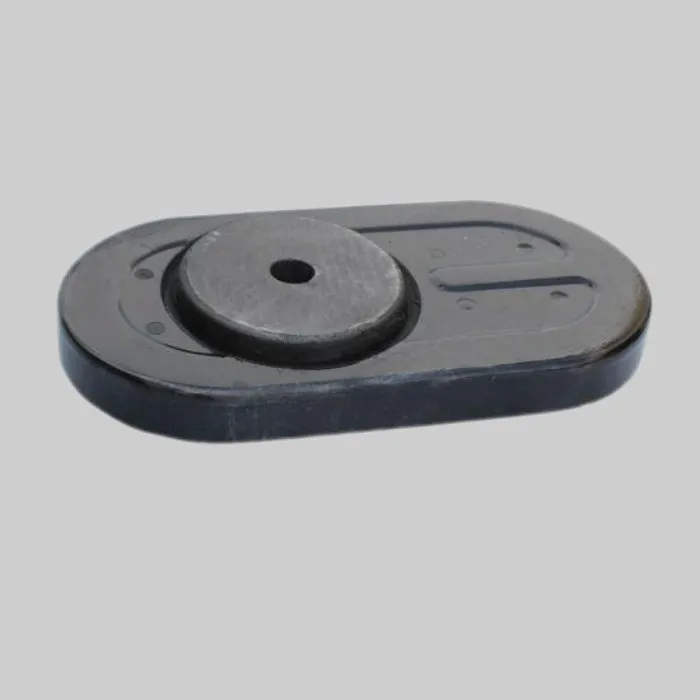
First off, let's talk about how these two things are built. A slide gate plate is a pretty straightforward piece of equipment. It consists of a refractory plate that slides horizontally to control the flow of molten metal or other materials. The plate has an opening, and by moving it, you can adjust how much stuff gets through. It's like a sliding door for your industrial process.
On the flip side, a butterfly valve has a different design. It has a disc that rotates around a central axis inside a pipe. The disc can be turned to different angles, from fully open to fully closed, to regulate the flow. It's kind of like a fan blade that you can spin to control the air coming through.
The slide gate plate is often used in applications where you need precise control over the flow, especially in high - temperature environments like steel plants. For example, in a Ladle Slide Gate, the slide gate plate allows for accurate pouring of molten steel. The refractory material used in slide gate plates can withstand extremely high temperatures, which is crucial when dealing with molten metals.
Butterfly valves, on the other hand, are more commonly used in systems where a quick shut - off or regulation of flow is needed, but the temperature isn't as extreme. They are often found in water treatment plants, HVAC systems, and some chemical processing applications.
2. Flow Control
When it comes to flow control, the two have different characteristics. Slide gate plates offer excellent throttling capabilities. You can move the plate in small increments to get just the right amount of material flowing. This is super important in industries where the amount of material being transferred needs to be very precise. For instance, in a Steel Plant Slide Gate Plate, even a small variation in the flow of molten steel can affect the quality of the final product.
Butterfly valves are great for on - off control and general flow regulation. They can open and close relatively quickly, which is useful in situations where you need to stop or start the flow rapidly. However, their throttling accuracy isn't as good as that of slide gate plates. When you try to throttle a butterfly valve to a very small opening, the flow can become turbulent, which might not be ideal for some applications.
3. Sealing Performance
Sealing is another key factor. Slide gate plates can provide a very tight seal when properly installed and maintained. The refractory materials are designed to fit together snugly, preventing any leakage of molten metal or other substances. This is essential in high - pressure and high - temperature environments, as any leakage can be extremely dangerous.
Butterfly valves also have seals, usually made of rubber or other elastomeric materials. These seals work well in normal operating conditions, but they may not be as effective in high - temperature or high - pressure situations. Over time, the seals can wear out, leading to leakage.
4. Maintenance and Durability
Maintenance is an important consideration for any industrial equipment. Slide gate plates, especially those made of high - quality Slide Gate Refractories, are quite durable. However, they do require regular inspection for wear and tear, especially in the areas where the plate slides. If the refractory material starts to crack or erode, it needs to be replaced to ensure proper operation.
Butterfly valves are relatively easy to maintain. The main parts that need attention are the seals and the actuator (the device that controls the rotation of the disc). If the seals wear out, they can usually be replaced without too much hassle. However, the durability of a butterfly valve depends a lot on the quality of the materials used and the operating conditions.
5. Cost
Cost is always a factor in any purchasing decision. Slide gate plates can be more expensive upfront, especially if you need high - quality refractory materials. The manufacturing process of slide gate plates is also more complex, which adds to the cost. However, considering their long - term durability and performance in high - temperature and high - pressure applications, they can be a cost - effective choice in the long run.
Butterfly valves are generally less expensive to purchase and install. They are widely available in different sizes and materials, making them a more budget - friendly option for many applications. However, you may need to factor in the cost of regular seal replacements and potential downtime for maintenance.

6. Application Suitability
As I mentioned earlier, slide gate plates are mainly used in the metallurgical industry, especially in steel plants. They are also used in foundries and other industries where precise control of molten materials is required.
Butterfly valves have a wider range of applications. They are used in water systems, gas pipelines, and various chemical and food processing industries. Their versatility makes them a popular choice for many general - purpose flow control needs.
In conclusion, both slide gate plates and butterfly valves have their own unique features and advantages. The choice between the two depends on your specific application requirements, such as temperature, pressure, flow control accuracy, and budget. If you're in an industry that deals with high - temperature and high - pressure molten materials, a slide gate plate is likely the better option. On the other hand, if you need a quick - acting, cost - effective flow control solution for normal operating conditions, a butterfly valve might be more suitable.
If you're considering purchasing slide gate plates for your industrial needs, I'd love to have a chat with you. I can provide more detailed information about our products, their performance, and how they can meet your specific requirements. Feel free to reach out for a consultation and let's see if our slide gate plates are the right fit for you.
References
- "Industrial Valves Handbook" by John Doe
- "Refractory Materials and Their Applications in High - Temperature Processes" by Jane Smith