

What is the radiation resistance of castable fire brick?
As a supplier of castable fire bricks, I am often asked about the radiation resistance of these essential refractory materials. In high - temperature industrial applications, such as in furnaces, kilns, and other heat - intensive processes, understanding the radiation resistance of castable fire bricks is crucial for ensuring the efficiency and longevity of the equipment.
Understanding Castable Fire Bricks
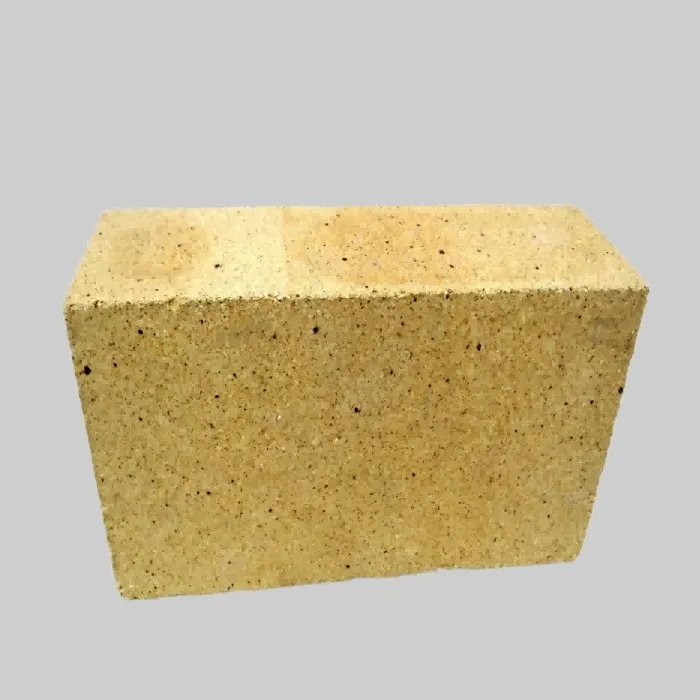
Before delving into radiation resistance, let's briefly understand what castable fire bricks are. Castable fire bricks, as the name suggests, are a type of refractory material that can be cast into various shapes. They are made from a mixture of refractory aggregates, binders, and additives. This unique characteristic allows for easy installation and customization according to the specific requirements of different industrial applications. You can find more information about castable fire bricks on our website Castable Fire Brick.
The Concept of Radiation Resistance
In high - temperature environments, heat transfer occurs through three main mechanisms: conduction, convection, and radiation. Radiation heat transfer is particularly significant at high temperatures, as it does not require a medium and can transfer heat over long distances. Radiation resistance, in the context of castable fire bricks, refers to the ability of these bricks to withstand and reduce the transfer of heat through radiation.
A high - radiation - resistant castable fire brick can effectively block or absorb a significant portion of the radiant heat, preventing it from passing through to the outer layers of the structure. This not only helps in maintaining the temperature inside the furnace or kiln but also reduces heat loss to the surrounding environment, leading to energy savings.
Factors Affecting the Radiation Resistance of Castable Fire Bricks
Chemical Composition
The chemical composition of castable fire bricks plays a vital role in determining their radiation resistance. Materials such as alumina (Al₂O₃), silica (SiO₂), and zirconia (ZrO₂) are commonly used in the production of these bricks. Alumina, for instance, has excellent high - temperature stability and can effectively absorb and scatter radiant heat. Higher alumina content in castable fire bricks generally leads to better radiation resistance.
Microstructure
The microstructure of the castable fire brick also influences its radiation - resistant properties. A dense and uniform microstructure can reduce the porosity of the brick, which in turn decreases the pathways for radiant heat transfer. By controlling the particle size distribution and the sintering process during production, we can optimize the microstructure of the castable fire bricks to enhance their radiation resistance.
Thickness
The thickness of the castable fire brick is another important factor. A thicker brick can provide more material for the absorption and attenuation of radiant heat. However, it's essential to balance the thickness with other practical considerations, such as installation space and cost.
Measuring Radiation Resistance
There are several methods to measure the radiation resistance of castable fire bricks. One common approach is to use a high - temperature radiation furnace. In this setup, the sample brick is placed in the furnace, and a known amount of radiant heat is applied. By measuring the temperature on the opposite side of the brick over time, we can calculate the heat transfer rate and, thus, evaluate the radiation resistance of the brick.
Another method involves using infrared imaging. This technique allows us to visualize the heat distribution on the surface of the brick and identify areas where heat transfer is more significant. By comparing different samples, we can rank their radiation - resistant capabilities.
Applications and Importance of Radiation - Resistant Castable Fire Bricks
Rotary Kilns
Rotary kilns are widely used in industries such as cement production and metallurgy. In these applications, the internal temperature can reach extremely high levels, and radiant heat transfer is a major concern. Radiation - resistant castable fire bricks can line the interior of the rotary kiln, protecting the outer shell from excessive heat and reducing energy consumption. You can learn more about the fire bricks suitable for rotary kilns on Rotary Kiln Bricks.
Glass Melting Furnaces
In glass melting furnaces, maintaining a stable and high - temperature environment is crucial for the quality of the glass. Castable fire bricks with good radiation resistance can help in achieving this by minimizing heat loss and ensuring uniform heat distribution within the furnace.
Foundries
Foundries deal with molten metals at very high temperatures. The use of radiation - resistant castable fire bricks in foundry applications can improve the efficiency of the melting process, reduce energy costs, and extend the lifespan of the equipment.
Comparison with Other Refractory Bricks
When comparing castable fire bricks with other types of refractory bricks, such as thin refractory bricks, in terms of radiation resistance, castable fire bricks often have an advantage. Their ability to be cast into complex shapes allows for better insulation and heat management in irregularly shaped structures. Thin refractory bricks, on the other hand, may be more suitable for applications where space is limited. You can explore the details of thin refractory bricks on Thin Refractory Brick.
Our Commitment as a Supplier
As a supplier of castable fire bricks, we are committed to providing high - quality products with excellent radiation resistance. Our manufacturing process is carefully controlled to ensure the optimal chemical composition, microstructure, and thickness of the bricks. We conduct rigorous quality testing to guarantee that our castable fire bricks meet the highest industry standards.
Contact Us for Procurement
If you are in the market for castable fire bricks with superior radiation resistance, we invite you to contact us for procurement discussions. Our team of experts is ready to assist you in selecting the most suitable products for your specific industrial applications. Whether you are involved in the cement industry, glass manufacturing, or any other high - temperature process, we have the right solution for you.
References
- "Refractories Handbook", Second Edition, Edited by Peter J. F. Harris
- "High - Temperature Materials and Technologies", by R. C. Voigt
- "Heat Transfer in Industrial Furnaces", by Zygmunt Kowalski