

Continuous casting of thin - slabs is a crucial process in the steelmaking industry, offering high productivity and cost - effectiveness. In this process, CCM (Continuous Casting Machine) refractories play a vital role. As a CCM refractories supplier, I have witnessed firsthand how these materials contribute to the success of thin - slab continuous casting operations.
Key Requirements for CCM Refractories in Thin - Slab Continuous Casting
In thin - slab continuous casting, the operating conditions are extremely harsh. The refractories are exposed to high - temperature molten steel, intense thermal shock, and chemical corrosion. Therefore, the refractories need to possess several key properties.
Firstly, excellent thermal shock resistance is essential. The sudden contact with molten steel at high temperatures can cause significant thermal stress on the refractories. If the refractories cannot withstand this thermal shock, they may crack, which can lead to steel leakage and other serious production problems. For example, during the start - up of the continuous casting process, the temperature of the refractories rises rapidly from room temperature to over 1500°C. A refractory with poor thermal shock resistance will quickly develop cracks under such a large temperature gradient.
Secondly, high corrosion resistance is required. Molten steel contains various chemical elements, such as sulfur, phosphorus, and oxygen, which can react with the refractories and cause corrosion. Additionally, the slag formed during the casting process also has a strong corrosive effect on the refractories. A refractory with good corrosion resistance can maintain its structural integrity and performance over a long period of continuous use, reducing the frequency of refractory replacement and improving production efficiency.
Thirdly, good mechanical strength is necessary. The refractories need to withstand the mechanical forces generated during the continuous casting process, such as the pressure of the molten steel flow and the friction between the refractory and the casting mold. If the mechanical strength is insufficient, the refractories may break or wear out quickly, affecting the quality of the cast slab.
Performance of Different Types of CCM Refractories in Thin - Slab Continuous Casting
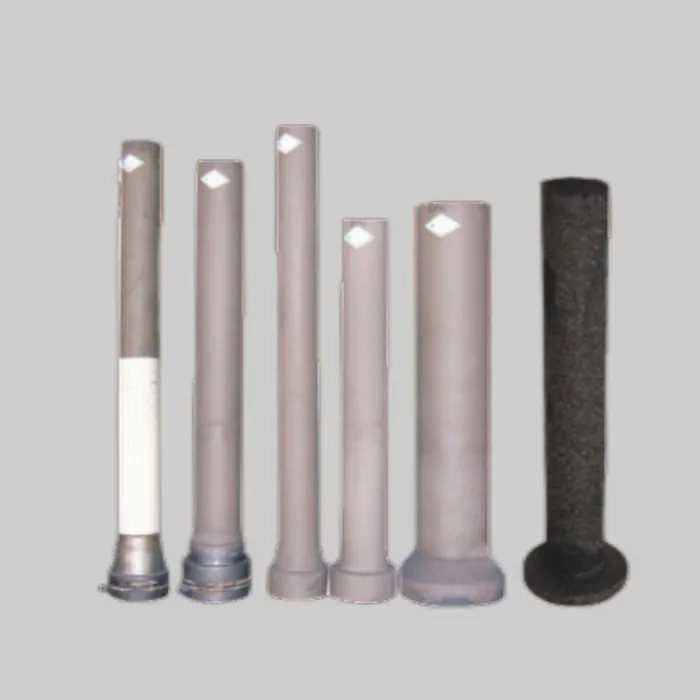
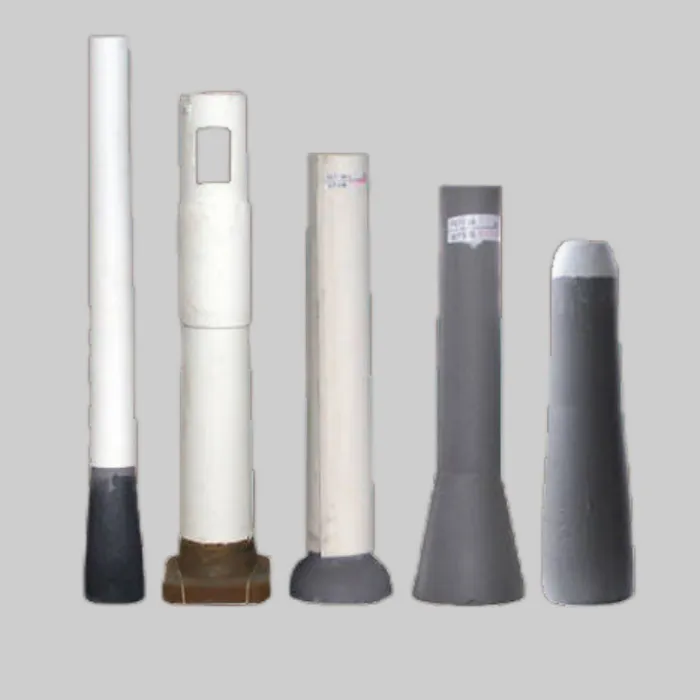
Sub Entry Nozzle
The Sub Entry Nozzle is a critical component in thin - slab continuous casting. It is responsible for guiding the molten steel from the tundish into the mold. The performance of the sub - entry nozzle has a direct impact on the quality of the cast slab.
One of the main functions of the sub - entry nozzle is to control the flow rate and flow pattern of the molten steel. A well - designed sub - entry nozzle can ensure a uniform and stable flow of molten steel into the mold, which helps to prevent defects such as surface cracks and inclusions in the cast slab. For example, by optimizing the shape and size of the nozzle outlet, the velocity and direction of the molten steel flow can be adjusted to achieve a more uniform distribution of heat and mass in the mold.
In terms of material properties, the sub - entry nozzle needs to have high thermal shock resistance. As mentioned earlier, the sudden contact with molten steel can cause severe thermal stress. Modern sub - entry nozzles are often made of materials such as zirconia - graphite or alumina - graphite, which have good thermal shock resistance and can withstand the rapid temperature changes during the casting process.
Moreover, the sub - entry nozzle also needs to have good corrosion resistance. The molten steel and slag can corrode the inner surface of the nozzle, reducing its service life. By using advanced coating technologies or high - quality refractory materials, the corrosion resistance of the sub - entry nozzle can be significantly improved.
Subentry Nozzle
The Subentry Nozzle is similar to the sub - entry nozzle in its function and requirements. It is also an important part of the molten steel delivery system in thin - slab continuous casting.
The subentry nozzle is usually designed to provide a smooth and controlled flow of molten steel. It helps to reduce the turbulence of the molten steel in the mold, which is beneficial for the formation of a high - quality cast slab. In addition, the subentry nozzle needs to be able to maintain its dimensional stability under high - temperature conditions. Any deformation of the nozzle can lead to an uneven flow of molten steel, resulting in slab defects.
To meet these requirements, the subentry nozzle is often made of high - performance refractory materials. For instance, some subentry nozzles are made of magnesia - carbon materials, which have excellent thermal and mechanical properties. These materials can resist the high - temperature environment and the chemical attack of molten steel and slag.
Ladle Shroud
The Ladle Shroud is used to connect the ladle and the tundish during the continuous casting process. Its main function is to prevent the oxidation of molten steel by isolating it from the air.
The ladle shroud needs to have good sealing performance. A proper seal can effectively prevent the entry of air, which can cause the oxidation of the molten steel and the formation of inclusions. In addition, the ladle shroud also needs to have high thermal insulation properties. This helps to reduce the heat loss of the molten steel during the transfer from the ladle to the tundish, ensuring that the molten steel remains at the appropriate temperature for casting.
The material of the ladle shroud is typically a refractory with high alumina content. Alumina - based refractories have good thermal stability and chemical resistance, which are suitable for use in the high - temperature and corrosive environment of the continuous casting process.
Impact of CCM Refractories on the Quality of Thin - Slabs
The performance of CCM refractories has a significant impact on the quality of thin - slabs. As mentioned above, a well - functioning sub - entry nozzle or subentry nozzle can ensure a uniform and stable flow of molten steel into the mold, which is crucial for the formation of a high - quality slab. A uniform flow of molten steel can reduce the occurrence of surface defects such as cracks and inclusions, improving the surface finish and internal quality of the slab.
The ladle shroud, by preventing the oxidation of molten steel, can also improve the quality of the slab. Oxidized steel contains more inclusions, which can reduce the mechanical properties and ductility of the slab. By using a high - quality ladle shroud, the amount of inclusions in the slab can be minimized, resulting in a slab with better mechanical performance.
Moreover, the long - term stability of CCM refractories is also important for slab quality. If the refractories wear out or break down during the casting process, it can disrupt the normal flow of molten steel and cause fluctuations in the casting conditions, leading to inconsistent slab quality. Therefore, choosing high - performance CCM refractories is essential for ensuring the production of high - quality thin - slabs.
Conclusion
In conclusion, CCM refractories play a crucial role in the continuous casting of thin - slabs. Different types of refractories, such as the sub - entry nozzle, subentry nozzle, and ladle shroud, have their own specific functions and requirements. They need to possess excellent thermal shock resistance, corrosion resistance, and mechanical strength to perform well in the harsh operating conditions of thin - slab continuous casting.
As a CCM refractories supplier, we are committed to providing high - quality refractories that can meet the demanding requirements of the steelmaking industry. Our products are designed and manufactured using the latest technologies and high - quality materials to ensure optimal performance in thin - slab continuous casting.
If you are interested in our CCM refractories and would like to discuss your specific needs for thin - slab continuous casting, please feel free to contact us for a detailed procurement discussion. We look forward to working with you to improve the efficiency and quality of your steel production.
References
- Zhang, Y., & Li, H. (2018). Research on the performance of refractories in continuous casting of thin - slabs. Journal of Iron and Steel Research, 30(5), 456 - 462.
- Wang, J., & Chen, S. (2019). Influence of refractory materials on the quality of thin - slab continuous casting. Steelmaking Technology, 45(3), 234 - 241.
- Liu, X., & Zhao, D. (2020). Development and application of high - performance CCM refractories in thin - slab continuous casting. Refractory Materials Science, 56(2), 123 - 130.