

In the intricate world of steel casting, the ladle shroud plays a pivotal role as a critical component within the casting system. As a leading ladle shroud supplier, I've witnessed firsthand how this seemingly simple refractory tube interacts with other key elements to ensure the efficiency, quality, and safety of the casting process. In this blog, I'll delve into the complex relationships between the ladle shroud and its counterparts in the casting system.
The Basics of a Ladle Shroud
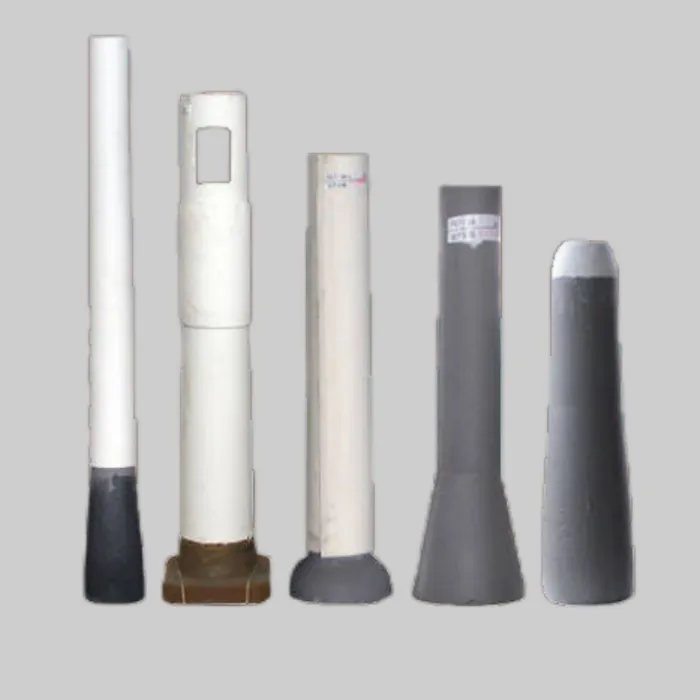
Before we explore its interactions, let's briefly understand what a ladle shroud is. A ladle shroud is a long, cylindrical refractory tube that is used to transfer molten steel from the ladle to the tundish during the continuous casting process. Its primary function is to prevent the oxidation of molten steel by shielding it from the surrounding air, thus maintaining the quality of the steel and reducing the formation of inclusions. You can find more detailed information about ladle shrouds on our website Ladle Shroud.
Interaction with the Ladle
The ladle is the first stop in the journey of molten steel in the casting system. The ladle shroud is attached to the ladle nozzle, which is located at the bottom of the ladle. This connection is crucial as it must be both secure and leak - proof. Any leakage at this junction can lead to safety hazards, such as molten steel spills, and can also result in the oxidation of the steel.
The ladle nozzle is designed to control the flow of molten steel into the ladle shroud. It has a specific inner diameter and shape that determine the rate and pattern of the steel flow. The ladle shroud, in turn, must be compatible with the ladle nozzle in terms of size and material properties. For example, if the ladle nozzle has a large inner diameter, the ladle shroud must be able to handle the high - volume flow of molten steel without being damaged.
Interaction with the Tundish
Once the molten steel passes through the ladle shroud, it enters the tundish. The tundish acts as a buffer between the ladle and the mold, ensuring a continuous and stable supply of molten steel to the mold. The ladle shroud must be positioned accurately above the tundish inlet to ensure that the molten steel is poured smoothly into the tundish.
The interaction between the ladle shroud and the tundish also involves the prevention of slag carry - over. Slag is a by - product of the steel - making process that floats on top of the molten steel. If slag enters the tundish, it can contaminate the steel and cause defects in the final product. The ladle shroud helps to minimize slag carry - over by creating a sealed environment for the molten steel flow.
Interaction with the Subentry Nozzle
The subentry nozzle is another important component in the casting system. It is located at the bottom of the tundish and is responsible for directing the molten steel from the tundish into the mold. The ladle shroud and the subentry nozzle work together to ensure a controlled and consistent flow of molten steel into the mold.
The design of the subentry nozzle affects the flow pattern of the molten steel in the mold. The ladle shroud, by delivering the molten steel to the subentry nozzle in a proper manner, helps to optimize the performance of the subentry nozzle. For more information about subentry nozzles, you can visit Subentry Nozzle.
Interaction with the Monolithic Stopper
The monolithic stopper is used to control the flow of molten steel from the ladle. It is inserted into the ladle nozzle and can be raised or lowered to adjust the opening of the nozzle. The ladle shroud and the monolithic stopper interact in a way that the stopper's movement does not disrupt the flow of molten steel through the ladle shroud.
When the monolithic stopper is opened, the molten steel starts to flow through the ladle shroud. The design of the ladle shroud must be such that it can handle the sudden change in the flow rate. Similarly, when the stopper is closed, the ladle shroud should be able to prevent the back - flow of molten steel and maintain its structural integrity. You can learn more about monolithic stoppers on Monolithic Stopper.
Impact on the Quality of the Cast Product
The proper interaction between the ladle shroud and other components in the casting system has a direct impact on the quality of the cast product. By preventing oxidation, slag carry - over, and ensuring a stable flow of molten steel, the ladle shroud helps to reduce the number of defects in the final product.
For example, inclusions in the steel, which are often caused by oxidation or slag contamination, can weaken the mechanical properties of the steel. By working effectively with other components, the ladle shroud helps to minimize the formation of inclusions, resulting in a higher - quality cast product.
Maintenance and Replacement
The interaction between the ladle shroud and other components also extends to the maintenance and replacement processes. All components in the casting system, including the ladle shroud, have a limited service life due to the harsh conditions of the molten steel environment.
The ladle shroud may need to be replaced more frequently than some other components because it is directly exposed to the high - temperature molten steel. When replacing the ladle shroud, it is important to ensure that the new shroud is compatible with the ladle nozzle, tundish, subentry nozzle, and monolithic stopper. This requires careful inspection and measurement of all the related components.
The Role of Material Properties
The material properties of the ladle shroud play a significant role in its interaction with other components. The ladle shroud is typically made of refractory materials, such as alumina - graphite or magnesia - carbon. These materials have high melting points, good thermal shock resistance, and chemical stability.
The choice of material for the ladle shroud depends on the specific requirements of the casting process and the compatibility with other components. For example, if the ladle nozzle is made of a certain type of refractory material, the ladle shroud should have similar thermal expansion characteristics to avoid cracking or damage during the heating and cooling cycles.
Future Developments
As the steel - casting industry continues to evolve, the interaction between the ladle shroud and other components is also expected to change. New technologies are being developed to improve the performance of each component in the casting system.
For example, advanced sensor technologies may be integrated into the ladle shroud or other components to monitor the flow of molten steel, temperature, and other parameters in real - time. This can help to optimize the interaction between the components and improve the overall efficiency and quality of the casting process.
Conclusion
In conclusion, the ladle shroud is an integral part of the casting system, and its interaction with other components is complex and multi - faceted. From its connection with the ladle nozzle to its role in delivering molten steel to the tundish and working with the subentry nozzle and monolithic stopper, every aspect of its interaction is crucial for the success of the casting process.
As a ladle shroud supplier, we understand the importance of these interactions and are committed to providing high - quality ladle shrouds that are compatible with other components in the casting system. If you are in the market for ladle shrouds or have any questions about their interaction with other components in your casting system, we encourage you to contact us for further discussion and potential procurement. We look forward to working with you to optimize your casting process and improve the quality of your cast products.
References
- R. Krishnan, "Continuous Casting of Steel", CRC Press, 2015.
- A. B. Pandey, "Refractories in Steelmaking", Elsevier, 2018.
- J. Smith, "Advanced Casting Technologies", Wiley - Blackwell, 2020.