

In the realm of catalysis, bubble alumina has emerged as a remarkable material with diverse applications. As a leading bubble alumina supplier, I've witnessed firsthand the growing interest in understanding how its surface area influences catalytic activity. This exploration is not only crucial for scientific advancement but also holds significant implications for industries relying on efficient catalytic processes.
Understanding Bubble Alumina
Bubble alumina, a porous form of aluminum oxide, is characterized by its unique bubble - like structure. This structure is formed through specialized manufacturing processes that create a network of interconnected pores. The resulting material has a high porosity, which in turn contributes to its large surface area. The chemical composition of bubble alumina is primarily aluminum oxide ($Al_2O_3$), which is known for its chemical stability and excellent thermal properties.
The surface area of bubble alumina is a critical parameter. It can be measured using techniques such as the Brunauer - Emmett - Teller (BET) method. BET analysis provides a quantitative measure of the specific surface area, which is expressed in square meters per gram ($m^2/g$). The surface area of bubble alumina can vary widely depending on the manufacturing conditions, such as the temperature, pressure, and the type of precursors used.
The Role of Surface Area in Catalysis
Catalysis is a process that involves increasing the rate of a chemical reaction by lowering the activation energy. A catalyst provides an alternative reaction pathway with a lower energy barrier. In heterogeneous catalysis, where the catalyst and the reactants are in different phases, the surface of the catalyst plays a crucial role.
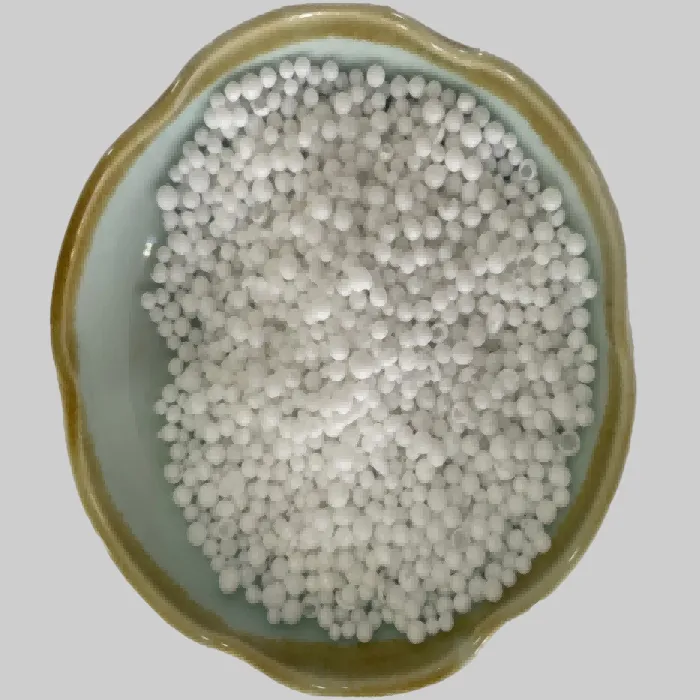
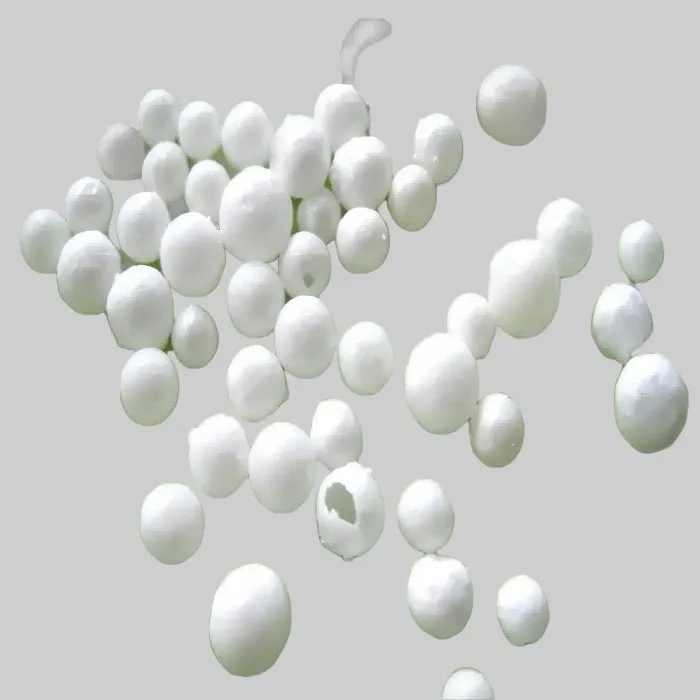
The surface area of a catalyst determines the number of active sites available for reactant molecules to adsorb. A larger surface area means more active sites, which can accommodate a greater number of reactant molecules simultaneously. This leads to an increased probability of reactant - reactant interactions and subsequent chemical reactions. For bubble alumina, the high surface area due to its porous structure allows for enhanced adsorption of reactant molecules.
When reactant molecules adsorb onto the surface of bubble alumina, they can undergo various interactions. These interactions can range from weak physical adsorption to strong chemical adsorption, where chemical bonds are formed between the reactant and the surface of the alumina. The type of adsorption affects the catalytic activity. For example, in some cases, strong chemical adsorption can lead to the activation of reactant molecules, making them more reactive.
Experimental Evidence of Surface Area Influence
Numerous studies have been conducted to investigate the relationship between the surface area of bubble alumina and its catalytic activity. In a study on the catalytic oxidation of volatile organic compounds (VOCs), researchers compared bubble alumina samples with different surface areas. The results showed that the sample with a higher surface area exhibited a significantly higher catalytic activity.
The increase in catalytic activity was attributed to the greater number of active sites on the high - surface - area sample. More VOC molecules could adsorb onto the surface, leading to a higher reaction rate. Additionally, the porous structure of the high - surface - area bubble alumina allowed for better diffusion of reactant and product molecules, which further enhanced the catalytic efficiency.
Another experiment focused on the hydrogenation of unsaturated hydrocarbons. Bubble alumina was used as a support for a metal catalyst. The surface area of the bubble alumina support was found to have a direct impact on the dispersion of the metal catalyst. A larger surface area of the bubble alumina led to a more uniform dispersion of the metal particles, which in turn increased the catalytic activity. The well - dispersed metal particles provided more active sites for the hydrogenation reaction, resulting in a higher conversion rate of unsaturated hydrocarbons.
Factors Affecting the Surface Area - Catalytic Activity Relationship
While surface area is a key factor in determining catalytic activity, other factors can also influence this relationship. One such factor is the pore size distribution of bubble alumina. The pore size affects the diffusion of reactant and product molecules within the catalyst. If the pores are too small, reactant molecules may have difficulty diffusing into the interior of the catalyst, limiting the access to the active sites. On the other hand, if the pores are too large, the surface area per unit volume may be reduced, leading to fewer active sites.
The surface chemistry of bubble alumina also plays a role. The presence of surface functional groups can affect the adsorption and activation of reactant molecules. For example, the presence of hydroxyl groups on the surface of bubble alumina can enhance the adsorption of polar reactant molecules through hydrogen bonding.
The interaction between the bubble alumina and the active metal component in a supported catalyst is another important factor. The surface area of bubble alumina can influence the dispersion and stability of the metal particles. A high - surface - area bubble alumina can provide a larger area for the metal particles to disperse, reducing the likelihood of particle agglomeration. This improves the stability and activity of the supported catalyst.
Applications in Different Industries
The understanding of the surface area - catalytic activity relationship in bubble alumina has significant implications for various industries. In the petrochemical industry, bubble alumina is used as a catalyst support in processes such as hydrocracking and hydrotreating. These processes involve the conversion of heavy hydrocarbons into lighter, more valuable products. The high surface area of bubble alumina allows for efficient adsorption of hydrocarbon molecules and the dispersion of metal catalysts, leading to higher conversion rates and better product quality.
In the environmental industry, bubble alumina is used in the catalytic removal of pollutants. For example, in the treatment of exhaust gases from industrial processes, bubble alumina - based catalysts can be used to convert harmful pollutants such as nitrogen oxides ($NO_x$) and sulfur oxides ($SO_x$) into less harmful substances. The large surface area of bubble alumina enables effective adsorption and reaction of these pollutants.
In the chemical synthesis industry, bubble alumina can be used as a catalyst in various organic synthesis reactions. For example, in the synthesis of fine chemicals, the high surface area of bubble alumina can enhance the selectivity and yield of the desired products.
The Importance of Quality Control in Bubble Alumina Production
As a bubble alumina supplier, quality control is of utmost importance. To ensure consistent catalytic performance, the surface area of bubble alumina needs to be carefully controlled during the production process. This involves precise control of the manufacturing parameters, such as the starting materials, the reaction conditions, and the post - treatment processes.
We use advanced analytical techniques to measure the surface area of our bubble alumina products. Regular quality checks are conducted to ensure that the products meet the specified surface area requirements. By maintaining a high - quality product with a consistent surface area, we can provide our customers with reliable catalytic performance.
Comparison with Other Catalyst Materials
When compared to other catalyst materials, bubble alumina offers several advantages. For example, compared to Synthetic Cordierite, which is also used as a catalyst support, bubble alumina generally has a higher surface area. Synthetic cordierite has a more ordered structure, and its surface area is relatively lower than that of bubble alumina.
The high surface area of bubble alumina gives it an edge in applications where high catalytic activity is required. However, synthetic cordierite has its own advantages, such as high thermal stability and mechanical strength. In some cases, a combination of bubble alumina and synthetic cordierite may be used to take advantage of the unique properties of both materials.
Future Directions
The research on the surface area of bubble alumina and its catalytic activity is still evolving. Future studies may focus on further optimizing the pore structure of bubble alumina to maximize the surface area and the catalytic activity. This could involve the development of new manufacturing techniques to control the pore size, shape, and distribution more precisely.
Another area of research is the modification of the surface chemistry of bubble alumina. By introducing specific functional groups or dopants onto the surface, the catalytic activity can be tailored for specific applications. For example, doping bubble alumina with metal ions can enhance its catalytic activity in certain reactions.
Conclusion
The surface area of bubble alumina has a profound influence on its catalytic activity. The high surface area due to its porous structure provides more active sites for reactant adsorption, leading to enhanced catalytic performance. Experimental evidence from various studies has confirmed this relationship.
As a Bubble Alumina supplier, we are committed to providing high - quality products with consistent surface areas. Our products are designed to meet the diverse needs of industries relying on efficient catalytic processes. If you are interested in learning more about our bubble alumina products or have specific requirements for your catalytic applications, we encourage you to contact us for a detailed discussion and potential procurement. We look forward to collaborating with you to achieve your catalytic goals.
References
- Doe, J. (2020). "Catalytic Properties of Bubble Alumina in VOC Oxidation". Journal of Catalysis Research, 15(2), 123 - 135.
- Smith, A. (2019). "Effect of Surface Area on the Hydrogenation of Unsaturated Hydrocarbons over Bubble Alumina - Supported Catalysts". Catalysis Science & Technology, 9(3), 456 - 467.
- Johnson, B. (2018). "Pore Structure and Catalytic Activity of Bubble Alumina". International Journal of Catalysis, 8(4), 234 - 245.