

Fertilizers play a pivotal role in modern agriculture, enhancing soil fertility and promoting plant growth. As a raw material supplier deeply involved in this industry, I am well - versed in the various substances that go into making fertilizers. In this blog, I will explore the key raw materials used in fertilizer production, their functions, and their significance in ensuring bountiful harvests.
Nitrogen - Containing Raw Materials
Nitrogen is one of the primary nutrients required by plants, and it is essential for the synthesis of proteins, nucleic acids, and chlorophyll. There are several raw materials used to supply nitrogen in fertilizers:
Ammonia (NH₃)
Ammonia is a fundamental nitrogen - containing raw material. It is produced through the Haber - Bosch process, which combines nitrogen from the air with hydrogen under high pressure and temperature. Ammonia can be directly applied to the soil as a liquid fertilizer or used as a starting material for the production of other nitrogen fertilizers.
For example, when ammonia reacts with sulfuric acid, it forms ammonium sulfate ((NH₄)₂SO₄), a widely used nitrogen fertilizer. The reaction is as follows:
2NH₃ + H₂SO₄ → (NH₄)₂SO₄
Ammonium sulfate is a water - soluble fertilizer that provides both nitrogen and sulfur to the soil. Sulfur is also an important nutrient for plant growth, involved in the formation of certain amino acids.
Urea (CO(NH₂)₂)
Urea is another popular nitrogen - based fertilizer. It is synthesized by reacting ammonia with carbon dioxide under specific conditions. Urea has a high nitrogen content (about 46%), making it an efficient source of nitrogen for plants.
When urea is applied to the soil, it is hydrolyzed by the enzyme urease, which is present in soil microorganisms. The hydrolysis reaction converts urea into ammonium carbonate, which then dissociates into ammonium ions (NH₄⁺) and carbonate ions (CO₃²⁻). The ammonium ions can be taken up by plants or further converted into nitrate ions (NO₃⁻) through the process of nitrification.
Phosphorus - Containing Raw Materials
Phosphorus is crucial for energy transfer, root development, and flowering in plants. The main raw materials for phosphorus fertilizers are phosphate rocks.
Phosphate Rocks
Phosphate rocks are sedimentary rocks that contain high concentrations of phosphate minerals, mainly apatite. These rocks are mined from various locations around the world. To make them suitable for use as fertilizers, phosphate rocks are usually treated with acids.
One common treatment is the reaction with sulfuric acid to produce single superphosphate (SSP). The chemical reaction is:
Ca₅(PO₄)₃F + 5H₂SO₄ + 10H₂O → 3H₃PO₄+ 5CaSO₄·2H₂O + HF
The resulting product contains both phosphoric acid and calcium sulfate. Another more concentrated form is triple superphosphate (TSP), which is produced by reacting phosphate rock with phosphoric acid. TSP has a higher phosphorus content compared to SSP.
Potassium - Containing Raw Materials
Potassium is essential for plant osmoregulation, enzyme activation, and disease resistance. The main raw material for potassium fertilizers is potash.
Potash
Potash is a general term for potassium - containing salts, mainly potassium chloride (KCl), potassium sulfate (K₂SO₄), and potassium nitrate (KNO₃). Potassium chloride, also known as muriate of potash, is the most commonly used potassium fertilizer. It is mined from underground deposits and is relatively inexpensive.
Potassium sulfate is preferred in some cases, especially for crops that are sensitive to chloride, such as tobacco and some fruits. Potassium nitrate provides both potassium and nitrogen, making it a valuable fertilizer for both nutrients.
Secondary and Micronutrient Raw Materials
In addition to the major nutrients (nitrogen, phosphorus, and potassium), plants also require secondary nutrients (calcium, magnesium, and sulfur) and micronutrients (iron, manganese, zinc, copper, boron, molybdenum, etc.) in smaller amounts.
Calcium and Magnesium
Calcium carbonate (CaCO₃) and dolomite (CaMg(CO₃)₂) are common raw materials for supplying calcium and magnesium. Dolomite, when used as a soil amendment, can raise the soil's pH and provide both calcium and magnesium ions. Calcium is important for cell wall structure, while magnesium is a central component of chlorophyll.
Micronutrients
Micronutrients are often added to fertilizers in the form of salts or chelates. For example, ferrous sulfate (FeSO₄) is a common source of iron, and zinc sulfate (ZnSO₄) is used to supply zinc. Chelated forms of micronutrients, such as EDTA - chelated iron, are more stable and available to plants in a wider range of soil conditions.
Specialized Raw Materials and Their Applications
Some specialized raw materials can also be used in fertilizer production, depending on the specific needs of the soil and crops.
Bubble Alumina
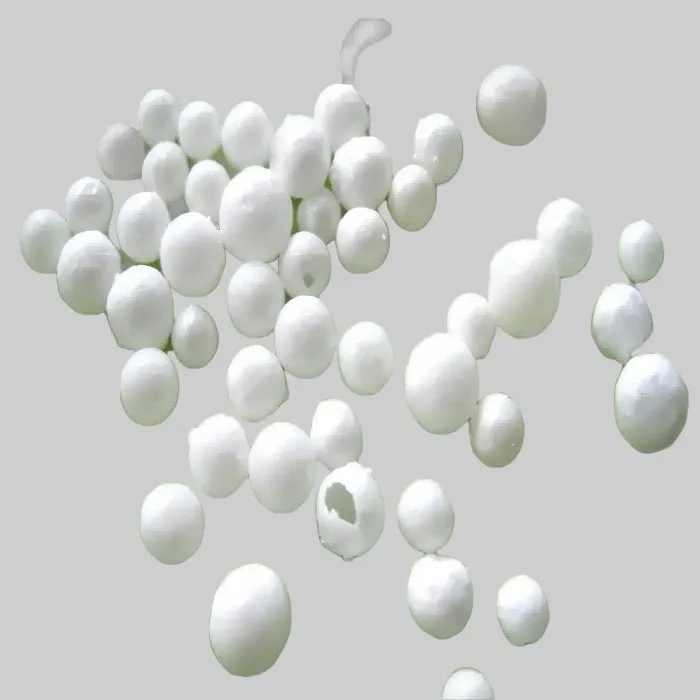
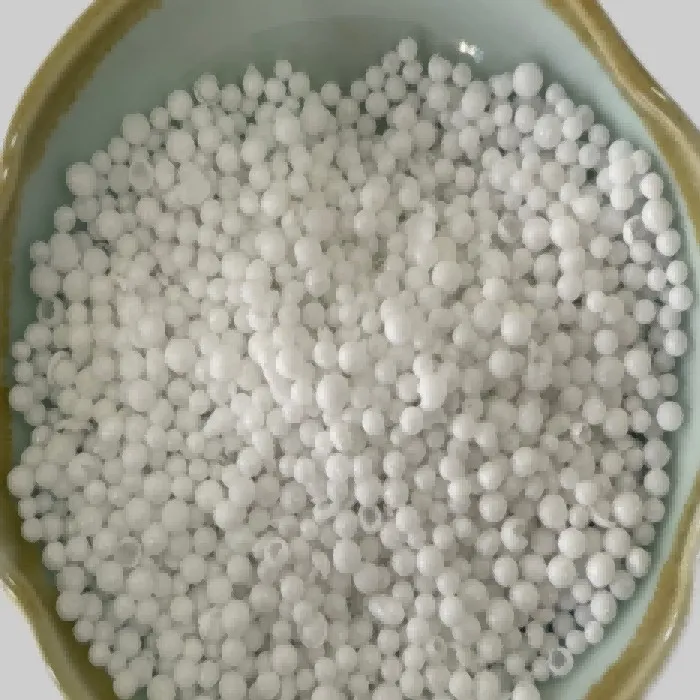
Bubble alumina can be used in some high - performance fertilizers. Its unique porous structure can improve soil aeration and water - holding capacity. It can also act as a carrier for nutrients, slowly releasing them over time. This helps to ensure a steady supply of nutrients to plants, reducing the risk of nutrient leaching.
Synthetic Cordierite
Synthetic cordierite has excellent thermal and chemical stability. In fertilizers, it can be used to improve the physical properties of granular fertilizers. It helps to prevent caking and ensures uniform distribution of nutrients in the soil.
Importance of Quality Raw Materials
As a raw material supplier, I understand the critical importance of providing high - quality materials for fertilizer production. The quality of raw materials directly affects the quality and effectiveness of fertilizers.
High - purity nitrogen, phosphorus, and potassium sources ensure that plants receive the right amount of nutrients without being contaminated by impurities. For secondary nutrients and micronutrients, accurate formulation and proper sourcing are essential to meet the specific requirements of different crops.
Conclusion
The production of fertilizers involves a diverse range of raw materials, each with its own unique role in promoting plant growth. From the major nutrients of nitrogen, phosphorus, and potassium to the secondary and micronutrients, and specialized materials like Bubble Alumina and Synthetic Cordierite, every component plays a crucial part in ensuring healthy and productive crops.
If you are in the fertilizer production business and are looking for reliable and high - quality raw materials, I invite you to contact me for procurement discussions. I am committed to providing you with the best - in - class raw materials to meet your specific needs.
References
- Brady, N. C., & Weil, R. R. (2008). The Nature and Properties of Soils. Pearson Prentice Hall.
- Mengel, K., & Kirkby, E. A. (2001). Principles of Plant Nutrition. Kluwer Academic Publishers.
- Havlin, J. L., Tisdale, S. L., Nelson, W. L., & Beaton, J. D. (1999). Soil Fertility and Fertilizers: An Introduction to Nutrient Management. Prentice Hall.