

As a well block supplier, I often get asked about the density of well blocks. Density is a crucial property in the world of refractories, and well blocks are no exception. In this blog post, I'll delve into what the density of a well block is, why it matters, and how it relates to the performance of these essential refractory components.
Understanding Density
Density is defined as the mass per unit volume of a substance. In the context of well blocks, it refers to how much mass is packed into a given volume of the well block material. Mathematically, density (ρ) is calculated using the formula ρ = m/V, where m is the mass of the well block and V is its volume.
The density of a well block is typically expressed in units such as grams per cubic centimeter (g/cm³) or kilograms per cubic meter (kg/m³). Different types of well blocks can have varying densities depending on their composition, manufacturing process, and intended application.
Factors Affecting the Density of Well Blocks
Material Composition
The materials used to make well blocks play a significant role in determining their density. Well blocks are commonly made from refractory materials such as alumina, magnesia, zirconia, and graphite. Each of these materials has its own characteristic density. For example, alumina has a relatively high density, while graphite has a lower density. The proportion of these materials in the well block formulation will directly impact its overall density.
Manufacturing Process
The way well blocks are manufactured also affects their density. Processes such as pressing, casting, and firing can all influence the packing of the refractory materials and the presence of pores within the well block. High - pressure pressing can result in a more compact well block with higher density, while improper firing conditions may lead to the formation of pores, reducing the density.
Additives and Binders
Additives and binders are often used in the manufacturing of well blocks to improve their mechanical properties and workability. These substances can also affect the density of the well block. Some binders may add mass to the well block, increasing its density, while others may create a more porous structure, reducing the density.
Importance of Well Block Density
Thermal Performance
The density of a well block is closely related to its thermal conductivity. Generally, well blocks with higher density have lower thermal conductivity. This is because the denser the material, the fewer pores it has, and heat transfer through conduction is less efficient. In applications where thermal insulation is important, such as in steelmaking ladles and tundishes, well blocks with appropriate density can help reduce heat loss, improve energy efficiency, and maintain the temperature of the molten metal.
Mechanical Strength
Density also has an impact on the mechanical strength of well blocks. Higher - density well blocks tend to have better mechanical properties, such as higher compressive strength and abrasion resistance. This is because the more compact the material, the better it can withstand the mechanical stresses and wear and tear during use. For example, in the harsh environment of a steelmaking process, well blocks need to be able to withstand the weight of the molten metal, the flow of the metal, and the impact of slag, and a higher - density well block is more likely to meet these requirements.
Chemical Resistance
The density of a well block can affect its chemical resistance. A denser well block has fewer pores, which means there are fewer pathways for corrosive substances such as slag and molten metal to penetrate the material. This can enhance the well block's resistance to chemical attack and increase its service life in aggressive chemical environments.
Density and Other Refractory Components
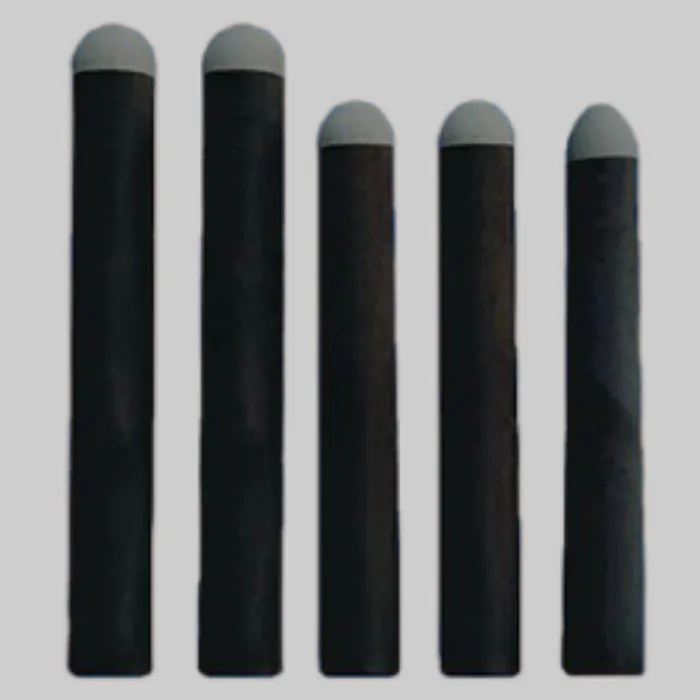
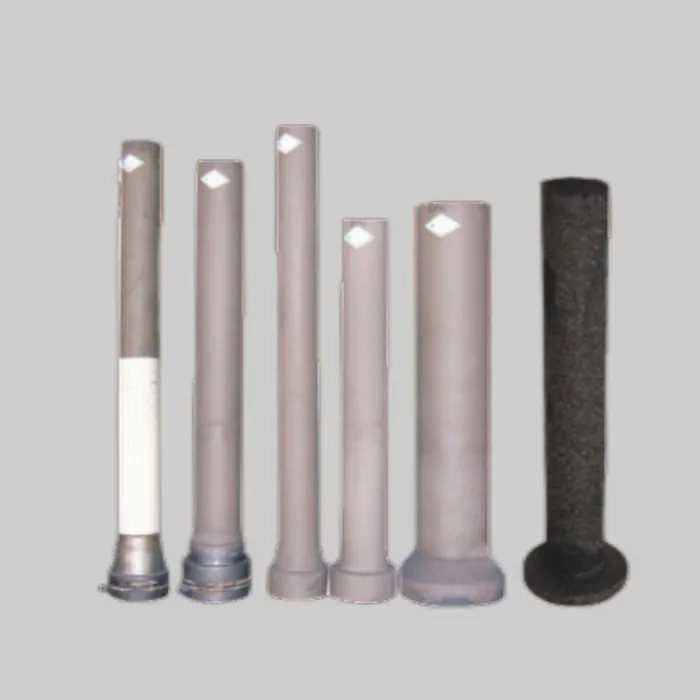
Well blocks are often used in conjunction with other refractory components such as Monolithic Stopper, Tundish Shroud, and Ladle Shroud. The density of these components needs to be carefully considered to ensure compatibility and optimal performance.
For example, if the density of the well block is significantly different from that of the ladle shroud, it may lead to differential thermal expansion and contraction during heating and cooling cycles. This can cause stress at the interface between the two components, potentially leading to cracking and failure. Therefore, when selecting refractory components for a steelmaking or other high - temperature process, it is important to choose materials with compatible densities to ensure a reliable and long - lasting refractory lining.
Measuring the Density of Well Blocks
There are several methods for measuring the density of well blocks. One common method is the Archimedes' principle. In this method, the well block is first weighed in air to determine its mass (m). Then, it is submerged in a liquid of known density (ρl), and the apparent mass (m') is measured. The volume (V) of the well block can be calculated using the formula V=(m - m')/ρl, and the density of the well block (ρ) is then calculated as ρ = m/V.
Another method is the geometric method, which involves measuring the dimensions of the well block (length, width, and height) to calculate its volume (V) and then weighing it to determine its mass (m). The density is then calculated using the formula ρ = m/V. This method is relatively simple but may be less accurate for well blocks with irregular shapes.
Controlling the Density of Well Blocks
As a well block supplier, we have the ability to control the density of well blocks through careful selection of raw materials, optimization of the manufacturing process, and use of appropriate additives.
We can adjust the proportion of different refractory materials in the formulation to achieve the desired density. For example, if a higher - density well block is required, we can increase the proportion of high - density materials such as alumina.
The manufacturing process parameters, such as pressing pressure, firing temperature, and firing time, can also be fine - tuned to control the density. Higher pressing pressures can result in more compact well blocks, while longer firing times at appropriate temperatures can help reduce the porosity and increase the density.
Conclusion
The density of a well block is a critical property that affects its thermal performance, mechanical strength, chemical resistance, and compatibility with other refractory components. As a well block supplier, we understand the importance of density and have the expertise to produce well blocks with the desired density to meet the specific needs of our customers.
If you are in the market for high - quality well blocks or other refractory components such as Monolithic Stopper, Tundish Shroud, and Ladle Shroud, we would be delighted to discuss your requirements and provide you with the best solutions. Contact us to start a procurement discussion and let us help you achieve optimal performance in your high - temperature processes.
References
- "Refractories Handbook", edited by Peter E. Mortimer
- "High - Temperature Materials and Technology", by John F. Shackelford