

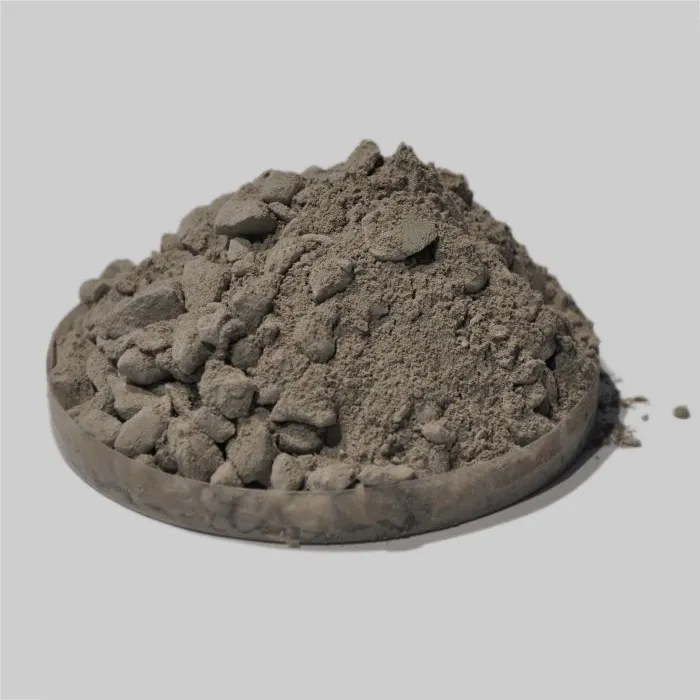
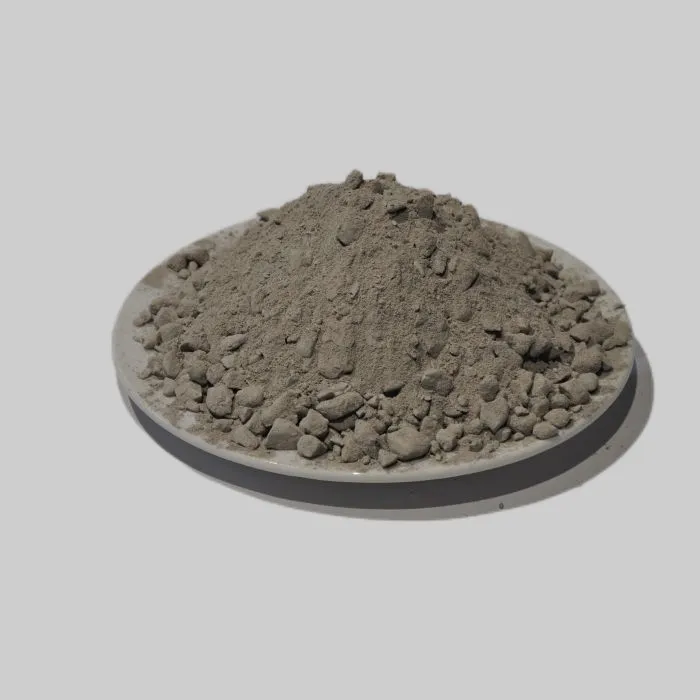
Flowability is a crucial property when it comes to gunning mixes, especially for a supplier like me who understands the importance of providing high - quality products to meet various industrial needs. In this blog, I'll delve into what the flowability of gunning mix is, why it matters, and how it impacts different applications.
Understanding the Concept of Flowability
Flowability refers to the ability of a gunning mix to move and spread easily under the influence of external forces, such as gravity or the pressure exerted during the gunning process. A gunning mix with good flowability will flow smoothly through the gunning equipment, ensuring an even and consistent application on the target surface.
The flowability of a gunning mix is affected by several factors. One of the primary factors is the particle size and shape of the raw materials used in the mix. Finer particles generally have better flow characteristics as they can move more freely among each other. Irregularly shaped particles, on the other hand, may cause more friction and impede the flow. For example, spherical particles tend to have better flowability compared to angular or elongated particles.
The moisture content in the gunning mix also plays a significant role. An appropriate amount of moisture acts as a lubricant, reducing the friction between particles and enhancing the flow. However, too much moisture can make the mix sticky and reduce its flowability, while too little moisture may result in a dry and non - flowing mix.
Another factor is the chemical composition of the gunning mix. Some additives can be included in the mix to improve its flowability. These additives can modify the surface properties of the particles, reduce inter - particle forces, or change the viscosity of the mix. For instance, certain polymers or surfactants can be added to enhance the flow characteristics.
Importance of Flowability in Gunning Mix Applications
In Electric Arc Furnace (EAF) Hot Patching
When it comes to Hot Patching EAF Gunning Mix, flowability is of utmost importance. In an EAF, the lining is exposed to extremely high temperatures and harsh chemical environments. Hot patching is a process used to repair the damaged parts of the furnace lining during operation. A gunning mix with good flowability can quickly and evenly fill the damaged areas, forming a dense and protective layer.
If the flowability is poor, the mix may not reach all the nooks and crannies of the damaged area, leaving gaps and weak spots in the repair. This can lead to premature failure of the patched area, reducing the lifespan of the furnace lining and increasing the frequency of repairs. Moreover, a well - flowing gunning mix can be applied more efficiently, saving time and labor costs during the hot - patching process.
In Ladle Applications
Ladle Gunning Mix is used to line the ladles that transport and hold molten metal. The flowability of the gunning mix in ladle applications is essential for creating a uniform and smooth lining. A ladle with a well - applied lining can better withstand the thermal shock and chemical erosion caused by the molten metal.
A gunning mix with good flowability can be evenly distributed on the ladle walls, ensuring consistent thickness and quality of the lining. This helps to prevent local overheating and erosion, which can lead to ladle leakage and safety hazards. Additionally, easy - flowing gunning mixes can be applied more quickly, minimizing the downtime of the ladle and improving the overall productivity of the steel - making process.
Measuring the Flowability of Gunning Mix
There are several methods to measure the flowability of a gunning mix. One common method is the flow cone test. In this test, a specified amount of the gunning mix is placed in a cone - shaped container with a small opening at the bottom. The time it takes for the mix to flow out of the cone is measured. A shorter flow time indicates better flowability.
Another method is the angle of repose measurement. The gunning mix is poured onto a flat surface to form a pile. The angle between the horizontal surface and the slope of the pile is measured. A smaller angle of repose means that the mix has better flowability as it can spread more easily.
Rheological measurements can also be used to assess the flow behavior of gunning mixes. These measurements involve applying different shear forces to the mix and measuring its response, such as viscosity and shear stress. By analyzing the rheological properties, we can gain a more in - depth understanding of the flow characteristics of the gunning mix under different conditions.
Improving the Flowability of Gunning Mix
As a gunning mix supplier, I'm constantly looking for ways to improve the flowability of our products. One approach is to optimize the particle size distribution of the raw materials. By carefully selecting and blending particles of different sizes, we can create a mix with a more favorable packing structure, reducing inter - particle friction and improving flow.
We also pay close attention to the moisture content during the manufacturing process. We use advanced moisture control systems to ensure that the gunning mix has the right amount of moisture for optimal flow. Additionally, we conduct extensive research on additives. By adding the right type and amount of additives, we can enhance the flowability of the mix without compromising its other important properties, such as refractoriness and chemical resistance.
Conclusion
The flowability of gunning mix is a complex but essential property that has a significant impact on its performance in various industrial applications. Whether it's for hot - patching electric arc furnaces or lining ladles, a gunning mix with good flowability can improve the quality of repairs, increase the lifespan of equipment, and enhance overall productivity.
As a gunning mix supplier, I'm committed to providing products with excellent flowability and other high - performance characteristics. If you're in need of gunning mix for your industrial processes, I encourage you to reach out to me for a detailed discussion about your specific requirements. We can work together to find the best gunning mix solution for your application, ensuring optimal results and long - term cost savings.
References
- Smith, J. (2018). "Refractory Materials and Their Applications in the Steel Industry." Metallurgical Publishing.
- Johnson, A. (2020). "Advances in Gunning Mix Technology." Journal of Industrial Ceramics, Vol. 15, pp. 45 - 56.