

As a seasoned supplier of AZS blocks, I've witnessed firsthand the pivotal role these materials play in various high - temperature industrial applications. Understanding the microstructure of AZS blocks is crucial not only for manufacturers but also for end - users who rely on their exceptional performance. In this blog, I'll delve deep into the intricate world of AZS block microstructures, shedding light on their composition, formation, and significance.
Composition of AZS Blocks
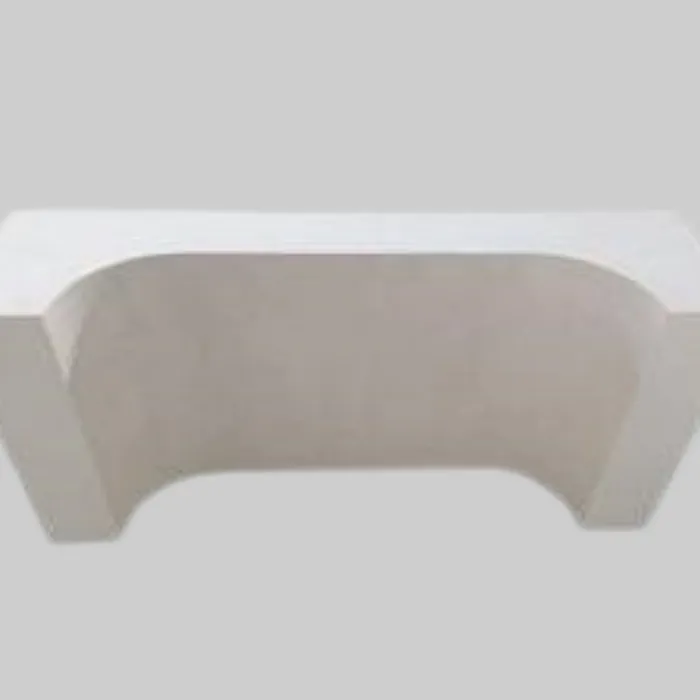
AZS, which stands for Alumina - Zirconia - Silica, is a refractory material known for its outstanding resistance to corrosion, thermal shock, and mechanical stress. The main components of AZS blocks are alumina (Al₂O₃), zirconia (ZrO₂), and silica (SiO₂). These elements combine in different proportions to form a unique microstructure that gives AZS blocks their distinctive properties.
Alumina is a hard and chemically stable oxide that provides the block with high strength and resistance to wear. It exists in different crystal forms, such as corundum (α - Al₂O₃), which is the most stable and has excellent mechanical properties. Zirconia, on the other hand, is known for its high melting point and phase - transformation toughening effect. When zirconia undergoes a phase change from tetragonal to monoclinic at a certain temperature, it can absorb energy and prevent crack propagation, enhancing the block's fracture toughness. Silica acts as a flux during the manufacturing process, helping to lower the melting point and improve the fluidity of the molten mixture.
Microstructure Formation
The microstructure of AZS blocks is formed during the manufacturing process, which typically involves melting the raw materials in an electric arc furnace at high temperatures (around 2000 - 2200°C). Once the materials are fully melted, the molten mixture is poured into a mold and allowed to cool and solidify.
During the cooling process, different phases start to crystallize out of the melt. The first phase to form is usually corundum (alumina), which precipitates as large, angular crystals. As the temperature continues to drop, zirconia starts to crystallize. Zirconia crystals can be either in the form of baddeleyite (monoclinic ZrO₂) or stabilized zirconia (tetragonal or cubic ZrO₂), depending on the cooling rate and the presence of stabilizers.
Silica forms a glassy phase that fills the spaces between the alumina and zirconia crystals. This glassy phase plays an important role in the block's properties. It can act as a binder, holding the crystals together and providing some degree of plasticity. However, it also has a lower melting point compared to the crystalline phases, which can limit the block's performance at extremely high temperatures.
Key Microstructural Features
- Corundum Crystals: The large corundum crystals in AZS blocks are the backbone of their mechanical strength. They are hard and resistant to abrasion, making the blocks suitable for applications where wear resistance is critical, such as in glass - melting furnaces. The size and distribution of corundum crystals can significantly affect the block's properties. Larger crystals generally provide higher strength but may also increase the risk of crack propagation.
- Zirconia Particles: Zirconia particles are dispersed throughout the microstructure, acting as toughening agents. As mentioned earlier, the phase - transformation of zirconia can absorb energy and prevent cracks from growing. The size, shape, and distribution of zirconia particles are important factors in determining the block's fracture toughness. Finely dispersed zirconia particles are more effective in toughening the material.
- Glassy Phase: The glassy phase in AZS blocks has both positive and negative effects. On one hand, it helps to bond the crystalline phases together and provides some flexibility. On the other hand, it can be a weak point at high temperatures, as it may soften or even melt, leading to a decrease in the block's mechanical properties. The composition and viscosity of the glassy phase can be controlled during the manufacturing process to optimize the block's performance.
Significance of Microstructure
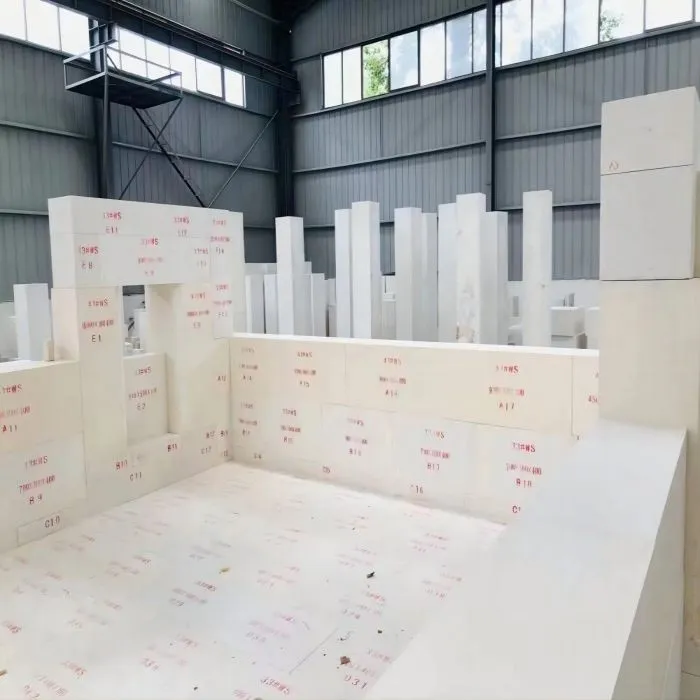
The microstructure of AZS blocks directly influences their performance in various applications. In glass - melting furnaces, for example, the high corrosion resistance of AZS blocks is essential to prevent contamination of the glass melt. The dense and well - structured microstructure of the blocks can resist the attack of molten glass and alkali vapors, ensuring a long service life of the furnace lining.
In addition, the thermal shock resistance of AZS blocks is closely related to their microstructure. The presence of zirconia particles and the appropriate distribution of phases can help to dissipate thermal stress and prevent the formation of cracks during rapid heating and cooling cycles.
Impact of Manufacturing Parameters on Microstructure
Manufacturing parameters such as raw material composition, melting temperature, cooling rate, and heat treatment can have a profound impact on the microstructure of AZS blocks. For instance, changing the ratio of alumina, zirconia, and silica in the raw materials can alter the proportion of different phases in the final product. A higher zirconia content may increase the block's fracture toughness but could also affect its thermal conductivity.
The melting temperature affects the homogeneity of the molten mixture. A higher melting temperature can ensure better mixing of the raw materials, resulting in a more uniform microstructure. The cooling rate is another critical parameter. A slow cooling rate allows for the formation of larger crystals, while a fast cooling rate can lead to a finer - grained microstructure. Heat treatment after solidification can also be used to modify the microstructure, for example, by promoting the transformation of zirconia phases or reducing internal stresses.
Quality Control and Microstructure Analysis
As a supplier, we place great emphasis on quality control to ensure that our AZS blocks meet the highest standards. Microstructure analysis is an important part of our quality control process. We use advanced techniques such as scanning electron microscopy (SEM) and energy - dispersive X - ray spectroscopy (EDX) to examine the microstructure of our products.
SEM allows us to observe the morphology and distribution of different phases at a high magnification. We can measure the size and shape of corundum crystals and zirconia particles, as well as the thickness and continuity of the glassy phase. EDX, on the other hand, helps us to determine the chemical composition of different phases, ensuring that the raw material ratios are within the specified range.
Applications of AZS Blocks Based on Microstructure
The unique microstructure of AZS blocks makes them suitable for a wide range of applications. In addition to glass - melting furnaces, they are also used in steel - making, non - ferrous metal smelting, and chemical industries.
In steel - making, AZS blocks can be used in ladles and tundishes to line the molten steel. Their high corrosion resistance and thermal shock resistance can protect the refractory lining from the aggressive environment of molten steel and slag. In non - ferrous metal smelting, such as aluminum and copper smelting, AZS blocks can withstand the high - temperature and corrosive conditions, ensuring the efficient operation of the smelting process.
Conclusion
In conclusion, the microstructure of AZS blocks is a complex and fascinating topic. It is the result of the interaction between different components during the manufacturing process and has a direct impact on the block's performance. As a supplier, we are committed to understanding and controlling the microstructure of our AZS blocks to provide our customers with high - quality products that meet their specific needs.
If you are interested in learning more about our [Zirconia Corundum Brick](/fire - brick/azs - block/zirconia - corundum - brick.html), [AZS Brick](/fire - brick/azs - block/azs - brick.html), or [Zirconium Corundum Brick](/fire - brick/azs - block/zirconium - corundum - brick.html), or if you have any requirements for AZS blocks in your industrial applications, please feel free to contact us for procurement and further discussions. We look forward to partnering with you to achieve your industrial goals.
References
- "Refractories Handbook" by V. Ramachandran
- "Microstructure and Properties of Refractory Materials" by J. F. MacKenzie
- Research papers on AZS block manufacturing and microstructure analysis from international refractory conferences.