

Continuous casting is a crucial process in the steelmaking industry, where molten steel is solidified into semi-finished products with a consistent cross-section. In this process, Continuous Casting Machine (CCM) refractories play a pivotal role, and their interaction with the continuous casting stopper rod is of great significance. As a leading CCM refractories supplier, we have in - depth knowledge and rich experience in this area.
The Basics of CCM Refractories and Stopper Rods
CCM refractories are materials that can withstand high temperatures and harsh chemical environments during the continuous casting process. They are used to line various components of the continuous casting machine, such as tundishes, ladles, and nozzles. The stopper rod, on the other hand, is a critical component used to control the flow of molten steel from the tundish into the mold. It is typically made of refractory materials and is designed to be moved up and down to open and close the nozzle, thereby regulating the flow rate of the molten steel.
The interaction between CCM refractories and the continuous casting stopper rod starts from the moment the stopper rod is inserted into the nozzle. The refractory materials of the stopper rod and the nozzle must be compatible to ensure smooth operation. For example, they should have similar thermal expansion coefficients to prevent cracking due to thermal stress during the heating and cooling cycles. If the thermal expansion coefficients are significantly different, the stopper rod may get stuck in the nozzle, or cracks may form in the refractory lining, leading to leakage of molten steel.
Physical and Chemical Interactions
Physical Interaction
Physically, the stopper rod needs to fit precisely into the nozzle to control the flow of molten steel accurately. The shape and dimensions of the stopper rod tip and the nozzle opening are carefully designed to ensure a proper seal. Any deviation in the shape or size can result in an improper flow control, such as excessive or insufficient flow of molten steel.
The wear and tear of the stopper rod and the nozzle refractories are also important physical interactions. During the continuous casting process, the stopper rod moves up and down repeatedly, and the molten steel flows through the nozzle at high speed. This causes abrasion on the surfaces of the stopper rod and the nozzle. High - quality CCM refractories are designed to have good abrasion resistance to minimize the wear. For instance, some advanced refractories use special aggregates and binders that can form a hard and dense surface layer, which can effectively resist the scouring of molten steel.
Chemical Interaction
Chemically, the CCM refractories and the stopper rod are exposed to molten steel, which contains various elements such as iron, carbon, silicon, and manganese. These elements can react with the refractory materials under high - temperature conditions. For example, carbon in the molten steel can react with some oxide - based refractories, leading to the formation of carbon monoxide gas and the degradation of the refractory structure.
To prevent such chemical reactions, we develop refractories with good chemical stability. For example, we use refractories with high - purity raw materials and appropriate additives. Some refractories are coated with a protective layer that can act as a barrier between the molten steel and the refractory substrate, reducing the chemical attack.
Impact on Casting Quality
The interaction between CCM refractories and the stopper rod has a direct impact on the quality of the cast products. If the flow of molten steel is not well - controlled due to improper interaction between the stopper rod and the nozzle, it can lead to defects in the cast products. For example, if the flow is too fast, it can cause turbulence in the mold, resulting in surface defects such as slag entrapment and uneven solidification. On the other hand, if the flow is too slow, it can lead to cold shuts and incomplete filling of the mold.
Moreover, the wear and chemical degradation of the refractories can introduce impurities into the molten steel. These impurities can affect the mechanical properties and the surface quality of the cast products. For example, if the refractory lining of the nozzle is eroded, some refractory particles may be carried into the molten steel, causing inclusions in the final product.
Types of CCM Refractories and Their Interaction with Stopper Rods
Monolithic Stopper
A Monolithic Stopper is a type of stopper rod made of a single - piece refractory material. Monolithic stoppers offer several advantages in terms of their interaction with the nozzle. They have a more uniform structure compared to multi - piece stoppers, which means better sealing performance. The monolithic design also reduces the risk of leakage at the joints, as there are no joints in the stopper rod.
The chemical composition of monolithic stoppers is carefully formulated to have good resistance to thermal shock and chemical attack. They are often made of materials such as alumina - graphite, which combines the high - temperature resistance of alumina and the lubricity and thermal shock resistance of graphite. This combination allows the monolithic stopper to interact well with the nozzle refractories, ensuring smooth operation during the continuous casting process.
Tundish Shroud
The Tundish Shroud is another important CCM refractory component that interacts with the stopper rod indirectly. The tundish shroud is used to protect the molten steel flowing from the tundish to the mold from oxidation and contamination. It is installed between the tundish and the mold, and the stopper rod controls the flow of molten steel into the shroud.
The tundish shroud needs to have good thermal insulation properties to maintain the temperature of the molten steel. It also needs to be chemically stable to resist the reaction with the molten steel. A well - designed tundish shroud can work in harmony with the stopper rod to ensure a clean and stable flow of molten steel into the mold.
Subentry Nozzle
The Subentry Nozzle is located at the bottom of the tundish and is directly connected to the stopper rod. It is responsible for guiding the molten steel from the tundish into the mold. The subentry nozzle needs to have a smooth inner surface to ensure a laminar flow of molten steel.
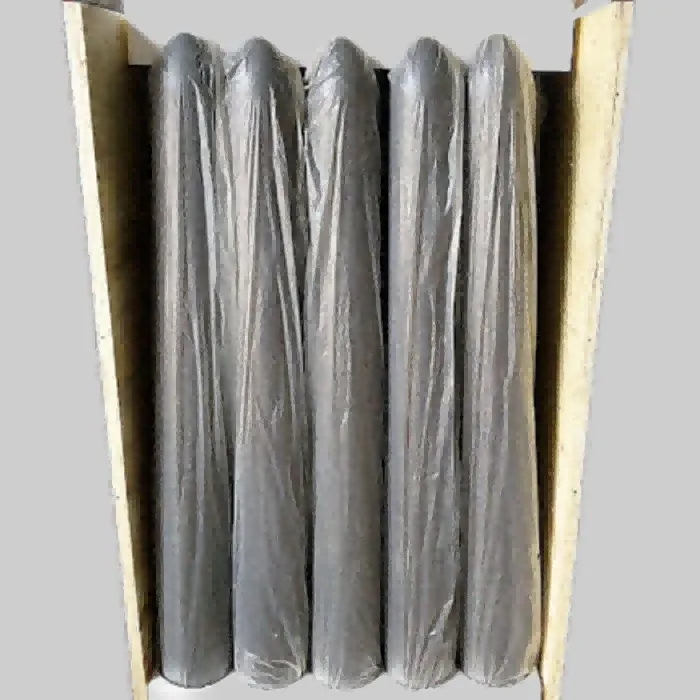
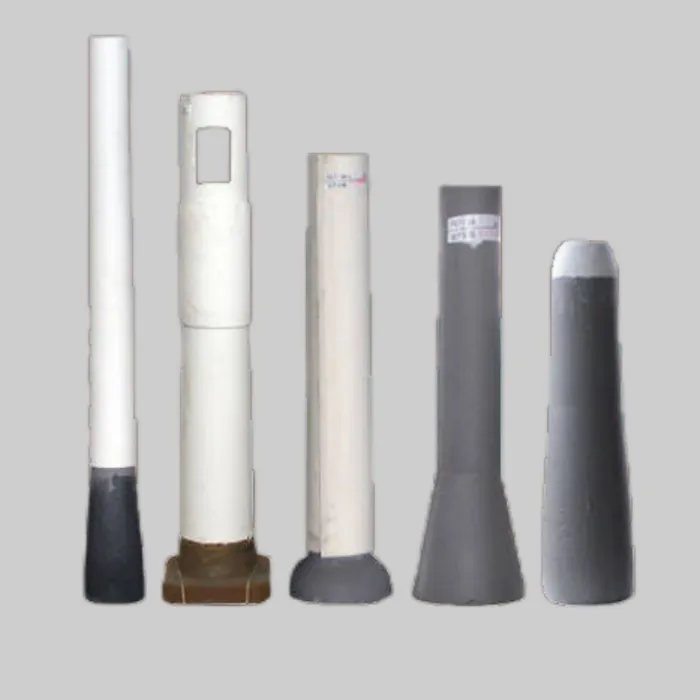
The interaction between the subentry nozzle and the stopper rod is crucial for accurate flow control. The shape and size of the subentry nozzle opening and the stopper rod tip are designed to match each other precisely. Additionally, the refractory material of the subentry nozzle should have good corrosion resistance to withstand the long - term contact with molten steel.
Conclusion
In conclusion, the interaction between CCM refractories and the continuous casting stopper rod is a complex process involving physical and chemical interactions. These interactions have a significant impact on the performance of the continuous casting process and the quality of the cast products. As a CCM refractories supplier, we are committed to developing high - quality refractories that can interact well with the stopper rod and other components of the continuous casting machine.
If you are in the steelmaking industry and are looking for reliable CCM refractories for your continuous casting process, we invite you to contact us for a detailed discussion. Our team of experts can provide you with customized solutions based on your specific requirements. We believe that by choosing our high - performance CCM refractories, you can improve the efficiency and quality of your continuous casting operations.
References
- "Continuous Casting of Steel" by John F. Wallace.
- "Refractories Handbook" edited by P. V. Ramana Rao.
- Research papers on CCM refractories and continuous casting technology from leading metallurgical journals.