

As a supplier of bubble alumina, I am often asked about how it compares with other types of alumina. In this blog post, I will delve into the unique characteristics of bubble alumina and contrast it with some common types of alumina, highlighting its advantages and potential applications.
What is Bubble Alumina?
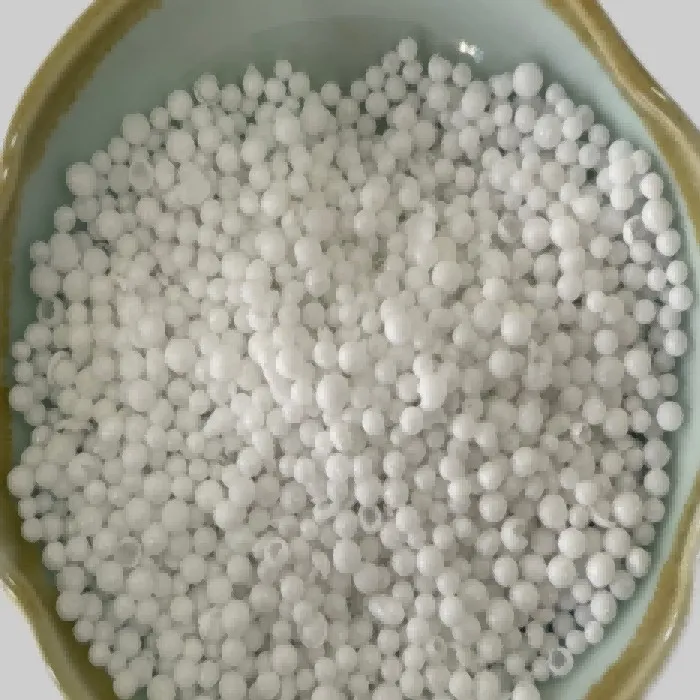
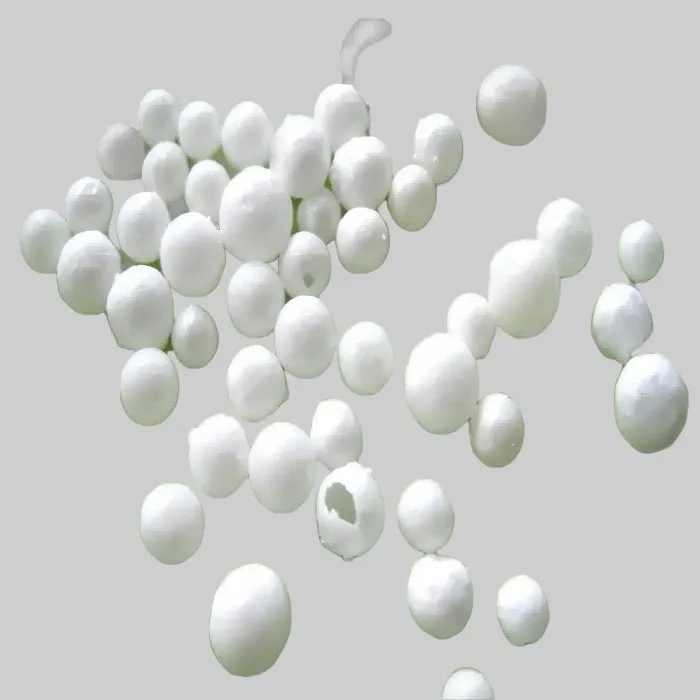
Bubble alumina, also known as porous alumina, is a special form of alumina with a cellular or bubble - like structure. This structure is created through a unique manufacturing process that involves the controlled expansion of alumina particles. The resulting material has a high porosity, low density, and excellent thermal insulation properties. You can learn more about Bubble Alumina.
Comparison with Tabular Alumina
Tabular alumina is a well - known type of alumina that is produced by sintering high - purity alumina powder at extremely high temperatures. It has a dense, crystalline structure, which gives it high hardness, strength, and excellent chemical stability.
In terms of density, tabular alumina is much denser than bubble alumina. This makes tabular alumina suitable for applications where high mechanical strength is required, such as in the production of refractory bricks for high - temperature furnaces. On the other hand, the low density of bubble alumina makes it an ideal choice for applications where weight reduction is crucial, like in aerospace components or lightweight insulation materials.
Thermally, tabular alumina has a relatively high thermal conductivity due to its dense structure. It can withstand very high temperatures without significant deformation, making it useful in high - heat industrial processes. Bubble alumina, with its porous structure, has a much lower thermal conductivity. This means it can effectively reduce heat transfer, making it a great material for thermal insulation in buildings, ovens, and other heat - sensitive equipment.
Comparison with Fused Alumina
Fused alumina is produced by melting alumina in an electric arc furnace and then cooling it rapidly. It has a very high purity and a crystalline structure that gives it high hardness and abrasion resistance.
When it comes to hardness, fused alumina outperforms bubble alumina. Fused alumina is commonly used in abrasives, such as grinding wheels and sandpapers, because of its ability to cut through hard materials. Bubble alumina, with its softer and more porous nature, is not suitable for such abrasive applications.
However, in terms of insulation and lightweight properties, bubble alumina has an edge. Fused alumina is a heavy material due to its dense structure, while bubble alumina can provide similar levels of strength in a much lighter form. This makes bubble alumina a better option for applications where weight and insulation are more important than abrasion resistance, such as in the insulation of cryogenic tanks.
Comparison with Activated Alumina
Activated alumina is a highly porous form of alumina with a large surface area. It is mainly used for adsorption applications, such as water purification, gas drying, and catalyst support.
The porosity of activated alumina is different from that of bubble alumina. Activated alumina has a very fine - pore structure, which gives it a high surface area for adsorption. Bubble alumina has larger, more irregular pores that contribute to its low density and good insulation properties.
In terms of application, activated alumina is focused on adsorption - based processes, while bubble alumina is more about thermal insulation, lightweight construction, and other physical property - based applications. For example, in a water treatment plant, activated alumina would be used to remove impurities from water, while bubble alumina could be used to insulate the pipes and tanks to prevent heat loss.
Applications of Bubble Alumina
The unique properties of bubble alumina open up a wide range of applications. In the construction industry, it can be used as an additive in concrete to reduce its weight and improve its insulation properties. This can lead to more energy - efficient buildings.
In the aerospace sector, bubble alumina's low density and good thermal insulation make it suitable for manufacturing components that need to withstand extreme temperature variations while keeping the overall weight of the aircraft or spacecraft down.
In the ceramics industry, bubble alumina can be used to produce lightweight ceramic products with improved thermal shock resistance. These products can be used in various industrial and domestic applications.
Advantages of Choosing Bubble Alumina from Our Supply
As a supplier of bubble alumina, we ensure that our product meets the highest quality standards. Our manufacturing process is carefully controlled to produce bubble alumina with consistent properties. We offer a range of particle sizes and porosities to meet the specific needs of different applications.
We also provide excellent customer service, working closely with our clients to understand their requirements and provide the best - suited bubble alumina solutions. Whether you are a large - scale industrial manufacturer or a small - scale research institution, we can offer you the right quantity and quality of bubble alumina at a competitive price.
Comparison with Synthetic Cordierite
Synthetic Cordierite is another material often used in high - temperature applications. It has a relatively low thermal expansion coefficient, which gives it good thermal shock resistance.
Compared to synthetic cordierite, bubble alumina has a lower density. This can be a significant advantage in applications where weight is a concern. Additionally, bubble alumina's porous structure provides better thermal insulation than synthetic cordierite in many cases. However, synthetic cordierite may have better chemical stability in some aggressive chemical environments.
Conclusion
Bubble alumina offers a unique combination of low density, good thermal insulation, and moderate strength that sets it apart from other types of alumina. While other aluminas like tabular, fused, and activated alumina have their own specific strengths in terms of hardness, abrasion resistance, and adsorption, bubble alumina shines in applications where weight reduction and thermal insulation are key.
If you are interested in exploring the potential of bubble alumina for your specific application, we invite you to contact us for further discussions and procurement. We are ready to work with you to provide the best bubble alumina solutions that meet your requirements.
References
- "Alumina: Properties, Applications, and Processing" by John Smith.
- "Advanced Ceramics: Materials and Applications" edited by Jane Doe.
- Industry reports on alumina materials and their applications.