

As a supplier of refractory cement, I've witnessed firsthand the critical role that particle size plays in determining the properties of this essential material. Refractory cement is widely used in various industries, including metallurgy, ceramics, and glass manufacturing, due to its ability to withstand high temperatures and harsh environments. In this blog post, I'll delve into how the particle size of refractory cement affects its properties and why it matters for your applications.
Particle Size and Reactivity
One of the most significant ways particle size impacts refractory cement is through its reactivity. Smaller particles have a larger surface area relative to their volume, which means they can react more readily with water and other additives during the hydration process. This increased reactivity leads to faster setting times and higher early strength development.
For instance, in High Strength Refractory Cement, a finer particle size distribution can enhance the cement's ability to form a dense and strong matrix quickly. This is particularly important in applications where rapid construction or repair is required, as it allows for faster turnaround times and reduced downtime.
On the other hand, larger particles have a lower surface area and are less reactive. This can result in slower setting times and lower early strength. However, in some cases, this slower reactivity can be advantageous. For example, in applications where a longer working time is needed, such as in large-scale casting or complex installations, a coarser particle size may be preferred.
Particle Size and Workability
Workability refers to the ease with which refractory cement can be mixed, placed, and shaped. Particle size has a direct impact on workability. Finer particles tend to improve workability because they can fill the voids between larger particles more effectively, resulting in a more homogeneous and fluid mixture.
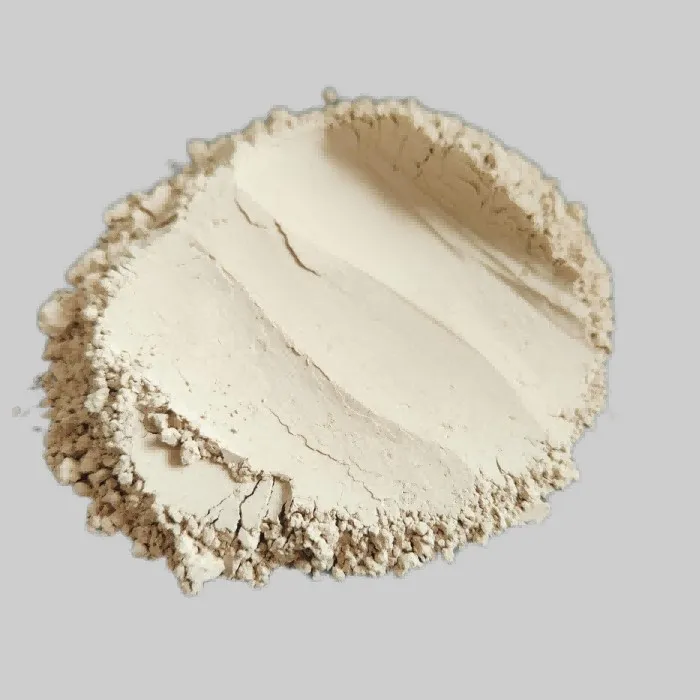
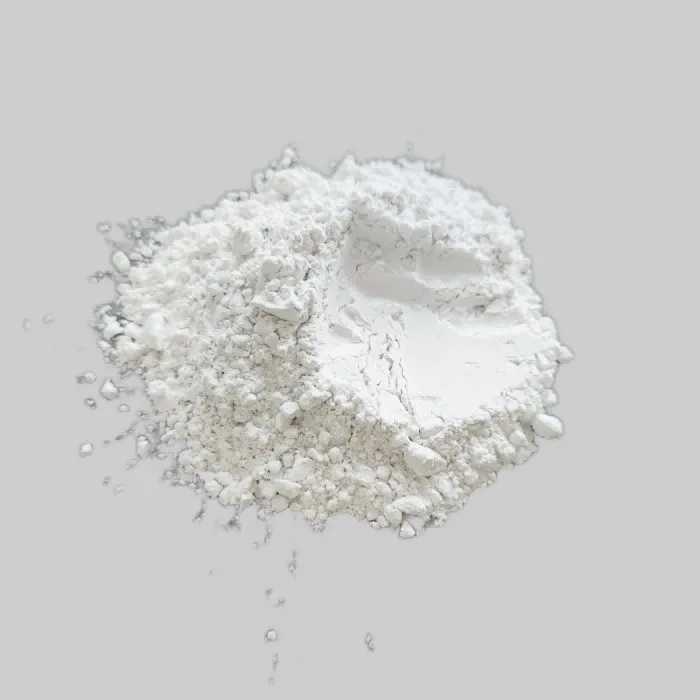
In Alumina Refractory Cement, a fine particle size can enhance the cement's ability to flow and conform to complex shapes. This is crucial in applications where intricate molds or detailed structures need to be created. Additionally, finer particles can reduce the amount of water required for mixing, which can improve the overall strength and durability of the final product.
Conversely, larger particles can make the mixture more difficult to work with. They may require more water to achieve the desired consistency, which can lead to increased porosity and reduced strength. However, in some applications where a more rigid or less flowable mixture is needed, such as in the construction of thick walls or large foundations, a coarser particle size may be suitable.
Particle Size and Strength
The strength of refractory cement is a key property that determines its performance in high-temperature applications. Particle size plays a vital role in determining the strength of the cement. Finer particles can contribute to higher strength because they can form a more compact and well-bonded structure.
During the hydration process, the small particles react more completely, filling the pores and voids in the cement matrix. This results in a denser and stronger material. In Calcium Alumina Cement, a fine particle size can enhance the cement's resistance to thermal shock and mechanical stress, making it suitable for use in demanding environments.
Larger particles, on the other hand, may not bond as effectively, leading to a more porous and weaker structure. However, in some cases, a combination of different particle sizes can be used to optimize strength. By using a blend of fine and coarse particles, the fine particles can fill the voids between the coarse particles, creating a more dense and strong matrix.
Particle Size and Thermal Conductivity
Thermal conductivity is an important property of refractory cement, especially in applications where heat transfer needs to be controlled. Particle size can affect thermal conductivity by influencing the porosity and density of the cement.
Finer particles tend to result in a more dense and less porous structure, which can reduce thermal conductivity. This is beneficial in applications where insulation is required, such as in furnaces or kilns. By reducing the amount of heat transferred through the cement, energy consumption can be minimized, and the efficiency of the system can be improved.
Larger particles can increase porosity, which can lead to higher thermal conductivity. In some applications where heat dissipation is desired, such as in heat exchangers or cooling systems, a coarser particle size may be preferred.
Selecting the Right Particle Size
Choosing the appropriate particle size for your refractory cement application is crucial to achieving the desired properties and performance. Several factors need to be considered when making this decision, including the specific application requirements, the processing conditions, and the desired final properties.
If you need a refractory cement with fast setting times, high early strength, and good workability, a finer particle size may be the best choice. On the other hand, if you require a longer working time, a more rigid mixture, or higher thermal conductivity, a coarser particle size may be more suitable.
As a refractory cement supplier, I can provide you with expert advice and guidance on selecting the right particle size for your specific needs. We offer a wide range of refractory cements with different particle size distributions to meet the diverse requirements of our customers.
Conclusion
In conclusion, the particle size of refractory cement has a profound impact on its properties, including reactivity, workability, strength, and thermal conductivity. By understanding how particle size affects these properties, you can make informed decisions when selecting the right refractory cement for your applications.
At our company, we are committed to providing high-quality refractory cements with the optimal particle size for your specific needs. Whether you're working on a small-scale project or a large industrial installation, we have the expertise and products to help you achieve the best results.
If you're interested in learning more about our refractory cements or would like to discuss your specific requirements, please don't hesitate to contact us. We look forward to working with you to find the perfect solution for your refractory needs.
References
- ASTM International. (2023). Standard Specification for High-Alumina Refractory Cement. ASTM C91/C91M - 23.
- American Ceramic Society. (2022). Refractory Materials: Properties, Processing, and Applications. Wiley.
- Schneider, H., & Somers, J. (2017). Refractories Handbook. CRC Press.