

Hey there! I'm a supplier of subentry nozzles, and today I wanna chat about the corrosion-resistant properties of these little but super important components.
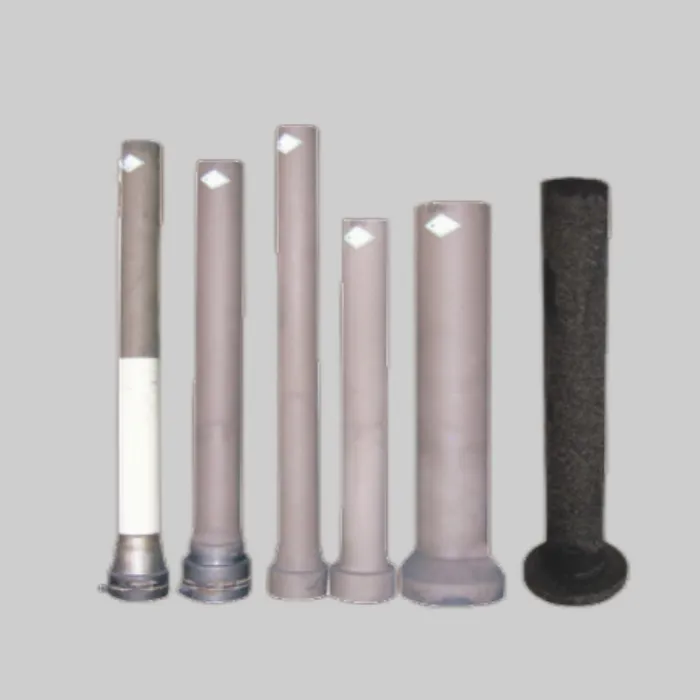
First off, let's understand what a subentry nozzle is. In the world of continuous casting, a subentry nozzle, also known as SEN, plays a crucial role. It's used to guide the molten metal from the tundish into the mold. You can find more detailed info about it on this page: Sub Entry Nozzle.
Now, why are corrosion-resistant properties so important for a subentry nozzle? Well, it's all about the harsh environment it has to work in. The molten metal that flows through the subentry nozzle is extremely hot, often reaching temperatures well over 1000 degrees Celsius. Along with the high temperature, the molten metal can be quite corrosive. If the subentry nozzle isn't corrosion-resistant enough, it can quickly get damaged. This not only shortens the lifespan of the nozzle but can also lead to problems in the casting process, like uneven metal flow or even contamination of the final product.
So, what makes a subentry nozzle corrosion-resistant? There are a few key factors.
Material Selection
The choice of material is fundamental. Most high-quality subentry nozzles are made from refractories. Refractory materials are known for their ability to withstand high temperatures and resist chemical attacks. For example, alumina-graphite composites are commonly used. Alumina has excellent thermal stability and high mechanical strength, while graphite provides good thermal conductivity and lubricity. The combination of these two materials creates a structure that can handle the heat and the corrosive nature of the molten metal.
Another material option is zirconia. Zirconia has high corrosion resistance, especially against certain types of molten metals. It also has good thermal shock resistance, which is important as the subentry nozzle experiences rapid temperature changes during the casting process.
Coating Technology
Applying special coatings on the surface of the subentry nozzle can significantly enhance its corrosion resistance. These coatings act as a barrier between the nozzle material and the molten metal. One common type of coating is a ceramic coating. Ceramic coatings can have a dense structure that prevents the penetration of the molten metal into the nozzle material. They can also be formulated to have specific chemical properties that resist the corrosive elements in the molten metal.
For instance, some ceramic coatings contain elements like chromium or titanium. These elements can react with the corrosive substances in the molten metal to form a protective layer on the surface of the coating. This layer further reduces the corrosion rate of the subentry nozzle.
Design Features
The design of the subentry nozzle also plays a role in its corrosion resistance. A well-designed nozzle can ensure a smooth flow of the molten metal. When the metal flows smoothly, there is less turbulence, which means less abrasion and corrosion on the inner walls of the nozzle.
For example, the shape of the inner bore of the subentry nozzle is carefully engineered. A tapered or streamlined inner bore can help reduce the impact of the molten metal on the nozzle walls. Additionally, some subentry nozzles have features like multiple ports or baffles. These features can help distribute the molten metal evenly, reducing the localized corrosion that might occur if the metal flow is concentrated in one area.
Comparison with Other Related Components
It's interesting to compare the corrosion-resistant properties of subentry nozzles with other components in the continuous casting process, like Monolithic Stopper and Tundish Shroud.
The monolithic stopper is used to control the flow of molten metal from the tundish. It also needs to be corrosion-resistant, but its requirements are a bit different. Since it's mainly in contact with the molten metal at the opening of the tundish, it needs to resist the initial impact and corrosion when the metal starts flowing. The design and material selection of the monolithic stopper are focused on this aspect.
The tundish shroud, on the other hand, is used to protect the molten metal from oxidation as it travels from the tundish to the mold. While it also needs to be corrosion-resistant, its main function is related to preventing the entry of air and other contaminants. So, its corrosion-resistant properties are more about protecting the metal rather than withstanding direct corrosion from the metal itself.
Real - World Performance
In real-world applications, the corrosion-resistant properties of our subentry nozzles have been proven time and time again. We've had customers who were facing issues with short nozzle lifespans and poor casting quality due to corrosion. After switching to our products, they noticed a significant improvement.
The longer lifespan of our subentry nozzles means less frequent replacements. This not only saves on the cost of purchasing new nozzles but also reduces the downtime associated with changing the nozzles during the casting process. The improved casting quality also leads to less waste and higher customer satisfaction.
Conclusion
In conclusion, the corrosion-resistant properties of a subentry nozzle are a result of a combination of material selection, coating technology, and design features. These properties are crucial for the efficient and high-quality operation of the continuous casting process.
If you're in the market for subentry nozzles and are looking for a reliable supplier, I'd love to talk to you. Whether you have questions about the corrosion-resistant properties or need advice on which type of nozzle is best for your specific application, I'm here to help. Let's have a chat and see how we can work together to improve your casting process.
References
- "Refractories in Steelmaking" - A comprehensive book on the use of refractories in the steel industry, which includes detailed information on the properties and applications of subentry nozzles.
- Industry research reports on continuous casting technology, which often contain data and analysis on the performance of different subentry nozzle materials and designs.