

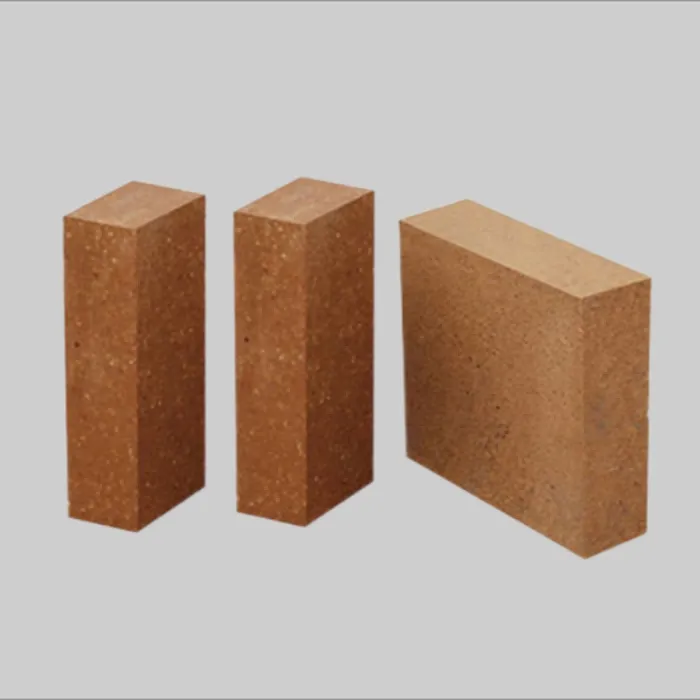
Hey there! As a magnesite brick supplier, I've been in the business for quite some time, and I know how crucial it is to have magnesite bricks with top - notch mechanical properties. In this blog, I'll share some measures you can take to improve the mechanical properties of magnesite bricks.
1. Raw Material Selection
First things first, the quality of raw materials is the foundation for high - performance magnesite bricks. Magnesite is the main raw material for these bricks. We need to pick high - purity magnesite ore. High - purity magnesite has a higher content of magnesium oxide (MgO), which is the key component for the excellent properties of magnesite bricks.
For instance, if the magnesite ore has a high content of impurities like silica (SiO₂), iron oxide (Fe₂O₃), and calcium oxide (CaO), these impurities can form low - melting - point phases during the firing process. These low - melting - point phases can weaken the structure of the bricks at high temperatures, reducing their mechanical strength. So, we always aim for magnesite ore with an MgO content of over 90% or even higher if possible. You can learn more about magnesite bricks from Magnesite Refractory Bricks.
2. Particle Size Distribution
The particle size distribution of the raw materials also plays a big role in the mechanical properties of magnesite bricks. We usually adopt a multi - grade particle size composition. Coarse particles act as the skeleton of the bricks, providing basic strength and stability. Medium - sized particles fill the gaps between the coarse particles, increasing the density of the brick structure. Fine particles can further fill the remaining small pores, making the structure more compact.
A well - designed particle size distribution can improve the packing density of the raw materials. Higher packing density means fewer pores in the final product. Pores are weak points in the bricks as they can act as stress concentrators. When the brick is under stress, cracks are more likely to initiate and propagate from these pores. By optimizing the particle size distribution, we can reduce the porosity of the magnesite bricks, thereby enhancing their mechanical strength. Mgo Brick products often benefit from a carefully controlled particle size distribution.
3. Binder Addition
Adding binders is another effective way to improve the mechanical properties of magnesite bricks, especially during the green (unfired) stage. Binders can hold the raw material particles together, providing initial strength to the bricks before firing. There are different types of binders available, such as organic binders and inorganic binders.
Organic binders like molasses or starch can provide good plasticity and bonding strength at room temperature. They decompose during the firing process, leaving little residue in the final product. Inorganic binders, on the other hand, such as magnesium chloride solution, can form chemical bonds with the magnesite particles. These chemical bonds can enhance the strength of the bricks both in the green state and after firing. However, the amount of binder added needs to be carefully controlled. Too much binder can lead to excessive shrinkage during firing, which may cause cracks in the bricks.
4. Forming Process
The forming process is critical for the mechanical properties of magnesite bricks. There are several forming methods, such as pressing and isostatic pressing. Pressing is a common method where the raw material mixture is placed in a mold and pressed under high pressure. The pressure applied during pressing can compact the raw materials, reducing porosity and increasing the density of the green bricks.
Isostatic pressing is a more advanced forming method. In isostatic pressing, the raw material is placed in a flexible mold and subjected to uniform pressure from all directions. This method can achieve a more uniform density distribution in the bricks compared to traditional pressing. A more uniform density means more consistent mechanical properties throughout the brick. For example, the strength and hardness are more evenly distributed, reducing the risk of local failure under stress.
5. Firing Process
The firing process is like the final "toughening" step for magnesite bricks. During firing, the raw material particles react with each other, forming new mineral phases that give the bricks their final properties. The firing temperature and firing time are two key parameters.
If the firing temperature is too low, the reactions between the particles may not be complete. The bricks will not develop the desired crystal structure and bonding strength, resulting in poor mechanical properties. On the other hand, if the firing temperature is too high, the bricks may over - sinter, leading to excessive shrinkage, deformation, and even the formation of large - sized pores due to the evaporation of some components.
We usually fire magnesite bricks at a temperature range of 1500 - 1800°C, depending on the specific composition of the raw materials. The firing time also needs to be carefully controlled to ensure that the reactions are fully completed. After firing, the magnesite bricks will have a dense and well - crystallized structure, which significantly improves their mechanical strength, hardness, and thermal shock resistance. You can find more details about the properties of fired magnesite bricks on Magnesia Refractory Bricks.
6. Heat Treatment
In some cases, additional heat treatment after firing can further improve the mechanical properties of magnesite bricks. Heat treatment can relieve internal stresses that may have been generated during the firing process. Internal stresses can cause micro - cracks in the bricks, which can reduce their mechanical strength and durability.
By subjecting the fired bricks to a controlled heat treatment process, we can allow the material to relax and adjust its structure. This can close some of the micro - cracks and improve the overall integrity of the bricks. Heat treatment can also enhance the crystal growth and phase transformation in the bricks, leading to better mechanical properties.
7. Surface Treatment
Surface treatment is an often - overlooked but effective way to improve the mechanical properties of magnesite bricks. We can apply a protective coating on the surface of the bricks. The coating can act as a barrier, preventing the penetration of corrosive substances and reducing the wear and tear of the brick surface.
For example, a ceramic coating can increase the hardness of the brick surface, making it more resistant to abrasion. A metal - based coating can improve the oxidation resistance of the bricks in high - temperature and oxidative environments. By protecting the surface of the bricks, we can extend their service life and maintain their mechanical properties for a longer time.
8. Quality Control
Last but not least, strict quality control is essential throughout the production process. We conduct various tests at different stages, such as raw material testing, green brick testing, and final product testing. For raw materials, we test the chemical composition, particle size distribution, and other properties to ensure they meet our requirements.
For green bricks, we check the dimensions, density, and strength to make sure they are within the acceptable range. For final products, we perform comprehensive tests including mechanical strength tests (such as compressive strength, flexural strength), thermal shock resistance tests, and corrosion resistance tests. Only the products that pass all the tests can be released to the market.
In conclusion, improving the mechanical properties of magnesite bricks is a complex process that involves multiple aspects from raw material selection to quality control. By implementing these measures, we can produce magnesite bricks with excellent mechanical properties that can meet the demanding requirements of various industrial applications.
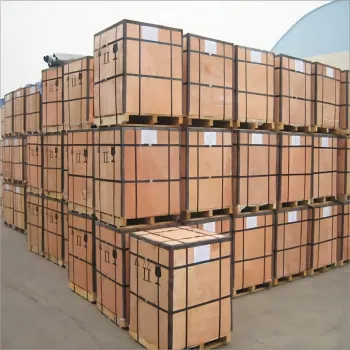
If you're interested in purchasing high - quality magnesite bricks with improved mechanical properties, feel free to contact us for further discussion and negotiation. We're always ready to provide you with the best products and services.
References
- "Refractory Materials Handbook"
- "Advances in Magnesite - Based Refractories Research"