

Radiation resistance is a critical property for sub entry nozzles, especially in the high - temperature and high - energy environments of steelmaking and other metallurgical processes. As a sub entry nozzle supplier, understanding and optimizing these radiation - resistance properties is of utmost importance for ensuring the quality and efficiency of our customers' operations.
The Significance of Radiation Resistance in Sub Entry Nozzles
In the steelmaking process, sub entry nozzles are used to control the flow of molten steel from the ladle to the continuous casting mold. The environment around the sub entry nozzle is extremely harsh, with high - temperature molten steel reaching temperatures of around 1500 - 1600°C. At such high temperatures, thermal radiation is a major mode of heat transfer.
Thermal radiation can cause several problems for sub entry nozzles. Firstly, excessive heat absorption due to radiation can lead to thermal stress within the nozzle material. This thermal stress can cause cracking and spalling of the nozzle, which not only shortens the service life of the nozzle but also poses a risk to the quality of the cast steel. If the nozzle cracks, it can introduce impurities into the molten steel, leading to defects in the final steel product.
Secondly, high - temperature radiation can also cause the nozzle material to degrade over time. The intense heat can change the chemical composition and microstructure of the nozzle material, reducing its mechanical strength and corrosion resistance. This degradation can further accelerate the wear and tear of the nozzle, increasing the frequency of nozzle replacement and thus increasing the overall production cost.
Factors Affecting the Radiation - Resistance Properties of Sub Entry Nozzles
Material Composition
The material composition of sub entry nozzles plays a crucial role in determining their radiation - resistance properties. Most sub entry nozzles are made of refractory materials, such as alumina - graphite, zirconia - graphite, etc. These materials have different thermal and optical properties, which affect their ability to resist radiation.
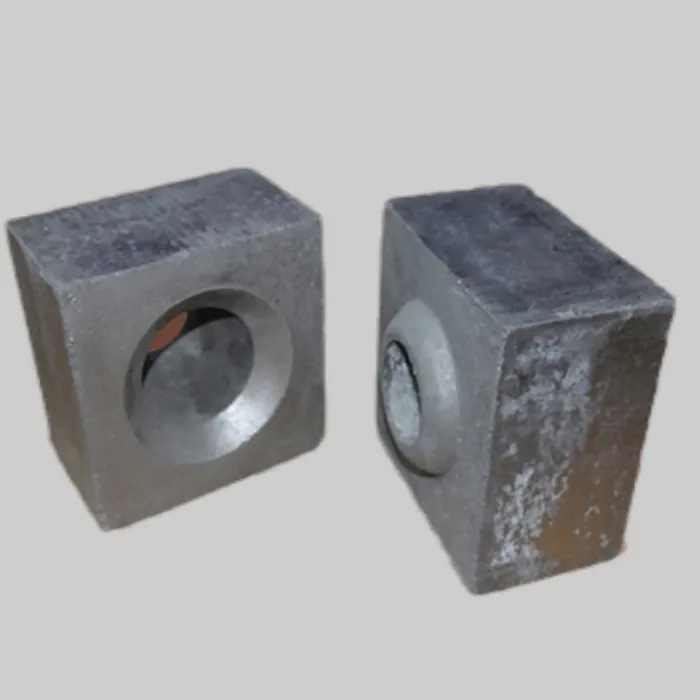
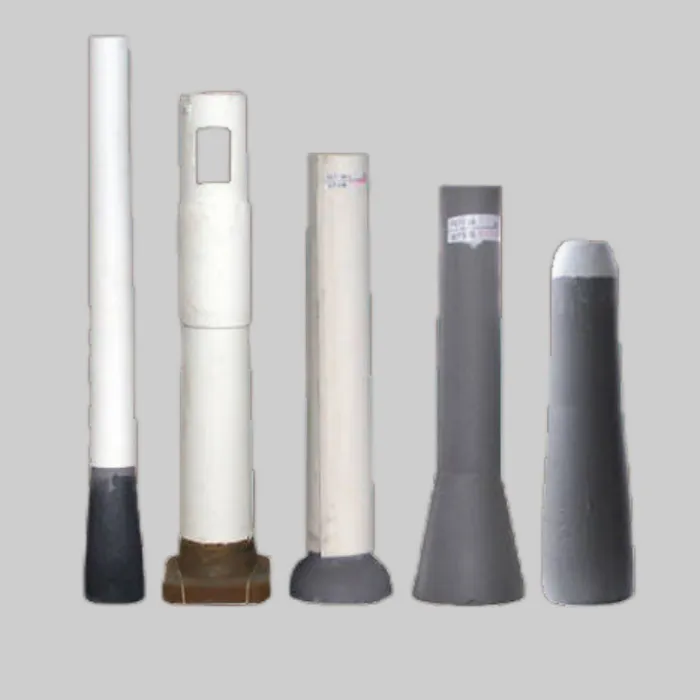
Alumina - graphite materials are widely used in sub entry nozzles due to their good thermal shock resistance and relatively low cost. Alumina has a high melting point and good chemical stability, which can withstand the high - temperature environment. Graphite, on the other hand, has good thermal conductivity, which helps to dissipate heat and reduce the temperature gradient within the nozzle. However, graphite is also prone to oxidation at high temperatures, which can reduce its radiation - resistance properties. To improve the oxidation resistance of alumina - graphite nozzles, various additives, such as antioxidants, are often added to the material.
Zirconia - graphite materials have better radiation - resistance properties compared to alumina - graphite materials. Zirconia has a very high melting point and low thermal conductivity, which can effectively block the transfer of thermal radiation. Graphite in zirconia - graphite nozzles still provides good thermal shock resistance. However, zirconia - graphite materials are more expensive than alumina - graphite materials, which limits their widespread use.
Microstructure
The microstructure of the nozzle material also affects its radiation - resistance properties. A dense and uniform microstructure can reduce the porosity of the material, which in turn reduces the absorption and scattering of thermal radiation. For example, in some advanced sub entry nozzles, fine - grained microstructures are designed to improve the radiation - resistance performance. The fine grains can increase the number of grain boundaries, which can scatter and reflect thermal radiation, reducing the amount of radiation absorbed by the material.
Coating
Applying a coating on the surface of the sub entry nozzle can significantly improve its radiation - resistance properties. Coatings can act as a barrier between the nozzle material and the high - temperature radiation environment. For example, some ceramic coatings have high reflectivity to thermal radiation, which can reflect a large portion of the incoming radiation back into the environment. These coatings can also protect the nozzle material from oxidation and corrosion, further extending the service life of the nozzle.
Measuring and Evaluating the Radiation - Resistance Properties of Sub Entry Nozzles
To ensure the quality of our sub entry nozzles, we use a variety of methods to measure and evaluate their radiation - resistance properties.
Thermal Radiation Testing
Thermal radiation testing is one of the most common methods. In this test, the sub entry nozzle sample is exposed to a high - temperature radiation source, and the temperature change of the sample is monitored over time. By measuring the temperature rise of the sample, we can evaluate its ability to resist thermal radiation. A lower temperature rise indicates better radiation - resistance properties.
Microstructure Analysis
Microstructure analysis, such as scanning electron microscopy (SEM) and X - ray diffraction (XRD), is also used to evaluate the radiation - resistance properties of sub entry nozzles. SEM can provide detailed information about the surface morphology and microstructure of the nozzle material, while XRD can analyze the crystal structure and phase composition of the material. By comparing the microstructure and phase composition of the nozzle material before and after radiation exposure, we can understand how the material degrades under radiation and take corresponding measures to improve its performance.
Applications and Advantages of Our Radiation - Resistant Sub Entry Nozzles
Our radiation - resistant sub entry nozzles have a wide range of applications in the steelmaking industry. They can be used in various continuous casting processes, including slab casting, billet casting, and bloom casting.
The main advantage of our sub entry nozzles is their long service life. Thanks to their excellent radiation - resistance properties, our nozzles can withstand the harsh high - temperature radiation environment for a longer time, reducing the frequency of nozzle replacement. This not only saves the cost of nozzle procurement but also reduces the downtime of the continuous casting machine, improving the overall production efficiency.
In addition, our sub entry nozzles can also improve the quality of the cast steel. By reducing the risk of nozzle cracking and spalling, our nozzles can prevent impurities from entering the molten steel, resulting in fewer defects in the final steel product.
Related Products and Their Compatibility
As a comprehensive refractory product supplier, we also offer other related products, such as Ladle Shroud and Well Blcok. These products work together with our Sub Entry Nozzle to ensure the smooth operation of the steelmaking process.
Ladle shrouds are used to protect the molten steel from oxidation and contamination during the transfer from the ladle to the tundish. They are often made of similar refractory materials as sub entry nozzles and need to have good radiation - resistance properties as well. Our ladle shrouds are designed to be compatible with our sub entry nozzles, ensuring a seamless connection and efficient flow of molten steel.
Well blocks are used to support the sub entry nozzle in the tundish. They need to have good thermal stability and mechanical strength to withstand the weight and thermal stress of the nozzle and the molten steel. Our well blocks are carefully designed to match the size and performance of our sub entry nozzles, providing reliable support and ensuring the proper functioning of the entire system.
Conclusion
Radiation - resistance properties are essential for sub entry nozzles in the steelmaking industry. As a sub entry nozzle supplier, we are committed to developing and producing high - quality nozzles with excellent radiation - resistance properties. Through continuous research and development, we optimize the material composition, microstructure, and coating of our nozzles to improve their performance.
If you are interested in our sub entry nozzles or other related refractory products, we welcome you to contact us for procurement and negotiation. Our professional team will provide you with detailed product information and customized solutions to meet your specific needs.
References
- "Refractories in Steelmaking" by John Doe, published by Steel Industry Press, 20XX.
- "Thermal Radiation and Heat Transfer in High - Temperature Processes" by Jane Smith, Journal of High - Temperature Materials, Vol. XX, No. XX, 20XX.
- "Advances in Refractory Materials for Continuous Casting" by Tom Brown, Proceedings of the International Conference on Refractories, 20XX.