

In the realm of continuous casting in the steelmaking industry, sub entry nozzles play a pivotal role in ensuring the smooth and efficient transfer of molten steel from the tundish to the mold. As a leading supplier of sub entry nozzles, I often encounter inquiries regarding the differences between single - orifice and multi - orifice sub entry nozzles. In this blog, I aim to shed light on these differences, their respective advantages and disadvantages, and the scenarios where each type is most suitable.
Design and Structure
The most obvious difference between single - orifice and multi - orifice sub entry nozzles lies in their design. A single - orifice sub entry nozzle, as the name suggests, has a single opening through which molten steel flows. This design is relatively simple, with a straight - forward channel that directs the steel into the mold. On the other hand, multi - orifice sub entry nozzles feature multiple openings, typically ranging from two to four or more. These orifices are strategically positioned around the nozzle's cross - section to distribute the molten steel more evenly within the mold.
The single - orifice design is characterized by its simplicity and ease of manufacturing. It has a well - defined flow path, which makes it easier to predict the behavior of the molten steel as it enters the mold. This simplicity also translates into lower production costs, as there are fewer components and less complex machining required.
In contrast, the multi - orifice design is more complex. The arrangement of the orifices needs to be carefully engineered to ensure uniform flow distribution. Each orifice must have the right size and orientation to prevent issues such as uneven filling of the mold or excessive turbulence. However, this complexity allows for more precise control over the flow of molten steel, which can lead to better casting quality in certain applications.
Flow Characteristics
The flow characteristics of single - orifice and multi - orifice sub entry nozzles differ significantly. In a single - orifice nozzle, the molten steel forms a single jet as it exits the nozzle. This jet can have a relatively high velocity, which may cause issues such as splashing and excessive turbulence in the mold. The high - velocity jet can also lead to uneven heat transfer and solidification patterns in the steel, potentially resulting in defects in the final product.
Multi - orifice nozzles, on the other hand, distribute the molten steel into multiple smaller jets. This reduces the velocity of each individual jet, resulting in a more gentle and controlled flow into the mold. The multiple jets also help to spread the molten steel more evenly across the width of the mold, promoting more uniform heat transfer and solidification. This can lead to better surface quality and fewer internal defects in the cast product.
The flow pattern in a single - orifice nozzle is more concentrated, which can be beneficial in some cases. For example, when casting thin - walled products, a single, high - velocity jet may be necessary to ensure proper filling of the mold. However, for thicker products or when a more uniform distribution of the molten steel is required, a multi - orifice nozzle is often the better choice.
Casting Quality
The differences in flow characteristics between single - orifice and multi - orifice sub entry nozzles have a direct impact on casting quality. As mentioned earlier, the high - velocity jet from a single - orifice nozzle can cause splashing and turbulence in the mold. This can lead to the entrapment of air and slag particles in the molten steel, which can result in surface defects such as porosity and inclusions.
Multi - orifice nozzles, with their more controlled flow, are better at preventing these issues. The even distribution of the molten steel reduces the likelihood of air and slag entrapment, resulting in a cleaner and more homogeneous cast product. The more uniform heat transfer also helps to minimize thermal stresses during solidification, which can reduce the risk of cracking and other internal defects.
In addition, multi - orifice nozzles can improve the surface finish of the cast product. The gentle flow of the molten steel reduces the formation of surface irregularities, such as ripples and waves, which can occur with a single - orifice nozzle. This is particularly important for products that require a high - quality surface finish, such as automotive components and precision parts.
Application Scenarios
The choice between a single - orifice and multi - orifice sub entry nozzle depends on several factors, including the type of steel being cast, the dimensions of the cast product, and the specific requirements of the casting process.
Single - orifice sub entry nozzles are commonly used in applications where a high - velocity jet is required. For example, in the casting of thin - walled sections, a single - orifice nozzle can provide the necessary momentum to fill the mold quickly and completely. They are also suitable for casting small - diameter products, where the concentrated flow of the single jet can ensure proper filling.
Multi - orifice sub entry nozzles are preferred in applications where a more uniform distribution of the molten steel is needed. They are commonly used in the casting of thick - walled products, such as slabs and blooms. The even distribution of the molten steel helps to prevent uneven solidification and reduces the risk of internal defects. Multi - orifice nozzles are also ideal for casting wide - width products, as they can spread the molten steel more evenly across the mold.
Compatibility with Other Refractory Products
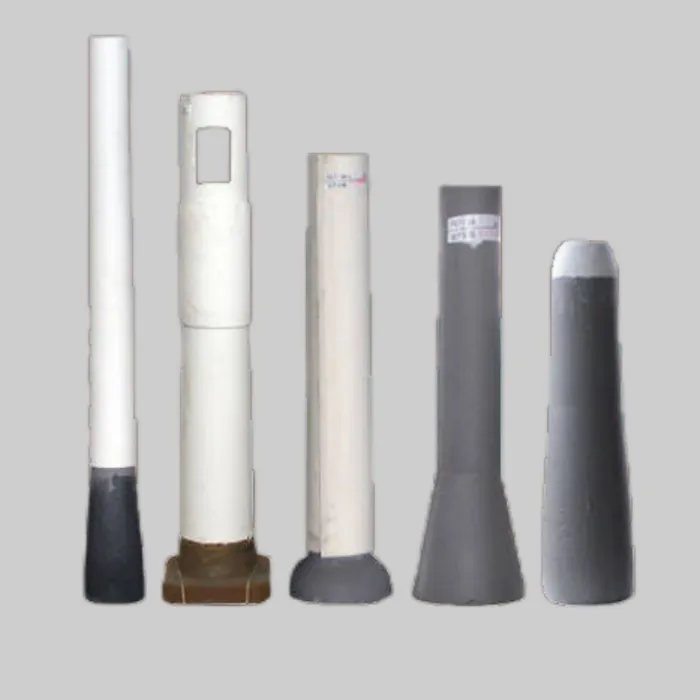
When considering the use of single - orifice or multi - orifice sub entry nozzles, it is important to take into account their compatibility with other refractory products in the casting system. For example, the Subentry Nozzle needs to work in conjunction with the Monolithic Stopper and the Tundish Shroud.
A single - orifice sub entry nozzle may have different flow requirements compared to a multi - orifice nozzle. The monolithic stopper, which controls the flow of molten steel from the tundish to the sub entry nozzle, needs to be properly adjusted to match the flow characteristics of the chosen nozzle. Similarly, the tundish shroud, which protects the molten steel from oxidation and contamination during its transfer from the tundish to the mold, needs to be designed to work effectively with either type of sub entry nozzle.
Cost Considerations
Cost is another important factor when choosing between single - orifice and multi - orifice sub entry nozzles. As mentioned earlier, single - orifice nozzles are generally less expensive to manufacture due to their simpler design. They also tend to have a lower replacement cost, as they are less complex and require less material.
However, the cost of using a particular type of nozzle should not be evaluated in isolation. The improved casting quality achieved with a multi - orifice nozzle can result in fewer rejects and rework, which can offset the higher initial cost. In addition, the longer service life of some multi - orifice nozzles can also lead to cost savings in the long run.
Conclusion
In conclusion, the choice between a single - orifice and multi - orifice sub entry nozzle depends on a variety of factors, including the casting requirements, the desired casting quality, and cost considerations. Single - orifice nozzles offer simplicity and a high - velocity jet, which can be suitable for certain applications. Multi - orifice nozzles, on the other hand, provide more uniform flow distribution and better casting quality, but at a higher cost.
As a supplier of sub entry nozzles, I am committed to providing our customers with the best solutions for their specific needs. Whether you require a single - orifice or multi - orifice nozzle, we have the expertise and experience to help you make the right choice. If you are interested in learning more about our sub entry nozzles or would like to discuss your casting requirements, please feel free to contact us for a detailed consultation. We look forward to working with you to achieve optimal casting results.
References
- Steel Casting Handbook, Second Edition.
- Continuous Casting Technology: Principles and Applications.
- Journal of Iron and Steel Research International, various issues related to continuous casting nozzles.