

What is the flow rate through a refractory nozzle?
As a supplier of refractory nozzles, I often encounter questions from customers regarding the flow rate through these crucial components. Understanding the flow rate is essential for various industrial processes, especially in the steelmaking and foundry industries where refractory nozzles play a vital role in controlling the flow of molten metal.
Refractory nozzles are designed to withstand high temperatures and corrosive environments, ensuring the smooth and controlled transfer of molten materials. The flow rate through a refractory nozzle is influenced by several factors, including the nozzle's design, size, material properties, and the characteristics of the molten fluid.
Factors Affecting Flow Rate
Nozzle Design
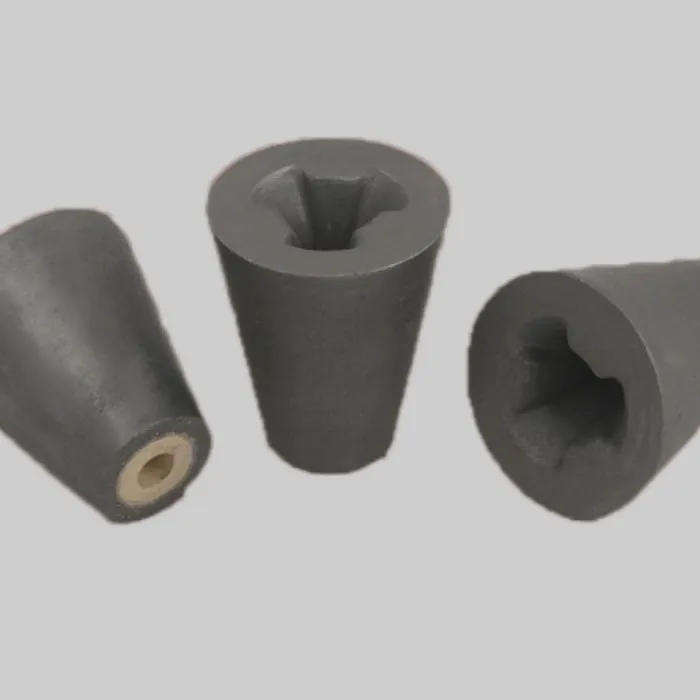
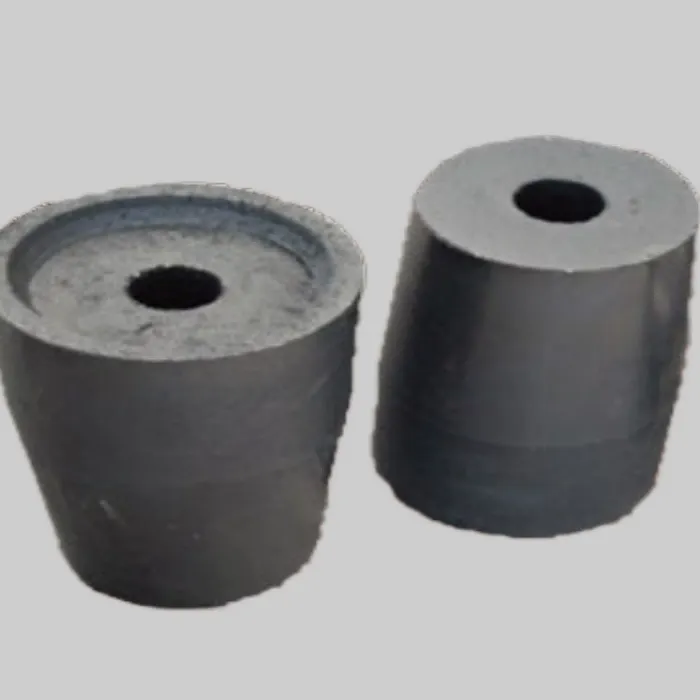
The design of the refractory nozzle has a significant impact on the flow rate. Different types of nozzles, such as Refractory Collector Nozzle, Refractory Ladle Nozzle, and Tundish Nozzle, are engineered to meet specific requirements. For example, a well - designed nozzle will have a smooth internal surface to minimize frictional losses. A nozzle with a proper taper or shape can also enhance the flow of molten metal by reducing turbulence and promoting a more laminar flow.
Nozzle Size
The size of the nozzle, particularly the inner diameter, is a critical factor in determining the flow rate. According to the principles of fluid mechanics, the flow rate is proportional to the cross - sectional area of the nozzle. A larger inner diameter allows for a greater volume of molten material to pass through per unit time. However, increasing the size of the nozzle also needs to be balanced with other factors such as the pressure available to drive the flow and the need to control the flow precisely.
Material Properties
The material of the refractory nozzle can affect the flow rate in several ways. The porosity of the refractory material can influence the adhesion of the molten metal to the nozzle walls. A more porous material may cause some of the molten metal to seep into the pores, reducing the effective cross - sectional area for flow and potentially increasing frictional resistance. Additionally, the thermal conductivity of the refractory material can impact the temperature of the molten metal near the nozzle walls. A high - thermal - conductivity material may cause the molten metal to solidify or cool more rapidly, which can disrupt the flow.
Molten Fluid Characteristics
The properties of the molten fluid itself, such as its viscosity, density, and surface tension, play a crucial role in determining the flow rate. Viscosity is a measure of the fluid's resistance to flow. A more viscous molten metal, like some high - alloy steels, will flow more slowly through the nozzle compared to a less viscous one. The density of the molten metal affects the pressure required to drive the flow, and surface tension can influence the formation of droplets or the behavior of the molten stream at the nozzle exit.
Calculating the Flow Rate
To calculate the flow rate through a refractory nozzle, we can use the Bernoulli's equation and the continuity equation from fluid mechanics. The continuity equation states that the mass flow rate is constant along a streamline. For an incompressible fluid (which is a reasonable approximation for most molten metals under normal conditions), the volumetric flow rate (Q) is given by:
(Q = A\times v)
where (A) is the cross - sectional area of the nozzle and (v) is the average velocity of the fluid.
The average velocity (v) can be estimated using Bernoulli's equation, which relates the pressure, velocity, and elevation of the fluid at different points. In the case of a refractory nozzle, if we assume that the pressure difference (\Delta P) across the nozzle is known, and neglecting elevation changes and frictional losses for a simplified calculation, we have:
(v=\sqrt{\frac{2\Delta P}{\rho}})
where (\rho) is the density of the molten fluid.
However, in real - world applications, frictional losses cannot be ignored. These losses can be accounted for by using a friction factor (f) in the Darcy - Weisbach equation:
(\Delta P = f\frac{L}{D}\frac{\rho v^{2}}{2})
where (L) is the length of the nozzle and (D) is the inner diameter.
Combining these equations and solving for the flow rate requires a more detailed analysis, taking into account the specific conditions of the application, such as the geometry of the nozzle, the properties of the molten metal, and the operating pressure.
Importance of Controlling the Flow Rate
Controlling the flow rate through a refractory nozzle is of utmost importance in industrial processes. In steelmaking, for example, precise control of the flow rate from the ladle to the tundish or from the tundish to the mold is crucial for ensuring the quality of the final product. An improper flow rate can lead to various problems.
If the flow rate is too high, it can cause excessive splashing and turbulence, which may result in the entrapment of air or slag in the molten metal. This can lead to defects in the cast product, such as porosity or inclusions. On the other hand, a flow rate that is too low can cause the molten metal to solidify prematurely in the nozzle, leading to blockages and production delays.
Measuring the Flow Rate
There are several methods to measure the flow rate through a refractory nozzle in real - time. One common method is to use flow meters based on the principle of electromagnetic induction. These flow meters work by measuring the voltage induced by the movement of a conductive fluid (such as molten metal) through a magnetic field. Another method is to use mass flow meters, which measure the mass of the molten material passing through the nozzle per unit time.
In some cases, indirect methods can also be used. For example, by monitoring the level of the molten metal in the ladle or tundish over time, and knowing the volume of the container, the flow rate can be estimated.
Optimizing the Flow Rate
To optimize the flow rate through a refractory nozzle, a comprehensive approach is required. This includes selecting the right nozzle design and size based on the specific application requirements. Regular maintenance of the nozzles is also essential to ensure that the internal surfaces remain smooth and free from any blockages or damage.
In addition, controlling the properties of the molten metal, such as its temperature and composition, can help to maintain a consistent flow rate. For example, pre - heating the molten metal to the appropriate temperature can reduce its viscosity and improve the flow.
As a refractory nozzle supplier, we are committed to providing our customers with high - quality nozzles that are designed to optimize the flow rate. Our team of experts can work closely with customers to understand their specific needs and recommend the most suitable nozzle solutions.
If you are in the market for refractory nozzles and need to ensure an optimal flow rate for your industrial processes, we invite you to contact us for a detailed discussion. We have the expertise and experience to help you select the right nozzles and provide support throughout your operations.
References
- White, F. M. (2011). Fluid Mechanics. McGraw - Hill.
- Incropera, F. P., & DeWitt, D. P. (2002). Fundamentals of Heat and Mass Transfer. Wiley.
- VDI Heat Atlas. Springer.