

Hey there! As a supplier of refractory nozzles, I often get asked about what slag resistance means when it comes to these crucial components. So, let's dive right in and break it down in a way that's easy to understand.
First off, what are refractory nozzles? Well, they're essential parts used in the steel - making and other high - temperature industrial processes. They're designed to withstand extremely high temperatures and harsh chemical environments. You can check out some of our products like the Zirconium Sizing Nozzle, Refractory Collector Nozzle, and Refractory Ladle Nozzle on our website.
Now, let's talk about slag. In the steel - making process, slag is a by - product that forms on top of the molten metal. It's a complex mixture of oxides, sulfides, and other compounds. Slag has some pretty aggressive properties. It can be highly corrosive, and it has a high melting point. When it comes into contact with refractory nozzles, it can cause a lot of damage if the nozzles aren't up to the task.
Slag resistance, then, is basically the ability of a refractory nozzle to resist the corrosive and erosive effects of slag. A nozzle with good slag resistance will last longer in the harsh environment of a steel - making furnace or other high - temperature applications. This is super important because if a nozzle fails due to slag attack, it can lead to all sorts of problems.
One of the main ways slag attacks a refractory nozzle is through chemical reactions. The oxides and other compounds in the slag can react with the materials in the nozzle. For example, if the slag contains a lot of silica, it can react with the alumina in an alumina - based refractory nozzle. This reaction can form new compounds that have different physical and chemical properties than the original materials. These new compounds might have a lower melting point or be more porous, which can weaken the nozzle and make it more prone to further damage.
Another way slag can damage a nozzle is through erosion. As the molten slag flows over the surface of the nozzle, it can wear away the material. This is especially true if the slag has a high velocity or if there are solid particles suspended in it. Over time, this erosion can thin the walls of the nozzle, reducing its structural integrity and eventually leading to failure.
So, how do we make refractory nozzles with good slag resistance? Well, it all starts with the choice of materials. Different materials have different levels of slag resistance. For example, zirconia - based materials are known for their excellent slag resistance. Zirconia has a high melting point and is relatively inert to many of the chemical compounds found in slag. That's why our Zirconium Sizing Nozzle is a great option for applications where slag resistance is a top priority.
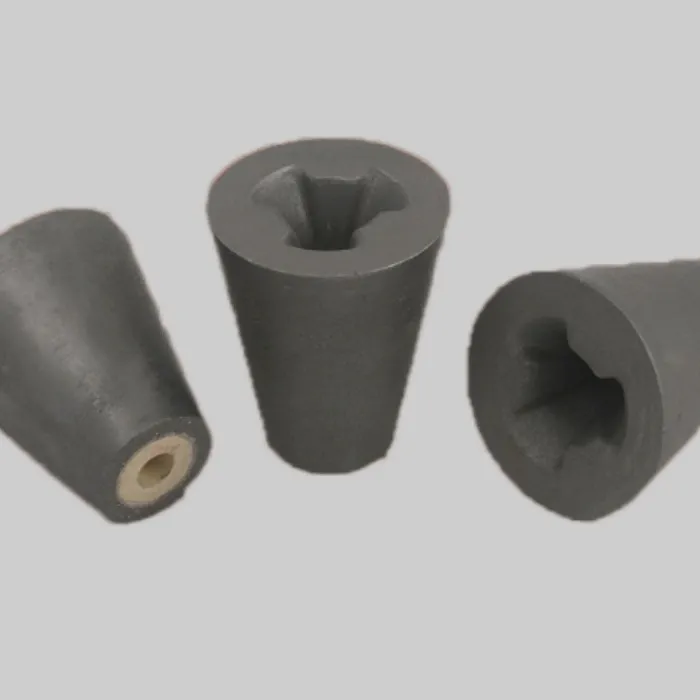
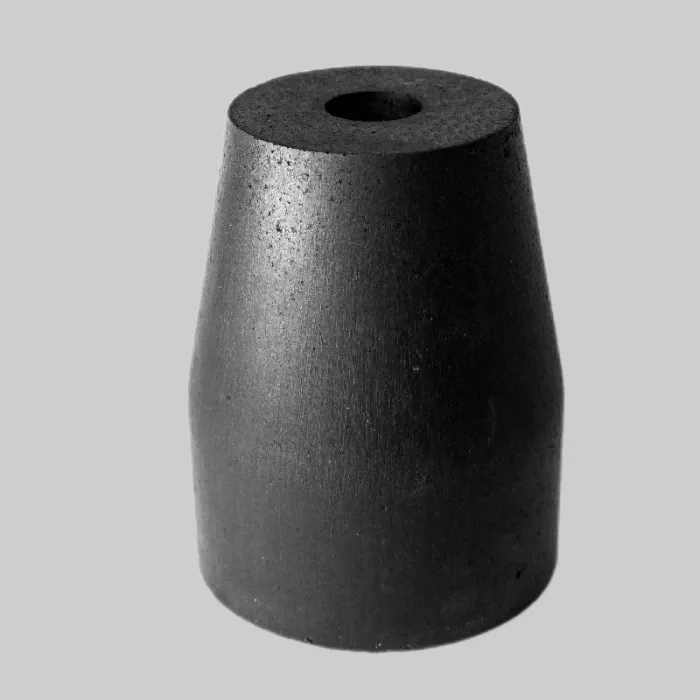
We also use advanced manufacturing techniques to improve the slag resistance of our nozzles. For example, we can use techniques like hot isostatic pressing (HIP) to make the material more dense. A denser material has fewer pores and cracks, which means there are fewer places for the slag to penetrate and cause damage.
In addition to material selection and manufacturing techniques, the design of the nozzle also plays a role in its slag resistance. A well - designed nozzle can direct the flow of molten metal and slag in a way that minimizes contact between the slag and the nozzle surface. For example, some nozzles are designed with special shapes or coatings that help to reduce the erosive effects of the slag.
When it comes to testing the slag resistance of our refractory nozzles, we use a variety of methods. One common method is the crucible test. In this test, a small sample of the refractory material is placed in a crucible and filled with a sample of slag. The crucible is then heated to a high temperature for a certain period of time. After the test, the sample is examined to see how much it has been corroded or eroded by the slag.
We also use more advanced techniques like scanning electron microscopy (SEM) and energy - dispersive X - ray spectroscopy (EDS) to analyze the microstructure and chemical composition of the samples before and after the slag - resistance tests. These techniques allow us to see exactly what's happening at the micro - level when the slag comes into contact with the nozzle material.
The importance of slag resistance can't be overstated. In the steel - making industry, downtime is extremely costly. If a refractory nozzle fails due to poor slag resistance, it means the furnace has to be shut down for repairs. This can cost a lot of money in terms of lost production time, replacement parts, and labor. That's why customers are always looking for nozzles with the best possible slag resistance.
As a supplier, we're constantly working to improve the slag resistance of our products. We're investing in research and development to find new materials and manufacturing techniques that can make our nozzles even more resistant to slag. We're also working closely with our customers to understand their specific needs and applications. By doing this, we can provide them with the best possible solutions for their slag - resistance requirements.
If you're in the market for refractory nozzles and you're concerned about slag resistance, we'd love to talk to you. We have a wide range of products, including the Zirconium Sizing Nozzle, Refractory Collector Nozzle, and Refractory Ladle Nozzle, that are designed to offer excellent slag resistance. Whether you're in the steel - making industry or another high - temperature application, we can help you find the right nozzle for your needs. Just reach out to us, and we'll be happy to discuss your requirements and provide you with a quote.
References
- "Refractories Handbook" by Peter J. F. Harris
- "High - Temperature Materials and Technology" by various authors
- Industry research reports on refractory materials and steel - making processes