

What is the hardness of azs block?
As a dedicated supplier of AZS blocks, I am often asked about the hardness of these remarkable refractory materials. Hardness is a crucial property that significantly influences the performance and suitability of AZS blocks in various industrial applications. In this blog, I will delve into the concept of hardness in AZS blocks, exploring its measurement, factors affecting it, and the implications for different uses.
Understanding Hardness in Materials
Hardness can be defined as a material's resistance to local deformation, typically by indentation, scratching, or abrasion. It is a complex property that is influenced by the material's composition, microstructure, and processing history. There are several methods to measure hardness, each with its own advantages and limitations. The most commonly used hardness tests for refractory materials like AZS blocks include the Mohs scale, the Brinell hardness test, and the Vickers hardness test.
The Mohs scale is a qualitative scale that ranks minerals from 1 (softest) to 10 (hardest) based on their ability to scratch one another. For example, talc has a Mohs hardness of 1, while diamond has a Mohs hardness of 10. Although the Mohs scale is useful for a quick comparison of relative hardness, it is not very precise for measuring the hardness of engineered materials like AZS blocks.
The Brinell hardness test involves pressing a hard ball (usually made of tungsten carbide) into the material under a specified load for a certain period. The diameter of the indentation left on the material's surface is then measured, and the Brinell hardness number (BHN) is calculated based on the load and the indentation diameter. This test is suitable for measuring the hardness of relatively large and homogeneous materials.
The Vickers hardness test, on the other hand, uses a pyramid-shaped indenter to make a small indentation on the material's surface. The diagonal lengths of the indentation are measured, and the Vickers hardness number (HV) is calculated. The Vickers test is more accurate than the Brinell test for measuring the hardness of small and heterogeneous materials, and it can be used on a wider range of materials, including ceramics and metals.
Hardness of AZS Blocks
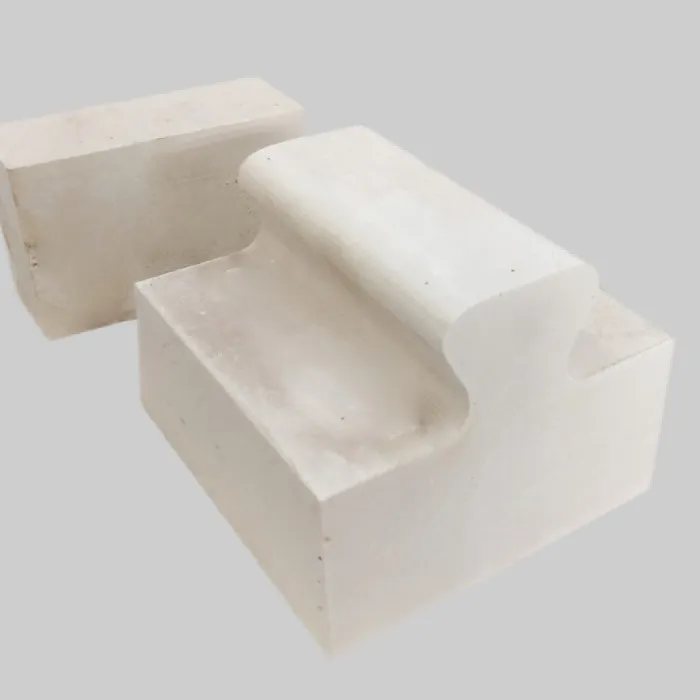
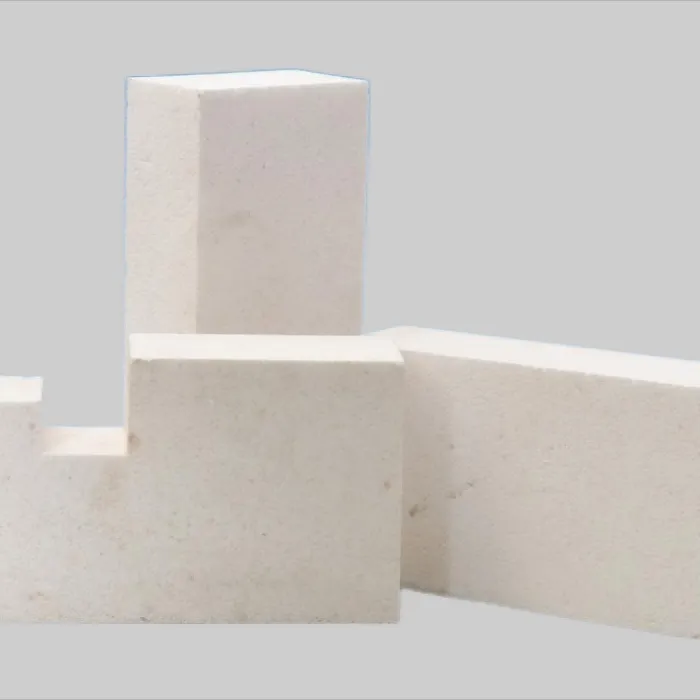
AZS blocks, also known as AZS Brick, are a type of fused - cast refractory material composed of alumina (Al₂O₃), zirconia (ZrO₂), and silica (SiO₂). The hardness of AZS blocks is primarily determined by their chemical composition and microstructure.
The alumina content in AZS blocks plays a significant role in determining their hardness. Alumina is a very hard material with a high melting point, and increasing the alumina content generally leads to an increase in the hardness of the AZS block. Zirconia also contributes to the hardness and wear resistance of the block. It forms a solid solution with alumina and helps to strengthen the microstructure of the material.
The microstructure of AZS blocks is another important factor affecting their hardness. Fused - cast AZS blocks are produced by melting the raw materials in an electric arc furnace and then casting the molten material into a mold. During the cooling process, the material undergoes a series of phase transformations, resulting in a complex microstructure consisting of different phases, such as corundum (Al₂O₃), baddeleyite (ZrO₂), and glassy phase. The distribution and size of these phases can have a significant impact on the hardness of the block. A fine - grained microstructure with a uniform distribution of phases generally results in a harder and more wear - resistant block.
Typically, the Vickers hardness of AZS blocks ranges from about 1000 HV to 1500 HV, depending on their composition and manufacturing process. This relatively high hardness makes AZS blocks highly resistant to abrasion, erosion, and corrosion, which are common problems in many industrial applications.
Implications of Hardness in Different Applications
The high hardness of AZS blocks makes them suitable for a wide range of industrial applications, especially in the glass - making industry. In glass furnaces, AZS blocks are used as lining materials for the melting tank, forehearth, and other critical areas. The hardness of the AZS blocks helps to resist the abrasive action of the molten glass, which contains various chemical components and has a high viscosity. This reduces the wear and tear of the lining materials, extends the service life of the furnace, and improves the quality of the glass product.
In addition to the glass - making industry, AZS blocks are also used in the steel - making, non - ferrous metal - smelting, and cement - manufacturing industries. In these industries, the high hardness of AZS blocks allows them to withstand the harsh operating conditions, such as high temperatures, chemical corrosion, and mechanical stress. For example, in steel - making furnaces, AZS blocks can be used to line the sidewalls and bottom of the furnace to protect them from the erosive action of the molten steel and slag.
Factors Affecting the Hardness of AZS Blocks
Apart from the chemical composition and microstructure, several other factors can affect the hardness of AZS blocks. These include the manufacturing process, heat treatment, and the presence of impurities.
The manufacturing process of AZS blocks can have a significant impact on their hardness. For example, the melting temperature, cooling rate, and casting method can all affect the microstructure and phase composition of the block. A higher melting temperature can result in a more homogeneous distribution of the phases, which can improve the hardness of the block. A slower cooling rate can also promote the growth of larger grains, which may reduce the hardness of the block.
Heat treatment is another important factor that can affect the hardness of AZS blocks. After casting, the blocks are usually subjected to a heat treatment process to relieve internal stresses and improve their mechanical properties. The heat treatment temperature and time can have a significant impact on the hardness of the block. For example, a higher heat treatment temperature can cause the formation of new phases or the transformation of existing phases, which can either increase or decrease the hardness of the block.
The presence of impurities in AZS blocks can also affect their hardness. Impurities can react with the main components of the block and form new phases or modify the existing microstructure, which can have a negative impact on the hardness and other properties of the block. Therefore, it is important to use high - quality raw materials and strict manufacturing processes to minimize the presence of impurities in AZS blocks.
Conclusion
In conclusion, the hardness of AZS blocks is a crucial property that is determined by their chemical composition, microstructure, and manufacturing process. The high hardness of AZS blocks makes them highly resistant to abrasion, erosion, and corrosion, which makes them suitable for a wide range of industrial applications, especially in the glass - making, steel - making, and non - ferrous metal - smelting industries.
If you are looking for high - quality Fused Cast Azs Block or Zirconium Corundum Brick for your industrial application, I encourage you to reach out to us for a detailed discussion. We have a wide range of AZS blocks with different hardness levels and specifications to meet your specific needs. Contact us today to start the procurement negotiation process and find the best solution for your business.
References
- "Refractory Materials Handbook", John Wiley & Sons, Inc.
- "Advanced Ceramics: Materials, Properties, Applications", Springer.
- Research papers on the properties of AZS blocks published in international refractory journals.