

As a supplier of SK34 firebrick, I often encounter various technical inquiries from customers. One question that has come up more frequently recently is about the Poisson's ratio of SK34 firebrick. In this blog post, I'll delve into what the Poisson's ratio is, why it matters for SK34 firebrick, and provide some insights based on industry knowledge and research.
Understanding Poisson's Ratio
Poisson's ratio is a fundamental mechanical property that describes the relationship between lateral strain and axial strain when a material is subjected to an external force. When a material is stretched or compressed along one axis (axial direction), it will also deform in the perpendicular (lateral) directions. Poisson's ratio, denoted by the Greek letter ν (nu), is defined as the negative ratio of the transverse strain (ε_transverse) to the axial strain (ε_axial):
ν = - ε_transverse / ε_axial
The value of Poisson's ratio typically ranges from -1 to 0.5 for most engineering materials. A value of 0.5 indicates a perfectly incompressible material, where the volume remains constant during deformation. A negative Poisson's ratio is rare and is found in some special materials known as auxetic materials, which expand laterally when stretched axially.
Importance of Poisson's Ratio for SK34 Firebrick
SK34 firebrick is a high - quality refractory material commonly used in various industrial applications, such as furnaces, kilns, and heat treatment ovens. The Poisson's ratio of SK34 firebrick plays a crucial role in understanding its mechanical behavior under different loading conditions.
In a furnace or kiln environment, the firebrick is often subjected to thermal expansion and contraction due to temperature changes. The Poisson's ratio affects how the brick will deform laterally as it expands or contracts axially. If the Poisson's ratio is not properly considered, it can lead to internal stresses within the brick structure, which may cause cracking, spalling, or other forms of damage over time.
For example, when the firebrick is heated and expands axially, a high Poisson's ratio means that it will contract more significantly in the lateral directions. This can create high - stress concentrations at the joints between bricks or at the interface with other components in the furnace, potentially leading to premature failure of the refractory lining.
Determining the Poisson's Ratio of SK34 Firebrick
Measuring the Poisson's ratio of SK34 firebrick requires specialized testing equipment and techniques. One common method is to use a uniaxial compression test. In this test, a cylindrical or rectangular specimen of the firebrick is loaded axially in a testing machine, and the axial and lateral strains are measured simultaneously using strain gauges.
The axial strain is calculated as the change in length of the specimen divided by its original length, while the lateral strain is the change in the width or diameter of the specimen divided by its original width or diameter. By taking multiple measurements at different load levels and averaging the results, an accurate value of the Poisson's ratio can be obtained.
It's important to note that the Poisson's ratio of SK34 firebrick can be influenced by several factors, including its chemical composition, porosity, and manufacturing process. For instance, a firebrick with a higher porosity may have a lower Poisson's ratio because the pores can act as voids that allow for more lateral deformation without significant resistance.
Typical Values of Poisson's Ratio for SK34 Firebrick
Based on industry research and testing data, the Poisson's ratio of SK34 firebrick typically ranges from 0.15 to 0.25. This relatively low value indicates that the firebrick is relatively stiff in the lateral direction compared to some other materials. The specific value within this range can vary depending on the exact formulation and manufacturing conditions of the firebrick.
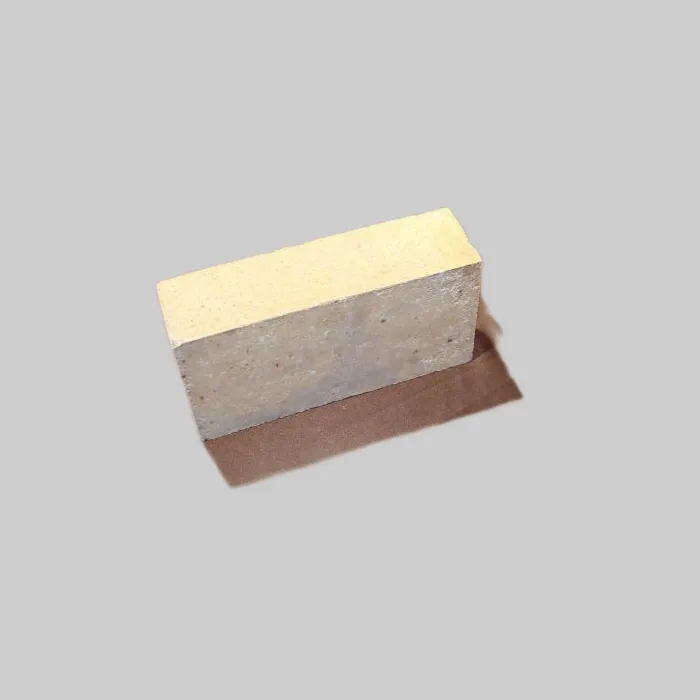
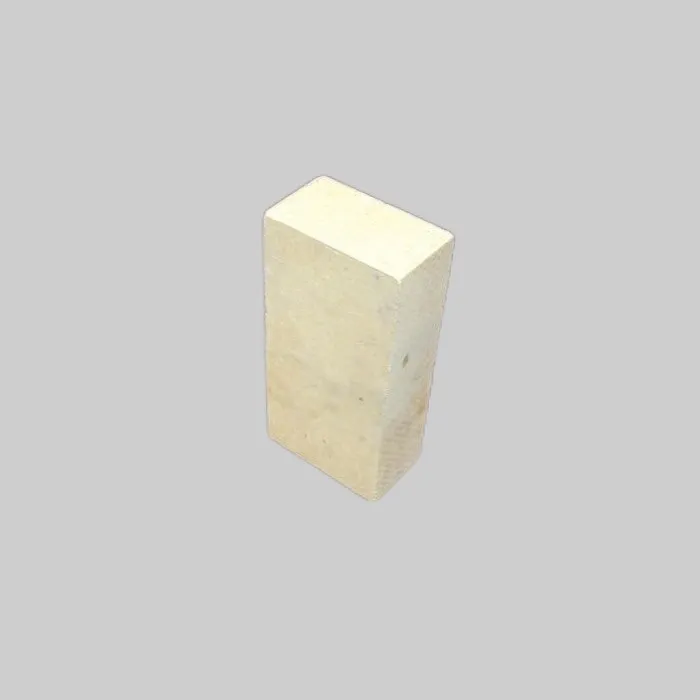
When designing a refractory lining using SK34 firebrick, engineers and designers need to take this Poisson's ratio into account to ensure that the structure can withstand the expected thermal and mechanical loads. They may use computer - aided engineering (CAE) software to simulate the behavior of the firebrick under different conditions, incorporating the Poisson's ratio along with other material properties such as thermal conductivity, coefficient of thermal expansion, and compressive strength.
Applications of SK34 Firebrick and Poisson's Ratio Considerations
- Furnaces: In industrial furnaces, the Poisson's ratio of SK34 firebrick affects the overall stability of the refractory lining. The lining needs to accommodate thermal expansion and contraction cycles without excessive stress buildup. By considering the Poisson's ratio, designers can optimize the brick layout and joint design to minimize the risk of damage. High Alumina Silica Brick is another type of refractory material that can be used in conjunction with SK34 firebrick in some furnace applications, and similar Poisson's ratio considerations apply.
- Kilns: Kilns used in the ceramics and cement industries also rely on SK34 firebrick for their high - temperature resistance. The Poisson's ratio influences how the firebrick will perform during the firing process, where rapid temperature changes can cause significant thermal stresses. Proper understanding of the Poisson's ratio helps in selecting the right installation method and expansion joints to ensure the longevity of the kiln lining.
- Heat Treatment Ovens: Fire Brick for Heat Treat Oven like SK34 firebrick are essential for maintaining a stable temperature environment. The Poisson's ratio affects how the brick will interact with the heating elements and the workpiece being treated. By considering the Poisson's ratio, the oven design can be optimized to prevent damage to the firebrick and ensure consistent heat treatment results.
Conclusion
In conclusion, the Poisson's ratio of SK34 firebrick is an important mechanical property that significantly impacts its performance in industrial applications. A typical Poisson's ratio range of 0.15 - 0.25 for SK34 firebrick indicates its unique mechanical behavior under loading and thermal conditions. Understanding and considering this property is crucial for engineers, designers, and operators to ensure the reliability and longevity of refractory linings in furnaces, kilns, and heat treatment ovens.
If you are in need of high - quality SK34 firebrick for your industrial project, or if you have any questions about its Poisson's ratio or other properties, please feel free to contact us. We are a reliable supplier of SK34 firebrick and can provide you with the best solutions tailored to your specific requirements. You can also explore our Fire Bricks 230x114x64mm for different size options.
References
- "Refractory Materials Handbook", Industrial Refractory Association
- "Mechanical Properties of Refractory Ceramics", Journal of Materials Science and Engineering
- Technical reports from refractory material testing laboratories