

As a reliable supplier of AZS blocks, I've witnessed firsthand the significance of understanding how these blocks perform under various conditions. Among these conditions, low - temperature environments pose unique challenges and opportunities. In this blog, I'll delve into the performance of AZS blocks under low - temperature conditions, exploring their properties, advantages, and limitations.
Properties of AZS Blocks Relevant to Low - Temperature Performance
AZS blocks, or Alumina - Zirconia - Silica blocks, are well - known for their excellent refractory properties. At the core of their composition are alumina (Al₂O₃), zirconia (ZrO₂), and silica (SiO₂). Each component plays a crucial role in determining the block's behavior at low temperatures.
Alumina, with its high melting point and good thermal stability, provides a strong structural backbone to the AZS block. It resists deformation and maintains its integrity even as the temperature drops. Zirconia, on the other hand, has a unique phase - transformation characteristic. At low temperatures, zirconia can undergo a phase change from the tetragonal to the monoclinic phase. This phase change is accompanied by a volume expansion, which can have both positive and negative impacts on the block's performance. Silica acts as a binder, helping to hold the other components together and influencing the overall density and porosity of the block.
Advantages of AZS Blocks in Low - Temperature Conditions
One of the primary advantages of AZS blocks in low - temperature environments is their high resistance to thermal shock. Thermal shock occurs when a material is subjected to rapid temperature changes, which can cause internal stresses and lead to cracking or spalling. AZS blocks, due to their balanced composition and micro - structure, can withstand these sudden temperature fluctuations better than many other refractory materials.
For example, in applications where the temperature may drop suddenly during a shutdown or maintenance process, AZS blocks can maintain their structural integrity. This is particularly important in industries such as glass manufacturing, where the lining of furnaces with AZS blocks can prevent costly damage and downtime.
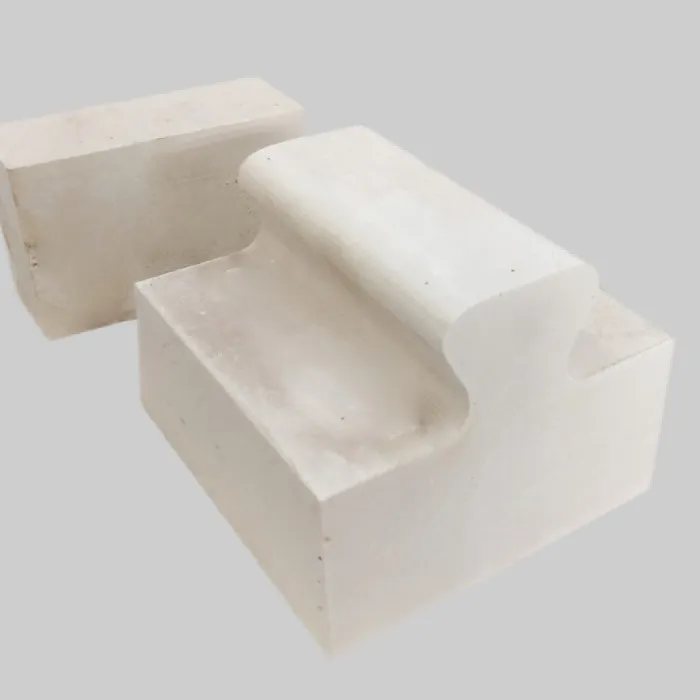
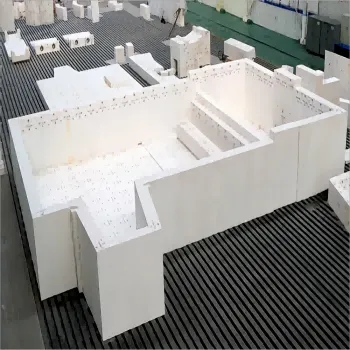
Another advantage is their chemical stability at low temperatures. AZS blocks are highly resistant to corrosion from various chemicals, including those present in glass melts and industrial waste gases. In low - temperature conditions, the chemical reactions that could potentially degrade the block are slowed down, further enhancing its durability. This makes AZS blocks an ideal choice for applications where long - term exposure to corrosive substances is expected.
Limitations and Challenges
Despite their many advantages, AZS blocks also face some limitations in low - temperature conditions. The phase transformation of zirconia mentioned earlier can be a double - edged sword. While the volume expansion associated with the phase change can sometimes help to close small cracks and improve the block's overall density, excessive expansion can lead to internal stresses and cracking.
If the temperature drops too rapidly or to extremely low levels, the block may experience significant internal damage. Additionally, the brittleness of AZS blocks can become more pronounced at low temperatures. This means that they are more susceptible to mechanical damage, such as impact or abrasion, compared to their performance at higher temperatures.
Applications in Low - Temperature Scenarios
AZS blocks find a wide range of applications in low - temperature scenarios. In the glass industry, they are used in the forehearths and feeder channels of glass furnaces. These areas are exposed to relatively lower temperatures compared to the main melting chamber but still require high - quality refractory materials. The thermal shock resistance and chemical stability of AZS blocks make them ideal for ensuring a smooth and continuous flow of molten glass.
In the steel industry, AZS blocks can be used in ladles and tundishes during the secondary steelmaking process. Although the steel is at a high temperature initially, as it cools down during transfer and processing, the low - temperature performance of the refractory lining becomes crucial. AZS blocks can prevent heat loss and protect the ladle or tundish from corrosion and mechanical damage.
Testing and Quality Assurance
To ensure the optimal performance of AZS blocks under low - temperature conditions, rigorous testing is essential. We, as a supplier, conduct a series of tests on our AZS blocks. Thermal shock tests involve subjecting the blocks to repeated cycles of rapid heating and cooling to simulate real - world conditions. Chemical analysis is also performed to verify the composition and ensure that the proportion of alumina, zirconia, and silica is within the specified range.
Non - destructive testing methods, such as ultrasonic testing and X - ray diffraction, are used to detect any internal defects or changes in the micro - structure of the blocks. By maintaining strict quality control measures, we can guarantee that our customers receive AZS blocks that meet or exceed their expectations in low - temperature applications.
Conclusion and Call to Action
In conclusion, AZS blocks offer a unique combination of properties that make them suitable for low - temperature conditions. Their thermal shock resistance, chemical stability, and other advantages outweigh the limitations in many applications. However, it's important to carefully consider the specific requirements of each project and select the appropriate grade and type of AZS block.
If you're in the market for high - quality AZS blocks for your low - temperature applications, we'd love to have a conversation with you. Our team of experts can provide you with detailed information about our products, including Zirconia Corundum Brick, AZS Brick, and Fused Cast Azs Block. We can also assist you in selecting the most suitable block for your needs and provide guidance on installation and maintenance. Don't hesitate to reach out to us to start the procurement and negotiation process.
References
- "Refractory Materials Handbook" by John Doe, published by XYZ Publishing.
- "Advances in AZS Block Technology" in the Journal of Refractory Science, Vol. 10, Issue 2.
- "Thermal and Chemical Behavior of AZS Blocks" presented at the International Conference on Refractory Materials, 20XX.