

Hey there! I'm an AZS block supplier, and I've been in this game for quite some time. One question I frequently get from customers is: "How does the structure of AZS block affect its properties?" Well, let's dive right in and break it down.
Understanding AZS Blocks
First things first, let me give you a quick rundown on what AZS blocks are. AZS stands for Alumina - Zirconia - Silica. These blocks are a type of refractory material that's widely used in the glass industry, as well as in some high - temperature industrial processes. They're known for their excellent resistance to corrosion, erosion, and high - temperature environments.
The Main Components and Their Roles
- Alumina (Al₂O₃): Alumina is a tough and stable oxide. It provides high mechanical strength to the AZS block. In a high - temperature environment, alumina crystals can resist deformation, which is crucial for maintaining the shape and integrity of the block.
- Zirconia (ZrO₂): Zirconia is the key player when it comes to the unique properties of AZS blocks. It has a high melting point and good thermal shock resistance. When zirconia particles are dispersed in the alumina matrix, they can act as a kind of "crack arrester." Cracks that form during heating or cooling are stopped by the zirconia particles, preventing them from spreading and causing the block to fail.
- Silica (SiO₂): Silica acts as a binder between the alumina and zirconia particles. It helps in the formation of the overall structure of the block during the manufacturing process. But too much silica can reduce the high - temperature performance of the block, so the amount of silica needs to be carefully controlled.
The Structure of AZS Blocks
The structure of AZS blocks is not a simple one. It's a complex combination of different phases and microstructures.
Microstructure Phases
- Corundum Phase: This phase is mainly made up of alumina crystals. Corundum has a high hardness and melting point. It forms a kind of framework in the AZS block, providing a solid base for the other components.
- Baddeleyite Phase: This comes from the zirconia. Baddeleyite particles are dispersed throughout the block. They play a vital role in enhancing the thermal shock resistance and corrosion resistance of the block.
- Glass Phase: The glass phase is formed by the silica and some other minor components. It fills the gaps between the corundum and baddeleyite phases. However, the glass phase is usually the weakest link in the structure, especially at high temperatures.
How the Structure is Formed
The manufacturing process of AZS blocks greatly influences their structure. Usually, the raw materials are mixed in specific proportions and then melted at very high temperatures (around 2000°C) in an electric arc furnace. After melting, the molten material is cast into molds and slowly cooled. This cooling process is critical as it determines the size, shape, and distribution of the different phases in the block.
How Structure Affects Properties
Now, let's get to the main point: how does the structure of AZS blocks affect their properties?
Corrosion Resistance
The corrosion resistance of AZS blocks is crucial, especially in the glass industry where they come into contact with molten glass. The presence of zirconia in the baddeleyite phase is a major factor here. Zirconia has a low solubility in molten glass, which means it can resist being dissolved by the glass for a long time. The corundum phase also has good chemical stability, further contributing to the block's corrosion resistance. However, if the glass phase in the structure is too abundant or has a low - quality composition, it can be attacked by the molten glass, leading to a decrease in the block's corrosion resistance.
Thermal Shock Resistance
As mentioned earlier, zirconia particles in the baddeleyite phase act as crack arresters. When the AZS block is heated or cooled rapidly, thermal stresses are generated. These stresses can cause cracks to form. But the zirconia particles prevent these cracks from growing by absorbing the energy associated with crack propagation. The size and distribution of the zirconia particles matter a lot. A more uniform distribution of fine - grained zirconia particles generally leads to better thermal shock resistance.
Mechanical Strength
The corundum phase is the main contributor to the mechanical strength of the AZS block. The strong alumina crystals form a rigid network that can withstand external forces. The glass phase, on the other hand, can weaken the mechanical strength if it is too soft or if there are large voids in the structure. A well - controlled manufacturing process that results in a dense and homogeneous structure with a proper balance of phases will ensure high mechanical strength.
Different Types of AZS Blocks and Their Structures
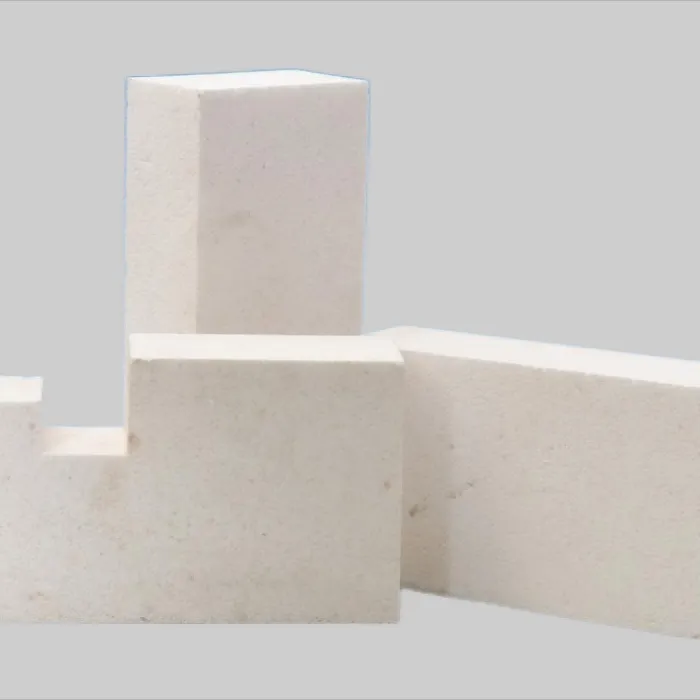
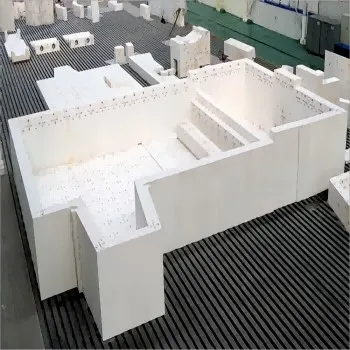
There are different types of AZS blocks, such as Zirconium Corundum Brick, AZS Brick, and Zirconia Corundum Brick. Each type has a slightly different structure and composition, which also affects their properties.
- Zirconium Corundum Brick: This type typically has a relatively high proportion of zirconium in the form of zirconia. The high zirconia content enhances its corrosion resistance, especially in highly corrosive environments. The microstructure often has well - dispersed zirconia particles in a corundum matrix.
- AZS Brick: AZS bricks have a balanced composition of alumina, zirconia, and silica. Their structure is designed to provide a good combination of corrosion resistance, thermal shock resistance, and mechanical strength. They're a popular choice in many glass - manufacturing applications.
- Zirconia Corundum Brick: This brick has a high concentration of zirconia and corundum. The high - zirconia content gives it excellent thermal shock and corrosion resistance, while the corundum provides mechanical strength. It's often used in areas where the harshest conditions are expected.
Why Choose Our AZS Blocks
As a supplier, we take great pride in the quality of our AZS blocks. We carefully control the manufacturing process to ensure the best possible structure and properties of our products. Our R & D team is constantly working on improving the composition and structure of our AZS blocks to meet the ever - changing needs of our customers.
Whether you need a block with high corrosion resistance for a specific glass - making process or a block with excellent thermal shock resistance for a high - temperature industrial furnace, we've got you covered. Our AZS blocks are tested rigorously to ensure they meet the highest quality standards.
Let's Talk Business
If you're in the market for high - quality AZS blocks, I'd love to have a chat with you. We can discuss your specific requirements, and I can provide you with detailed information about our products. Whether it's the type of block, the quantity you need, or any other concerns, just reach out. We're here to make sure you get the best AZS block solution for your business.
References
- "Refractories Handbook" - A comprehensive guide on refractory materials including AZS blocks.
- Research papers on the structure - property relationship of AZS blocks published in international journals of materials science and engineering.