

Hey there! As a fire brick supplier, I've seen firsthand how crucial it is to determine the quality of fire bricks. Whether you're in the business of industrial furnaces, foundries, or simply looking to upgrade your home fireplace, picking the right fire bricks can make a world of difference. In this blog post, I'm gonna walk you through some key factors to consider when evaluating the quality of fire bricks.
1. Material Composition
The first thing you gotta look at is what the fire bricks are made of. Different materials have different properties, which can greatly affect the performance of the bricks.
Silica Firebrick
Silica bricks are made mainly of silica (SiO₂). They are known for their high refractoriness, meaning they can withstand really high temperatures without melting. You can check out Silica Firebrick for more details. These bricks are great for applications where the temperature is extremely high, like in glass melting furnaces. However, they are a bit brittle and can crack under thermal shock, so they might not be the best choice for applications with rapid temperature changes.
High Duty Firebrick
High Duty Firebricks are typically rich in alumina (Al₂O₃). Higher alumina content generally means better strength and resistance to chemical attacks. For more info on these, visit High Duty Firebrick. They are very versatile and can be used in a wide range of applications, from steel making to cement kilns. They offer good thermal stability and can handle a fair amount of mechanical stress.
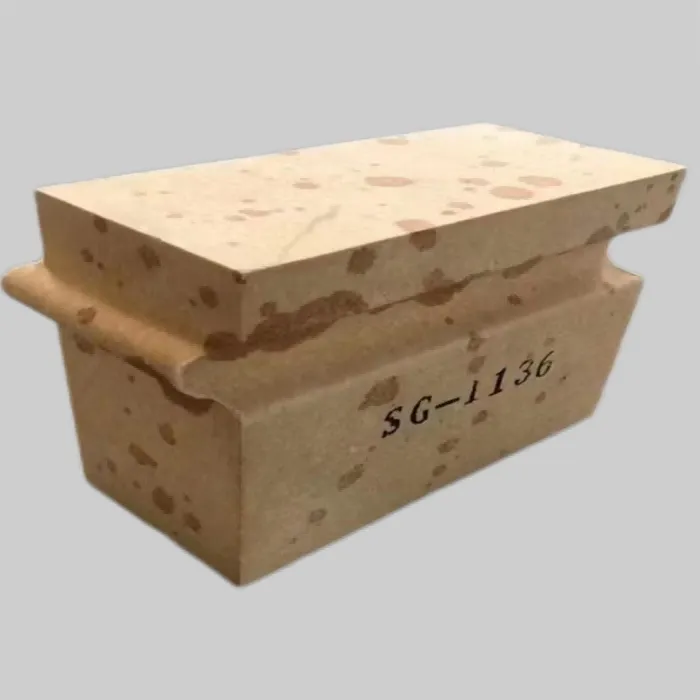
Refractory Anchor Brick
Refractory Anchor Bricks are designed to support and anchor the refractory lining in a furnace. They are made with special compositions to ensure they can hold up under the weight of the lining and the harsh furnace environment. You can find more about these at Refractory Anchor Brick.
2. Refractoriness
Refractoriness is a measure of a fire brick's ability to withstand high temperatures without melting or deforming. It's usually expressed in degrees Celsius. The higher the refractoriness, the better the brick can handle extreme heat.
You can perform a simple test by heating a small sample of the brick in a furnace. Gradually increase the temperature until you notice any signs of melting or significant deformation. Compare the results with the manufacturer's specifications. If the brick fails to reach the advertised refractoriness, it might be of lower quality.
3. Thermal Conductivity
Thermal conductivity is another important factor. It refers to how well a material conducts heat. In the case of fire bricks, you generally want a low thermal conductivity. A brick with low thermal conductivity will help to insulate the furnace, reducing heat loss and saving energy.
To measure thermal conductivity, you can use a thermal conductivity meter. However, this is a bit technical and might not be practical for everyone. As a general rule of thumb, bricks with a denser structure tend to have higher thermal conductivity, while more porous bricks are better insulators.
4. Porosity
Porosity is the amount of empty space or pores within the fire brick. A certain level of porosity can be beneficial as it can improve the brick's insulation properties and reduce its weight. However, too much porosity can make the brick weak and more susceptible to chemical attacks and mechanical damage.
You can visually inspect the brick for large pores or cracks. A high - quality fire brick should have a relatively uniform pore structure. You can also perform a water absorption test. Weigh the dry brick, then soak it in water for a certain period (usually 24 hours). Weigh it again after removing the surface water. The percentage increase in weight indicates the water absorption rate, which is related to the porosity. A lower water absorption rate generally means better quality.
5. Strength
Strength is crucial, especially in applications where the fire bricks are subjected to mechanical stress, such as in a furnace where there might be vibrations or the weight of other materials.
There are two main types of strength to consider: compressive strength and flexural strength. Compressive strength measures the brick's ability to withstand pressure from above, while flexural strength measures its ability to withstand bending forces.
Manufacturers usually provide strength data for their bricks. You can also perform simple tests at home. For example, try applying a gentle force to the edge of the brick. If it chips or breaks easily, it might not be strong enough.
6. Chemical Resistance
Fire bricks are often exposed to various chemicals in industrial processes. Chemical resistance is the ability of the brick to resist corrosion and damage from these chemicals.
The type of chemical resistance required depends on the specific application. For example, in a steel - making furnace, the bricks need to resist the attack of slag, which contains various metal oxides and other compounds. In a chemical plant, they might need to resist the action of acids or alkalis.
You can ask the manufacturer about the chemical resistance properties of the bricks. Some manufacturers may provide test reports showing the performance of their bricks in different chemical environments.
7. Dimensional Accuracy
Dimensional accuracy is important for proper installation of fire bricks. If the bricks are not of the correct size, it can lead to gaps in the furnace lining, which can cause heat loss and reduce the efficiency of the furnace.
Check the dimensions of the bricks against the manufacturer's specifications. Use a measuring tape or caliper to measure the length, width, and height of the bricks. The variation in dimensions should be within an acceptable range.
Conclusion
Determining the quality of fire bricks is a multi - faceted process. By considering factors such as material composition, refractoriness, thermal conductivity, porosity, strength, chemical resistance, and dimensional accuracy, you can make an informed decision and choose the right fire bricks for your needs.
If you're in the market for high - quality fire bricks, don't hesitate to reach out for a consultation. We're here to help you find the perfect solution for your application and ensure that your furnace or fireplace runs efficiently and safely. Get in touch to start the procurement discussion and take your industrial or domestic heating system to the next level!
References
- "Refractories Handbook" edited by a group of industry experts.
- Technical documents from fire brick manufacturers.