

The coefficient of thermal expansion is a crucial property for refractory materials like AZS blocks. As a supplier of high - quality AZS blocks, I'm here to delve into this topic in detail, providing you with comprehensive information that can assist you in making informed decisions for your refractory needs.
Understanding the Coefficient of Thermal Expansion
The coefficient of thermal expansion (CTE) is defined as the fractional change in length or volume of a material per unit change in temperature. For AZS (Alumina - Zirconia - Silica) blocks, it is expressed as the change in dimension (either linear or volumetric) with respect to a change in temperature.
Mathematically, the linear coefficient of thermal expansion ($\alpha$) is given by the formula:
$\alpha=\frac{\Delta L}{L_0\Delta T}$
where $\Delta L$ is the change in length, $L_0$ is the original length, and $\Delta T$ is the change in temperature.
Volumetric coefficient of thermal expansion ($\beta$) is related to the linear coefficient. For isotropic materials, $\beta = 3\alpha$.
Factors Affecting the CTE of AZS Blocks
Chemical Composition
The chemical components of AZS blocks play a significant role in determining their thermal expansion. Alumina ($Al_2O_3$), zirconia ($ZrO_2$), and silica ($SiO_2$) are the main constituents. Alumina generally has a relatively high coefficient of thermal expansion. Zirconia, on the other hand, has a complex behavior. In its monoclinic phase, it has a certain CTE, but when it transforms to the tetragonal phase during heating, there is a significant volume change. Silica has a relatively low CTE compared to alumina. The proportion of these three components in the AZS block will directly affect the overall CTE. For example, an AZS block with a higher alumina content will tend to have a higher CTE.
Microstructure
The microstructure of AZS blocks, including the grain size, porosity, and the distribution of different phases, also impacts the CTE. A well - sintered AZS block with a uniform grain size and low porosity will have a more predictable and consistent CTE. If the grains are large, they may have different thermal expansion characteristics at the grain boundaries, leading to internal stresses during thermal cycling. Porosity can act as a buffer to some extent, reducing the overall apparent CTE as the pores can accommodate some of the volume changes.
Typical Values of the CTE of AZS Blocks
The CTE of AZS blocks can vary depending on their specific type and application. Generally, the linear CTE of AZS blocks in the temperature range of 20 - 1000°C is approximately in the range of $6 - 8\times10^{-6}/°C$. However, this value can deviate based on the factors mentioned above.
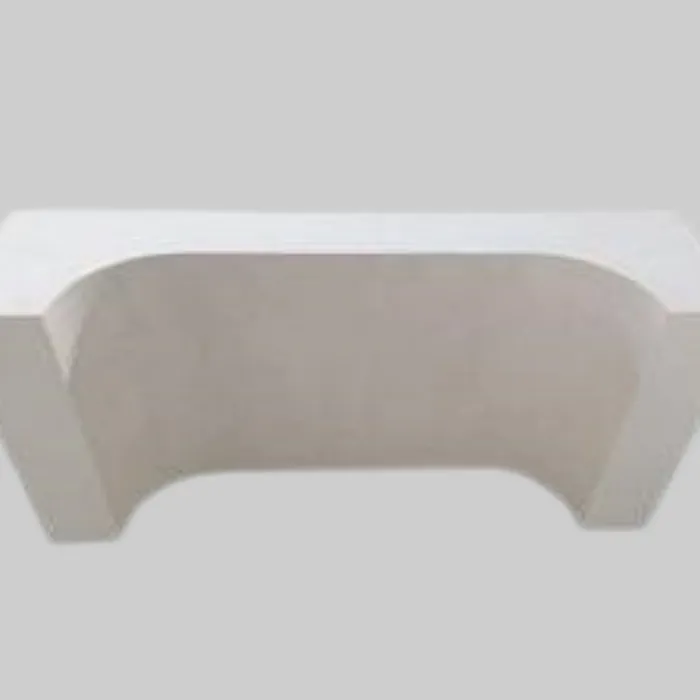
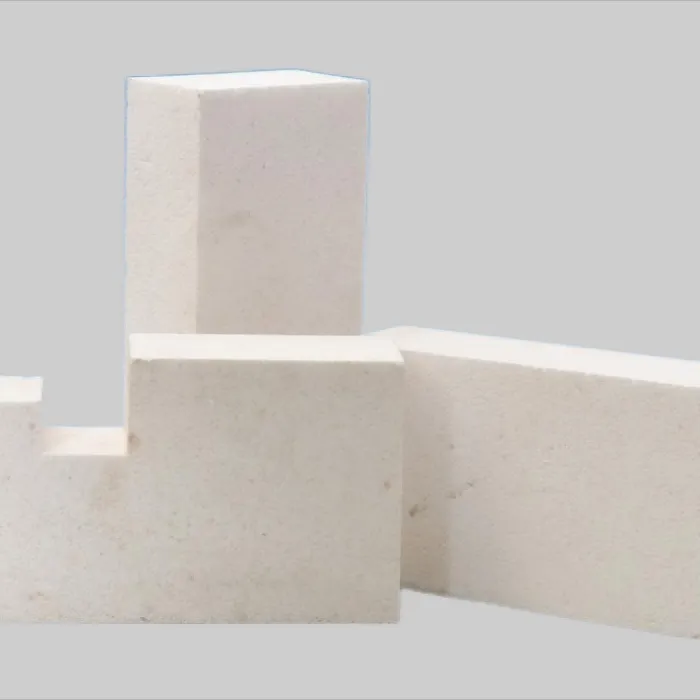
For instance, Zirconia Corundum Brick, which is a type of AZS block, may have a slightly different CTE due to its unique chemical and microstructural properties. Similarly, AZS Brick and Fused Cast Azs Block also have their own characteristic CTE values within the general range.
Importance of CTE in AZS Block Applications
Furnace Linings
In furnace applications, AZS blocks are often used as linings. The CTE is crucial because during the heating and cooling cycles of the furnace, the material will expand and contract. If the CTE of the AZS block is not compatible with the other components in the furnace lining or the furnace structure itself, it can lead to cracking, spalling, and ultimately failure of the lining. For example, if the CTE of the AZS block is much higher than that of the adjacent refractory material, the AZS block will expand more during heating, creating internal stresses that can cause it to crack.
Glass Melting Tanks
In glass melting tanks, AZS blocks are widely used due to their excellent corrosion resistance against molten glass. The thermal cycling in these tanks is extreme, with high - temperature operation followed by cooling for maintenance. A proper CTE ensures that the AZS blocks can withstand these temperature variations without significant damage. If the CTE is too high, the blocks may crack and release particles into the molten glass, affecting the quality of the glass product.
Measuring the CTE of AZS Blocks
There are several methods to measure the CTE of AZS blocks. One common method is the dilatometric method. In this method, a sample of the AZS block is heated at a controlled rate, and the change in its length is measured using a dilatometer. The data obtained from the dilatometer is then used to calculate the CTE according to the formula mentioned earlier.
Another method is the optical method, which uses optical techniques to measure the dimensional changes of the sample during heating. This method is non - contact and can provide accurate measurements, especially for small samples.
Controlling the CTE of AZS Blocks
As a supplier, we have developed various techniques to control the CTE of AZS blocks. One approach is to carefully control the chemical composition during the manufacturing process. By adjusting the ratios of alumina, zirconia, and silica, we can fine - tune the CTE to meet the specific requirements of different applications.
We also pay close attention to the sintering and cooling processes. A well - controlled sintering process can ensure a uniform microstructure, which in turn helps to stabilize the CTE. Slow cooling after sintering can reduce internal stresses and improve the thermal stability of the AZS blocks.
Our Commitment as an AZS Block Supplier
As a leading supplier of AZS blocks, we understand the importance of the CTE in the performance of our products. We conduct rigorous quality control measures to ensure that the CTE of our AZS blocks meets the industry standards and the specific needs of our customers. Our R & D team is constantly working on improving the manufacturing process to optimize the CTE and other properties of our AZS blocks.
If you are in the market for high - quality AZS blocks, we invite you to contact us for a detailed discussion about your requirements. Whether you need Zirconia Corundum Brick, AZS Brick, or Fused Cast Azs Block, we have the expertise and the products to meet your needs. Our team of experts is ready to assist you in selecting the most suitable AZS blocks for your application, taking into account the CTE and other important factors.
Conclusion
The coefficient of thermal expansion is a critical property of AZS blocks that significantly affects their performance in various applications. Understanding the factors that influence the CTE, its measurement, and control methods is essential for both manufacturers and users of AZS blocks. As a reliable AZS block supplier, we are dedicated to providing high - quality products with well - controlled CTE values. If you have any questions or are interested in purchasing our AZS blocks, please do not hesitate to contact us for a procurement discussion.
References
- Schneider, H., & Simatupang, R. (2017). Refractories Handbook. Wiley - VCH.
- Riedel, R. (2015). Oxide Ceramics: Science and Technology. Springer.
- ASTM International. (2019). Standard Test Method for Linear Thermal Expansion of Rigid Solids with a Push - Rod Dilatometer. ASTM E228 - 19.