

Hey there! As a supplier of AZS blocks, I often get asked about the thermal conductivity of these bad boys. So, I thought I'd take a deep dive into this topic and share everything I know with you.
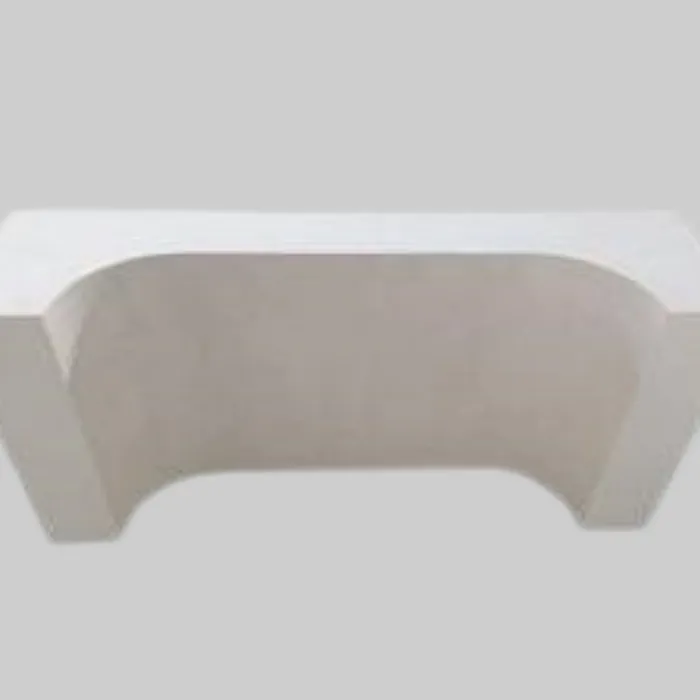
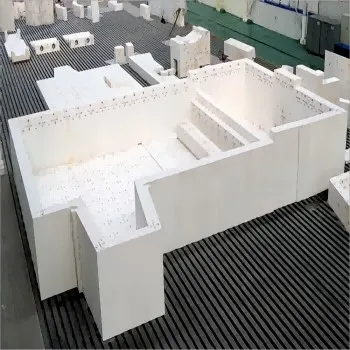
First off, let's talk about what AZS blocks are. AZS stands for Alumina - Zirconia - Silica. These blocks are super important in the refractory industry. They're made through a special process that combines alumina, zirconia, and silica, resulting in a material that's tough as nails and can withstand some seriously high temperatures. You can check out more about Zirconia Corundum Brick, Fused Cast Azs Block, and Zirconium Corundum Brick on our website.
Now, let's get to the main question: what is the thermal conductivity of AZS block? Thermal conductivity is basically a measure of how well a material can conduct heat. In simpler terms, it tells us how fast heat can pass through the AZS block.
The thermal conductivity of AZS blocks can vary depending on a few factors. One of the biggest factors is the composition of the block. Different ratios of alumina, zirconia, and silica can lead to different thermal conductivities. Generally, higher levels of zirconia can increase the thermal insulation properties of the block, which means it'll have a lower thermal conductivity. That's because zirconia is a great insulator.
Another factor that affects thermal conductivity is the density of the AZS block. Denser blocks usually have higher thermal conductivities. This is because the atoms in a denser material are closer together, which makes it easier for heat to transfer through the material via molecular vibrations.
The temperature also plays a huge role. As the temperature goes up, the thermal conductivity of AZS blocks can change. At lower temperatures, the thermal conductivity might be relatively stable. But as the temperature rises, the movement of atoms and molecules within the block increases, which can cause the thermal conductivity to increase as well.
Typically, the thermal conductivity of AZS blocks ranges from about 2 to 4 W/(m·K) at room temperature. But keep in mind, this is just a rough estimate. The actual value can vary based on the specific type of AZS block and the conditions it's under.
So, why does the thermal conductivity of AZS blocks matter? Well, in industries like glass manufacturing, where high temperatures are the norm, having the right thermal conductivity is crucial. If the thermal conductivity is too high, a lot of heat will be lost through the refractory lining made of AZS blocks. This not only wastes energy but can also affect the quality of the glass being produced. On the other hand, if the thermal conductivity is too low, it might be difficult to control the temperature inside the furnace.
As a supplier of AZS blocks, I understand the importance of getting the thermal conductivity right for our customers. That's why we offer a wide range of AZS blocks with different compositions and densities to meet the specific needs of different industries. Whether you're in the glass, steel, or any other high - temperature industry, we've got the perfect AZS block for you.
If you're in the market for AZS blocks and want to learn more about their thermal conductivity or any other properties, don't hesitate to reach out. We're here to help you make the best choice for your business. Whether you're a small - scale operation or a large industrial giant, our team of experts can guide you through the selection process and ensure you get the most suitable AZS blocks for your application.
In conclusion, the thermal conductivity of AZS blocks is a complex but important property. It's influenced by factors like composition, density, and temperature. And as a supplier, we're committed to providing high - quality AZS blocks with the right thermal conductivity for your specific requirements. So, if you're interested in purchasing AZS blocks, let's start a conversation and see how we can work together.
References:
- Industry reports on refractory materials
- Research papers on the properties of AZS blocks