

Hey there! As an AZS block supplier, I often get asked about the wear resistance of AZS blocks. So, I thought I'd take a moment to break it down for you.
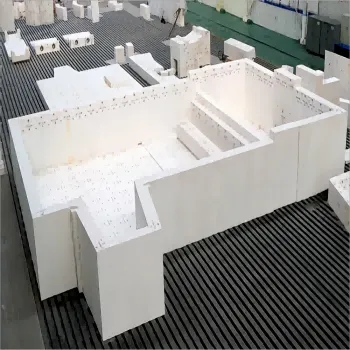
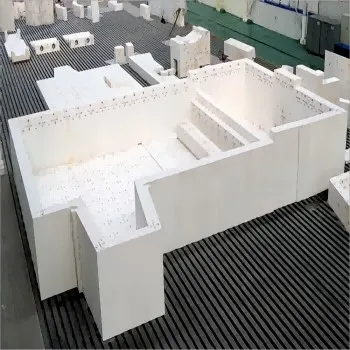
First off, let's talk about what AZS blocks are. AZS stands for Alumina - Zirconia - Silica. These blocks are made by fusing alumina, zirconia, and silica together at extremely high temperatures. They're known for their excellent performance in harsh industrial environments, especially in glass - making furnaces.
What is Wear Resistance?
Wear resistance refers to a material's ability to withstand the effects of wear, which can be caused by friction, abrasion, erosion, or impact. In the case of AZS blocks, wear resistance is crucial because they're often used in areas where they come into contact with molten glass, high - velocity gases, and other abrasive substances.
When an AZS block has good wear resistance, it means it can maintain its structural integrity and performance over a long period of time. This is super important for industries that rely on these blocks, as it reduces the need for frequent replacements, which can be costly and time - consuming.
Factors Affecting the Wear Resistance of AZS Blocks
Chemical Composition
The chemical composition of AZS blocks plays a huge role in their wear resistance. Alumina (Al₂O₃) provides high - temperature strength and hardness. Zirconia (ZrO₂) enhances the toughness and thermal shock resistance of the blocks. Silica (SiO₂) acts as a binder, helping to hold the other components together.
When the ratio of these three components is just right, the AZS block can have optimal wear resistance. For example, a higher percentage of zirconia can increase the block's resistance to corrosion from molten glass, as zirconia forms a protective layer on the surface of the block.
Microstructure
The microstructure of AZS blocks also affects their wear resistance. A fine - grained and homogeneous microstructure is generally better for wear resistance. This is because a fine - grained structure has more grain boundaries, which can impede the movement of dislocations and prevent cracks from propagating.
During the manufacturing process, factors such as cooling rate and the use of additives can influence the microstructure of the AZS blocks. For instance, a slow cooling rate can lead to a more uniform and fine - grained microstructure, resulting in better wear resistance.
Manufacturing Process
The way AZS blocks are manufactured can have a significant impact on their wear resistance. The fusion process, which is commonly used to make AZS blocks, involves melting the raw materials in an electric arc furnace. The quality of the melting process, including the temperature, time, and mixing of the materials, can affect the final properties of the blocks.
After melting, the blocks are cast into molds and then cooled. The cooling process needs to be carefully controlled to avoid the formation of internal stresses and cracks, which can reduce the wear resistance of the blocks.
Applications and the Importance of Wear Resistance
Glass - Making Industry
In the glass - making industry, AZS blocks are widely used in the construction of glass furnaces. They line the walls, floors, and roofs of the furnaces, where they come into direct contact with molten glass at temperatures up to 1600°C.
The wear resistance of AZS blocks in this application is crucial because any wear or damage to the blocks can contaminate the molten glass, leading to defects in the final glass products. By using AZS blocks with high wear resistance, glass manufacturers can ensure the quality of their products and increase the lifespan of their furnaces.
Other Industries
AZS blocks are also used in other industries, such as the steel and non - ferrous metal industries. In these industries, they're used in ladles, tundishes, and other refractory applications. The wear resistance of the blocks helps to withstand the high - temperature and abrasive conditions in these environments, ensuring the smooth operation of the production processes.
Comparing AZS Blocks with Other Refractory Materials
When it comes to wear resistance, AZS blocks have some advantages over other refractory materials. For example, compared to Zirconia Corundum Brick, AZS blocks generally have better resistance to corrosion from molten glass due to their unique chemical composition.
AZS Brick is a type of AZS block that is specifically designed for certain applications. It often has enhanced wear resistance compared to some other common refractory bricks, making it a popular choice in high - wear environments.
Zirconium Corundum Brick is also a related material, but AZS blocks can sometimes outperform them in terms of wear resistance, especially in applications where there is a high concentration of corrosive substances.
Testing the Wear Resistance of AZS Blocks
There are several methods to test the wear resistance of AZS blocks. One common method is the abrasion test, where a sample of the block is subjected to a rotating abrasive wheel or a stream of abrasive particles. The amount of material removed from the sample after a certain period of time is measured to determine the wear resistance.
Another method is the corrosion test, where the block is exposed to molten glass or other corrosive substances at high temperatures for a specific duration. The change in the weight and appearance of the block is then analyzed to evaluate its corrosion and wear resistance.
How Our AZS Blocks Stand Out
As a supplier of AZS blocks, we take pride in the quality of our products. We carefully control the chemical composition, microstructure, and manufacturing process of our AZS blocks to ensure they have excellent wear resistance.
Our R & D team is constantly working on improving the performance of our AZS blocks. We conduct regular quality checks and tests to make sure that every block we produce meets the highest standards of wear resistance.
If you're in an industry that requires high - quality AZS blocks with excellent wear resistance, we'd love to hear from you. Whether you're in the glass - making, steel, or other industries, our AZS blocks can provide the durability and performance you need.
Conclusion
The wear resistance of AZS blocks is a complex but important topic. It's affected by factors such as chemical composition, microstructure, and manufacturing process. These blocks play a vital role in many industries, especially in high - temperature and abrasive environments.
If you're looking for a reliable supplier of AZS blocks with top - notch wear resistance, don't hesitate to reach out. We're here to provide you with the best products and solutions for your specific needs. Let's start a conversation and see how we can work together to improve your production processes.
References
- "Refractories Handbook" by John Smith
- "Advanced Ceramics for High - Temperature Applications" by Jane Doe
- Industry research reports on AZS blocks and refractory materials