

What materials are used to make a tundish shroud?
As a reliable tundish shroud supplier, I am often asked about the materials used in the production of tundish shrouds. Tundish shrouds play a crucial role in the continuous casting process, ensuring the smooth and controlled flow of molten steel from the tundish to the mold. The choice of materials is of utmost importance as it directly affects the performance, durability, and quality of the tundish shroud.
Key Requirements for Tundish Shroud Materials
Before delving into the specific materials, it's essential to understand the key requirements that these materials must meet. A good tundish shroud material should have high thermal shock resistance to withstand the sudden temperature changes when in contact with molten steel. It also needs excellent corrosion resistance to prevent erosion from the aggressive molten metal and slag. Additionally, the material should possess sufficient mechanical strength to maintain its shape and integrity during the casting process.
Common Materials for Tundish Shrouds
Alumina - Carbon (Al₂O₃ - C)
One of the most widely used materials for tundish shrouds is the alumina - carbon composite. Alumina (Al₂O₃) is known for its high melting point, good chemical stability, and excellent mechanical strength at high temperatures. Carbon, on the other hand, provides thermal shock resistance and lubricity. The combination of these two materials results in a tundish shroud that can withstand the harsh conditions of the continuous casting process.
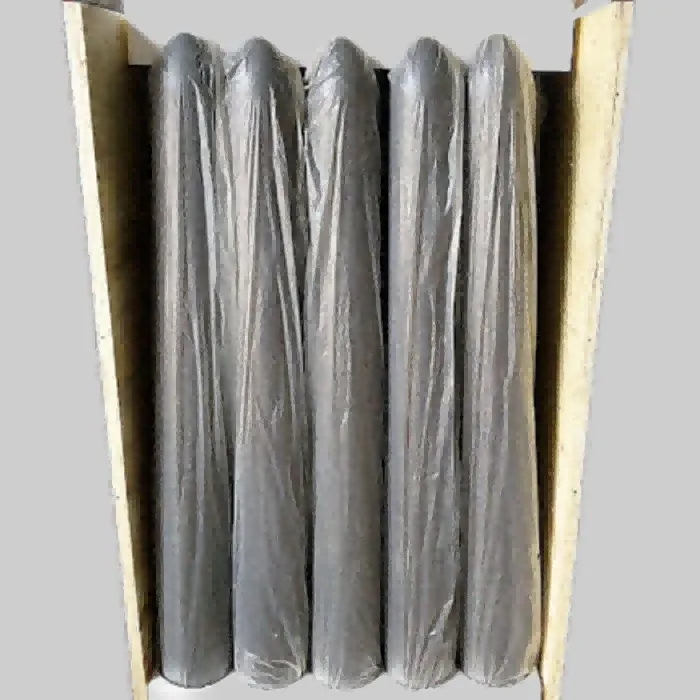
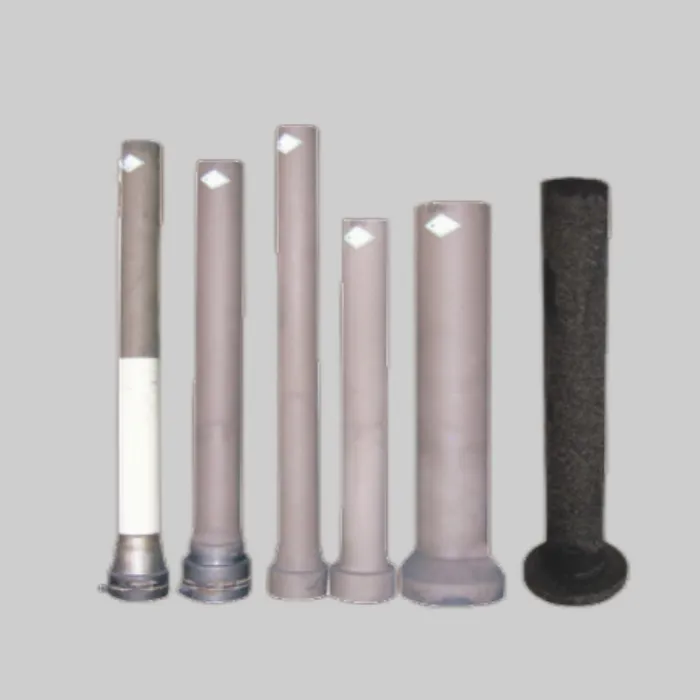
The alumina - carbon tundish shrouds are typically made by mixing alumina powder and carbonaceous materials such as graphite or pitch. The mixture is then shaped into the desired form through processes like isostatic pressing or extrusion. After that, the pre - formed product undergoes heat treatment to enhance its properties. These shrouds are highly resistant to corrosion from molten steel and slag, and their thermal shock resistance allows them to handle the rapid temperature changes during casting. For more information about our high - quality Tundish Shroud, you can visit our website.
Magnesia - Carbon (MgO - C)
Magnesia - carbon materials are also commonly used in the production of tundish shrouds, especially in applications where there is a high risk of slag attack. Magnesia (MgO) has a high melting point and excellent resistance to basic slags. When combined with carbon, it forms a composite material with improved thermal shock resistance.
The magnesia - carbon tundish shrouds are manufactured in a similar way to the alumina - carbon ones. Magnesia powder and carbon sources are mixed, shaped, and heat - treated. These shrouds are particularly suitable for casting certain types of steels where the slag has a high basicity. They can effectively resist the corrosion caused by the basic slag and maintain their performance over an extended period.
Zirconia - Based Materials
Zirconia (ZrO₂) is another important material used in tundish shrouds. Zirconia has unique properties such as high melting point, excellent thermal insulation, and good chemical stability. Zirconia - based tundish shrouds are often used in special casting processes or for casting high - quality steels.
There are different types of zirconia - based materials, including partially stabilized zirconia (PSZ) and fully stabilized zirconia (FSZ). These materials can be made into tundish shrouds through processes like sintering or melting. Zirconia - based shrouds offer excellent resistance to corrosion and thermal shock, and they can also provide better control of the molten steel flow due to their smooth inner surface.
Factors Affecting Material Selection
The selection of materials for tundish shrouds depends on several factors. The type of steel being cast is a major consideration. Different steels have different chemical compositions and temperatures, which require specific material properties to ensure optimal performance. For example, when casting stainless steel, materials with high corrosion resistance are preferred.
The casting process parameters, such as casting speed and temperature, also influence the material choice. Higher casting speeds may require materials with better thermal shock resistance to prevent cracking. The duration of the casting campaign is another factor. For long - term casting operations, more durable materials are needed to avoid frequent replacements.
Our Expertise as a Tundish Shroud Supplier
As a leading tundish shroud supplier, we have in - depth knowledge of these materials and their applications. We have a team of experts who can analyze the specific requirements of our customers and recommend the most suitable materials for their tundish shrouds. Our production facilities are equipped with advanced technology to ensure the high - quality manufacturing of tundish shrouds.
We also offer other related products such as Sub Entry Nozzle and Monolithic Stopper. These products are made with the same high - standard materials and manufacturing processes, providing a complete solution for the continuous casting process.
Contact Us for Procurement
If you are in the market for high - quality tundish shrouds or related products, we invite you to contact us for procurement discussions. Our team is ready to provide you with detailed information about our products, pricing, and delivery options. We are committed to meeting your specific needs and ensuring the success of your continuous casting operations.
References
- "Refractories for the Steel Industry" - A comprehensive handbook on refractory materials used in steelmaking processes.
- "Continuous Casting Technology" - This book provides in - depth knowledge about the continuous casting process and the role of tundish shrouds.
- Industry research papers on the development and application of materials for tundish shrouds.